Loading...
This comparison has not been analyzed yet.
One-time AI generation (~1 minute). Scores and timeline are already available below.
William the Lion vs Zhenzhu Khan
Zhenzhu Khan leads by 2.8 pts · 2 figures compared
…
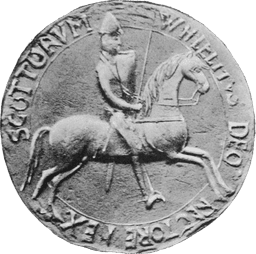
William the Lion
Emperor · Medieval
50.8Total

Zhenzhu Khan
Emperor · Medieval
53.6Total
Basic Information
Born
1143
605
Died
1214
645
Era
Medieval
Medieval
Nationality
Scotland
Xueyantuo
Occupation
Emperor
Emperor
Civilization
Western
Eastern
Score Comparison
Military (10%)
45.0
70.0
Political (20%)
45.1
43.7
Influence (20%)
54.9
51.8
Legacy (20%)
47.5
45.0
Leadership (15%)
67.0
67.0
Strategy (15%)
38.6
57.5
TOTAL
50.8
53.6
William the Lion — Complete Timeline
1174 AD
Capture at AlnwickWar
William the Lion was captured by English forces near Alnwick Castle during an invasion of Northumberland. He was taken prisoner to England, leading to the Treaty of Falaise where Scotland became a vassal state of England.
CaptureAnglo-Scottish WarVassalage
Impact: nationaldestructive
Treaty of FalaisePolitical Action◆ Major
William the Lion signed the Treaty of Falaise, acknowledging Henry II of England as his feudal overlord. Scotland's castles were garrisoned by English troops, and William paid homage to the English king.
TreatyVassalageAnglo-Scottish Relations
Impact: nationaldestructive
1178 AD
Foundation of Arbroath AbbeyCultural
William the Lion founded Arbroath Abbey in Angus, dedicated to St. Thomas Becket. The abbey became a major religious center and later the site where the Declaration of Arbroath was drafted in 1320.
FoundationReligionArchitecture
Impact: nationalconstructive
1189 AD
Purchase of Quitclaim of CanterburyPolitical Action
William the Lion paid 10,000 marks to Richard I of England to annul the Treaty of Falaise. This purchase restored Scotland's independence and ended English overlordship, with all English garrisons withdrawn from Scottish castles.
IndependenceTreatyDiplomacy
Impact: nationalconstructive
Zhenzhu Khan — Complete Timeline
628 AD
Establishment of the Xueyantuo KhaganatePolitical Action◆ Major
Zhenzhu Khan founded the Xueyantuo Khaganate in Mongolia after the collapse of the Eastern Turkic Khaganate. He united the Xueyantuo and other Tiele tribes, creating a powerful steppe confederation.
State FormationXueyantuoMongolia
Impact: regionalconstructive
630 AD
Alliance with Tang ChinaPolitical Action◆ Major
Zhenzhu Khan allied with Tang China against the Eastern Turkic Khaganate. He provided cavalry support to Tang forces, contributing to the defeat of Illig Qaghan and the annexation of the Eastern Turks.
AllianceTang DynastyEastern Turkic Khaganate
Impact: regionalconstructive
635 AD
Expansion of the Xueyantuo KhaganateWar◆ Major
Zhenzhu Khan expanded the Xueyantuo Khaganate westward, conquering territories from the Western Turkic Khaganate. He extended his rule over the Tiele tribes and the eastern part of the Tarim Basin.
Territorial ExpansionXueyantuoWestern Turkic Khaganate
Impact: regionalconstructive
645 AD
Death and succession crisisPolitical Action◆ Major
Zhenzhu Khan died, and his son succeeded him but was soon overthrown. The Xueyantuo Khaganate quickly declined after his death, eventually being conquered by the Tang dynasty and the Uyghurs.
DeathSuccession CrisisXueyantuo
Impact: regionaltragic
This comparison has not been analyzed yet.
One-time AI generation (~1 minute). Scores and timeline are already available below.
Rankings
🥇
Zhenzhu KhanLeader
Mil: 70.0Pol: 43.7Inf: 51.8
53.6
🥈
William the Lion
Mil: 45.0Pol: 45.1Inf: 54.9
50.8
+2.8 behind
How This Comparison Works
Algorithm
Each figure is scored on 6 dimensions (0—100 scale) based on structured historical data: Military (10%), Political (20%), Influence (20%), Legacy (20%), Leadership (15%), Strategy (15%). The weighted total produces the final ranking.
Data Sources
Scores are computed from structured sub-indicators in the database. Scale factors adjust for era (Ancient ×0.85, Modern ×1.0) and civilization size (Eastern ×1.05, Other ×0.80) to account for differences in population and military scale.
Maximum 3 Figures
Comparisons are limited to 2—3 figures to ensure readability and statistical meaningfulness.
Error Margins
±5 points per dimension — Sub-scores are derived from historical records with inherent uncertainty. Two figures within 5 points on a dimension should be considered roughly equivalent in that area.
Total Score Accuracy
±3 points overall — The weighted combination of 6 dimensions produces a total score with approximately ±3 points of uncertainty. Differences of less than 3 points are not statistically significant— the figures are effectively tied.
Known Limitations
- Historical records are incomplete and uneven across civilizations
- Figures from oral-tradition societies may be underrepresented
- Occupation labels can misclassify multi-role figures
- Scores measure capability and impact, not moral character
- Quantitative scoring is a comparison tool, not absolute truth
Capability Radar
Military (10%) — Battles & Warfare
Battles
30
55
Win Rate
25
60
Expansion
20
60
Political (20%) — Governance & Reform
Reform
40
30
Diplomacy
50
55
Economy
35
35
Influence (20%) — Cultural & Global Reach
Cultural
30
30
Global
20
20
Legacy (20%) — Historical Impact
Historical
40
40
Longevity
35
30
Leadership (15%) — Power & Stability
Tenure
60
50
Stability
30
40
Strategy (15%) — Tactics & Innovation
Strategy
25
55
Tactics
20
50
Reform
15
40
Similar Comparisons
Comments & Discussion
No comments yet. Be the first to share your thoughts!