Loading...
This comparison has not been analyzed yet.
One-time AI generation (~1 minute). Scores and timeline are already available below.
Wilfried Martens vs Yun Bo-seon
Wilfried Martens leads by 19.2 pts · 2 figures compared
…
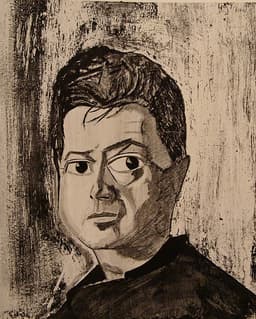
Wilfried Martens
Politician · Modern
55.2Total

Yun Bo-seon
Politician · Modern
36.0Total
Basic Information
Born
1936
1897
Died
—
1990
Era
Modern
Modern
Nationality
Belgium
Korea
Occupation
Politician
Politician
Civilization
Western
Eastern
Score Comparison
Military (10%)
50.0
14.4
Political (20%)
59.3
25.0
Influence (20%)
54.9
48.6
Legacy (20%)
45.8
39.2
Leadership (15%)
79.8
34.6
Strategy (15%)
41.9
36.6
TOTAL
55.2
36.0
Wilfried Martens — Complete Timeline
1979 AD
Prime Minister of Belgium (first term)Political Action◆ Major
Wilfried Martens became Prime Minister of Belgium for the first time, leading a coalition government. He would go on to serve nine terms, making him the longest-serving Belgian prime minister. His tenure focused on economic austerity and state reform.
Prime MinisterBelgian Politics
Impact: national
1980 AD
State reform of 1980Reform
Under Prime Minister Wilfried Martens, Belgium enacted a second state reform that created the Flemish and Walloon Regions and the French, Flemish, and German Communities. This further federalized the country, granting more autonomy to linguistic groups.
State ReformFederalizationBelgium
Impact: nationalconstructive
1990 AD
President of the European People's PartyPolitical Action◆ Major
Wilfried Martens became President of the European People's Party (EPP), the pan-European Christian democratic political group. He led the EPP for 23 years, shaping its policies and expanding its influence in the European Parliament.
European PoliticsChristian Democracy
Impact: regionalconstructive
1992 AD
Signing of the Maastricht TreatyPolitical Action◆ Major
As Prime Minister, Wilfried Martens signed the Maastricht Treaty on behalf of Belgium. This treaty established the European Union and introduced the euro. Martens was a strong advocate for European integration.
European UnionMaastricht TreatyIntegration
Impact: globalconstructive
Yun Bo-seon — Complete Timeline
1949 AD
Service as Mayor of SeoulPolitical Action
Yun Bo-seon served as Mayor of Seoul from 1949 to 1950, overseeing post-war reconstruction and urban development. He later served as Minister of Commerce and Industry.
GovernmentUrban DevelopmentAdministration
constructive
1960 AD
Election as Second President of South KoreaPolitical Action◆ Major
Yun Bo-seon was elected president of South Korea in August 1960 after the April Revolution. He led the Second Republic, a parliamentary system, but his presidency was short-lived due to political instability and the 1961 military coup.
ElectionSecond RepublicDemocracy
Impact: national
Role in the April RevolutionPolitical Action◆ Major
Yun Bo-seon was a key opposition figure during the April Revolution that ousted Syngman Rhee. He provided political leadership to the protest movement and later became president as a result of the uprising.
April RevolutionOppositionDemocracy
Impact: nationalconstructive
1961 AD
Overthrow by Park Chung-hee's Military CoupPolitical Action
Yun Bo-seon was overthrown by a military coup led by Park Chung-hee on May 16, 1961. He resigned from the presidency, ending the Second Republic and ushering in military rule.
CoupMilitary RuleEnd of Democracy
Impact: nationaltragic
This comparison has not been analyzed yet.
One-time AI generation (~1 minute). Scores and timeline are already available below.
Rankings
🥇
Wilfried MartensLeader
Mil: 50.0Pol: 59.3Inf: 54.9
55.2
🥈
Yun Bo-seon
Mil: 14.4Pol: 25.0Inf: 48.6
36.0
+19.2 behind
How This Comparison Works
Algorithm
Each figure is scored on 6 dimensions (0—100 scale) based on structured historical data: Military (10%), Political (20%), Influence (20%), Legacy (20%), Leadership (15%), Strategy (15%). The weighted total produces the final ranking.
Data Sources
Scores are computed from structured sub-indicators in the database. Scale factors adjust for era (Ancient ×0.85, Modern ×1.0) and civilization size (Eastern ×1.05, Other ×0.80) to account for differences in population and military scale.
Maximum 3 Figures
Comparisons are limited to 2—3 figures to ensure readability and statistical meaningfulness.
Error Margins
±5 points per dimension — Sub-scores are derived from historical records with inherent uncertainty. Two figures within 5 points on a dimension should be considered roughly equivalent in that area.
Total Score Accuracy
±3 points overall — The weighted combination of 6 dimensions produces a total score with approximately ±3 points of uncertainty. Differences of less than 3 points are not statistically significant— the figures are effectively tied.
Known Limitations
- Historical records are incomplete and uneven across civilizations
- Figures from oral-tradition societies may be underrepresented
- Occupation labels can misclassify multi-role figures
- Scores measure capability and impact, not moral character
- Quantitative scoring is a comparison tool, not absolute truth
Capability Radar
Military (10%) — Battles & Warfare
Battles
27
14
Win Rate
30
15
Expansion
36
21
Political (20%) — Governance & Reform
Reform
65
10
Diplomacy
70
20
Economy
60
10
Influence (20%) — Cultural & Global Reach
Cultural
30
10
Global
30
10
Legacy (20%) — Historical Impact
Historical
40
15
Longevity
35
10
Leadership (15%) — Power & Stability
Tenure
75
15
Stability
55
5
Strategy (15%) — Tactics & Innovation
Strategy
39
21
Tactics
38
27
Reform
44
28
Similar Comparisons
Comments & Discussion
No comments yet. Be the first to share your thoughts!