Loading...
Louis St. Laurent vs Wilfried Martens
Louis St. Laurent leads by 5.9 pts · 2 figures compared
…

Louis St. Laurent
Politician · Modern
61.1Total
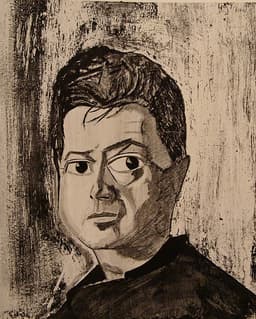
Wilfried Martens
Politician · Modern
55.2Total
Basic Information
Born
1882
1936
Died
1973
—
Era
Modern
Modern
Nationality
Canada
Belgium
Occupation
Politician
Politician
Civilization
Western
Western
Score Comparison
Military (10%)
49.6
50.0
Political (20%)
72.0
59.3
Influence (20%)
59.0
54.9
Legacy (20%)
52.0
45.8
Leadership (15%)
80.0
79.8
Strategy (15%)
55.5
41.9
TOTAL
61.1
55.2
Louis St. Laurent — Complete Timeline
1948 AD
Became Prime Minister of CanadaPolitical Action◆ Major
St. Laurent succeeded Mackenzie King as Prime Minister of Canada, leading the Liberal Party. He inherited a strong economy and a government experienced in post-war reconstruction.
Government FormationSuccessionLiberalism
Impact: national
1949 AD
Oversaw Newfoundland's entry into ConfederationPolitical Action◆ Major
St. Laurent's government negotiated the entry of Newfoundland into Canada as the tenth province. This completed the territorial expansion of the Canadian federation.
ConfederationNewfoundlandExpansion
Impact: nationalconstructive
1954 AD
Approved construction of the St. Lawrence SeawayPolitical Action◆ Major
St. Laurent's government partnered with the United States to build the St. Lawrence Seaway, a major infrastructure project that opened the Great Lakes to ocean-going ships. The project boosted trade and economic growth.
InfrastructureTradeUS-Canada Relations
Impact: regionalconstructive
1957 AD
Lost 1957 election to John DiefenbakerPolitical Action◆ Major
St. Laurent's Liberal government was defeated in the federal election by John Diefenbaker's Progressive Conservatives. The loss ended 22 years of Liberal rule and marked a shift in Canadian politics.
ElectionDefeatTransition
Impact: national
Wilfried Martens — Complete Timeline
1979 AD
Prime Minister of Belgium (first term)Political Action◆ Major
Wilfried Martens became Prime Minister of Belgium for the first time, leading a coalition government. He would go on to serve nine terms, making him the longest-serving Belgian prime minister. His tenure focused on economic austerity and state reform.
Prime MinisterBelgian Politics
Impact: national
1980 AD
State reform of 1980Reform
Under Prime Minister Wilfried Martens, Belgium enacted a second state reform that created the Flemish and Walloon Regions and the French, Flemish, and German Communities. This further federalized the country, granting more autonomy to linguistic groups.
State ReformFederalizationBelgium
Impact: nationalconstructive
1990 AD
President of the European People's PartyPolitical Action◆ Major
Wilfried Martens became President of the European People's Party (EPP), the pan-European Christian democratic political group. He led the EPP for 23 years, shaping its policies and expanding its influence in the European Parliament.
European PoliticsChristian Democracy
Impact: regionalconstructive
1992 AD
Signing of the Maastricht TreatyPolitical Action◆ Major
As Prime Minister, Wilfried Martens signed the Maastricht Treaty on behalf of Belgium. This treaty established the European Union and introduced the euro. Martens was a strong advocate for European integration.
European UnionMaastricht TreatyIntegration
Impact: globalconstructive
Expert Analysis
Origins
Louis St. Laurent was born on February 1, 1882, in Compton, Quebec, into a French-Canadian family. His father was a storekeeper, and his mother a devout Catholic. He excelled academically, earning a law degree from Université Laval in 1905. He built a successful corporate law practice, becoming one of Canada's most respected lawyers. His entry into politics came late; he was nearly 60 when he first ran for office.
Wilfried Martens was born on April 19, 1936, in Sleidinge, East Flanders, Belgium, into a Flemish Catholic family. His father was a farmer. He studied law and philosophy at the Catholic University of Leuven, earning doctorates in both. He became active in the Catholic youth movement and the Flemish movement. His early career included teaching and legal practice before entering politics full-time.
Rise to Power
St. Laurent's political ascent was swift. In 1941, Prime Minister Mackenzie King appointed him as Minister of Justice, despite St. Laurent having no political experience. He proved a capable minister, managing wartime legal matters. In 1946, he became Secretary of State for External Affairs, representing Canada at the United Nations. When King retired in 1948, St. Laurent easily won the Liberal Party leadership and became Prime Minister on November 15, 1948.
Martens rose through the ranks of the Christian Democratic Party (CVP). He was first elected to the Belgian Chamber of Representatives in 1974. He became party chairman in 1977. In 1979, following the government crisis, he became Prime Minister on April 3, 1979, at age 43. His first term was short, but he returned to lead nine governments over the next decade, becoming Belgium's longest-serving prime minister.
Leadership & Governance
St. Laurent governed with a calm, consensus-building style. He focused on domestic prosperity and infrastructure. His government approved the St. Lawrence Seaway (1954), a joint project with the US that opened the Great Lakes to ocean shipping. He also expanded social programs, including old-age pensions and hospital insurance. On foreign policy, he was a strong supporter of NATO and the United Nations, sending troops to the Korean War.
Martens specialized in managing Belgium's complex linguistic divisions. He oversaw the state reform of 1980, which created the Flemish and Walloon Regions and Community Commissions, devolving powers to language groups. This federalization was crucial for keeping the country together. He also championed European integration, signing the Maastricht Treaty in 1992, which established the European Union. His leadership score of 79.8 reflects his ability to hold coalitions together, but his political score of 59.3 is lower due to the inherent instability of Belgian politics.
Triumph & Tragedy
St. Laurent's greatest triumph was overseeing Newfoundland's entry into Confederation on March 31, 1949, completing Canada's territorial expansion. The St. Lawrence Seaway also boosted trade. However, his tragedy was his electoral defeat in 1957. His government had become complacent after 22 years in power, and the Suez Crisis and pipeline debate damaged his popularity. He lost to John Diefenbaker, ending the Liberal dynasty. His leadership score of 80.0 is high, but his legacy score of 52.0 is moderate because his achievements were overshadowed by subsequent prime ministers.
Martens' triumphs include the state reforms that prevented Belgium's breakup and his role in creating the EU. His tragedy was the ongoing political instability; his nine terms were often short-lived, and he could not resolve the deep divisions between Flemish and Walloon communities. His influence score of 54.9 reflects his European impact, but his legacy score of 45.8 is lower because Belgium's internal issues persisted.
Character & Destiny
St. Laurent was known as "Uncle Louis" for his avuncular, low-key demeanor. He was pragmatic and cautious, preferring quiet negotiation over confrontation. His character suited the post-war era of stability, but his reluctance to engage in partisan politics contributed to his party's defeat. He retired from politics after 1957 and died in 1973.
Martens was a skilled negotiator and conciliator, essential for managing Belgium's coalitions. He was persistent, returning to power repeatedly despite setbacks. His European vision was forward-looking, but his domestic focus on federalism was reactive. He died in 2013 after a long illness.
Legacy
St. Laurent's legacy includes Newfoundland's inclusion, the St. Lawrence Seaway, and the foundation of Canada's universal healthcare system (hospital insurance). He also established Canada's role as a middle power in NATO and the UN. However, his government's achievements are often attributed to the broader post-war boom. His total score of 61.1 reflects solid but not transformative impact.
Martens' legacy is more institutional: the federalization of Belgium and the Maastricht Treaty. He was a key architect of the European Union, serving as President of the European People's Party from 1990 to 2013. Yet, his domestic reforms did not solve Belgium's linguistic tensions, and his European role is often overshadowed by larger countries' leaders. His total score of 55.2 is lower, reflecting the limits of his influence.
Conclusion
Louis St. Laurent had a greater impact than Wilfried Martens, as reflected in his higher total score (61.1 vs. 55.2). St. Laurent's decisions shaped Canada's geography and social fabric permanently, while Martens' achievements, though significant, were more about managing decline and promoting European integration. St. Laurent's leadership and political scores are higher, and his actions had direct, lasting effects on millions of Canadians. Martens was a capable manager, but his legacy is constrained by Belgium's internal divisions and the secondary role of Belgian leaders in European history.
Rankings
🥇
Louis St. LaurentLeader
Mil: 49.6Pol: 72.0Inf: 59.0
61.1
🥈
Wilfried Martens
Mil: 50.0Pol: 59.3Inf: 54.9
55.2
+5.9 behind
How This Comparison Works
Algorithm
Each figure is scored on 6 dimensions (0—100 scale) based on structured historical data: Military (10%), Political (20%), Influence (20%), Legacy (20%), Leadership (15%), Strategy (15%). The weighted total produces the final ranking.
Data Sources
Scores are computed from structured sub-indicators in the database. Scale factors adjust for era (Ancient ×0.85, Modern ×1.0) and civilization size (Eastern ×1.05, Other ×0.80) to account for differences in population and military scale.
Maximum 3 Figures
Comparisons are limited to 2—3 figures to ensure readability and statistical meaningfulness.
Error Margins
±5 points per dimension — Sub-scores are derived from historical records with inherent uncertainty. Two figures within 5 points on a dimension should be considered roughly equivalent in that area.
Total Score Accuracy
±3 points overall — The weighted combination of 6 dimensions produces a total score with approximately ±3 points of uncertainty. Differences of less than 3 points are not statistically significant— the figures are effectively tied.
Known Limitations
- Historical records are incomplete and uneven across civilizations
- Figures from oral-tradition societies may be underrepresented
- Occupation labels can misclassify multi-role figures
- Scores measure capability and impact, not moral character
- Quantitative scoring is a comparison tool, not absolute truth
Capability Radar
Military (10%) — Battles & Warfare
Battles
29
27
Win Rate
32
30
Expansion
34
36
Political (20%) — Governance & Reform
Reform
70
65
Diplomacy
75
70
Economy
80
60
Influence (20%) — Cultural & Global Reach
Cultural
40
30
Global
55
30
Legacy (20%) — Historical Impact
Historical
60
40
Longevity
50
35
Leadership (15%) — Power & Stability
Tenure
75
75
Stability
80
55
Strategy (15%) — Tactics & Innovation
Strategy
37
39
Tactics
42
38
Reform
44
44
Similar Comparisons
Comments & Discussion
No comments yet. Be the first to share your thoughts!