Loading...
Wen Jiabao vs William Massey
William Massey leads by 4.0 pts · 2 figures compared
…

Wen Jiabao
Politician · Modern
51.3Total
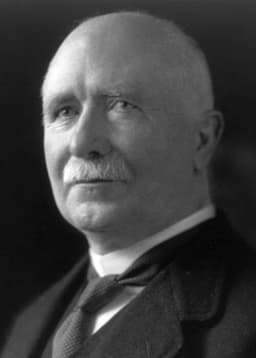
William Massey
Politician · Modern
55.3Total
Basic Information
Born
1942
1856
Died
—
1925
Era
Modern
Modern
Nationality
China
New Zealand
Occupation
Politician
Politician
Civilization
Eastern
Western
Score Comparison
Military (10%)
16.4
49.6
Political (20%)
55.0
60.0
Influence (20%)
61.0
52.5
Legacy (20%)
45.8
45.0
Leadership (15%)
80.0
85.0
Strategy (15%)
26.7
41.9
TOTAL
51.3
55.3
Wen Jiabao — Complete Timeline
2003 AD
Became Premier of the People's Republic of ChinaPolitical Action◆ Major
Wen Jiabao succeeded Zhu Rongji as Premier, continuing market reforms while emphasizing social welfare. He focused on reducing rural poverty and improving healthcare and education.
PremierEconomic ReformSocial Welfare
Impact: nationalconstructive
Oversaw the response to the SARS outbreakPolitical Action◆ Major
Wen Jiabao led China's response to the SARS epidemic, implementing quarantine measures and improving transparency. The crisis was contained within months, though initial delays were criticized.
SARSPublic HealthCrisis Management
Impact: globalconstructive
2006 AD
Abolished agricultural taxReform◆ Major
Wen Jiabao's government abolished the agricultural tax, a levy that had burdened farmers for centuries. This reform reduced rural poverty and increased agricultural productivity.
Agricultural ReformRural PovertyTax Abolition
Impact: nationalconstructive
2008 AD
Implemented the 4 trillion yuan stimulus packageReform◆ Major
In response to the global financial crisis, Wen Jiabao announced a 4 trillion yuan stimulus package focused on infrastructure, social welfare, and tax cuts. This helped China maintain high growth rates.
Stimulus PackageGlobal Financial CrisisInfrastructure
Impact: globalconstructive
2013 AD
Retired from politicsPolitical Action
Wen Jiabao stepped down as Premier after two terms, retiring from public life. He was succeeded by Li Keqiang, and his policies of social welfare expansion continued.
RetirementPolitical TransitionSocial Welfare
Impact: national
William Massey — Complete Timeline
1912 AD
Became Prime Minister of New ZealandPolitical Action◆ Major
Massey became Prime Minister on 10 July 1912, leading the Reform Party. He succeeded Joseph Ward and began a 13-year tenure that shaped New Zealand's early 20th-century politics.
Prime MinisterReform Party
Impact: national
1914 AD
Led New Zealand in World War IWar◆ Major
Massey led New Zealand through World War I, committing troops to the Allied cause. He supported the British Empire's war effort and oversaw the mobilization of New Zealand's military and economy.
World War IMilitary Mobilization
Impact: global
1919 AD
Signed the Treaty of VersaillesPolitical Action◆ Major
Massey attended the Paris Peace Conference and signed the Treaty of Versailles on behalf of New Zealand. He secured New Zealand's membership in the League of Nations, marking a step in its international recognition.
Treaty of VersaillesLeague of Nations
Impact: globalconstructive
1925 AD
Died in OfficePolitical Action◆ Major
Massey died in office on 10 May 1925, becoming the first New Zealand prime minister to die while serving. His death marked the end of the Reform Party's long dominance.
Death in OfficeEnd of Era
Impact: nationaltragic
Expert Analysis
Origins
Wen Jiabao was born in September 1942 in Tianjin, China, into a middle-class family. He studied geomechanics at the Beijing Institute of Geology, graduating in 1965. His early career was in geological survey work, which kept him away from the Cultural Revolution turmoil. He joined the Communist Party in 1965 and slowly rose through bureaucratic ranks, influenced by his mentor, Premier Zhao Ziyang. William Massey was born on 26 March 1856 in Limavady, Ireland, and emigrated to New Zealand with his family in 1862. He grew up on a farm in Northland, received limited formal education, and became a farmer and businessman. Massey entered politics in 1894 as a Member of Parliament for Franklin, representing conservative rural interests.
Rise to Power
Wen Jiabao's rise was gradual and technocratic. He served as chief of staff to Premier Zhao Ziyang in the 1980s, gaining administrative experience. After a period in the provinces, he was appointed Vice Premier in 1998 under Zhu Rongji. He became Premier in March 2003, succeeding Zhu. His elevation was seen as a compromise between reformist and conservative factions. William Massey's rise was more confrontational. He became leader of the conservative opposition in 1903, fiercely opposing the Liberal government's policies. He formed the Reform Party in 1909, consolidating rural and conservative support. In the 1911 election, his party won the most seats but not a majority; he became Prime Minister on 10 July 1912 after a no-confidence vote against the Liberal government.
Leadership & Governance
Wen Jiabao's leadership style was populist and hands-on. He often visited rural areas, earning the nickname "people's premier." He continued market reforms but emphasized social welfare. Key policies included abolishing the agricultural tax in 2006, which reduced the burden on farmers by about 120 billion yuan annually. He also implemented a 4 trillion yuan stimulus package in 2008-2009 to counter the global financial crisis, focusing on infrastructure and social programs. His response to the SARS outbreak in 2003 involved strict quarantine measures and improved transparency, containing the epidemic within months. William Massey was a pragmatic conservative who prioritized rural interests and imperial loyalty. He introduced the Industrial Conciliation and Arbitration Act amendments to weaken unions, and his government supported the British Empire strongly. During World War I, he committed over 100,000 troops from a population of 1 million, and introduced conscription in 1916, which caused deep divisions. He also suppressed the 1913 Great Strike with force.
Triumph & Tragedy
Wen Jiabao's greatest success was the abolition of the agricultural tax, a historic reform that improved the lives of 800 million farmers. His stimulus package helped China maintain growth above 9% during the global recession. However, his tenure also saw rising inequality, corruption, and environmental degradation. Critics note that his reforms did not address political freedoms. His political score of 55.0 reflects moderate achievements. William Massey's triumph was leading New Zealand through World War I and securing a seat at the Treaty of Versailles, gaining international recognition. He also signed the Treaty of Versailles on behalf of New Zealand, a symbol of national maturity. His tragedy was the deep social rift caused by conscription and his failure to manage the post-war economy, leading to a recession. He died in office on 10 May 1925, leaving a mixed legacy.
Character & Destiny
Wen Jiabao was known for his humility and common touch, often quoting ancient Chinese poetry. He was a cautious reformer within the Communist Party framework, avoiding direct confrontation with conservatives. His leadership score of 80.0 reflects his effective management of crises, but his strategic score of 26.7 indicates a lack of long-term vision beyond incremental reforms. William Massey was stubborn and combative, earning the nickname "Bill Massey's head." He was a staunch imperialist and a skilled political organizer. His leadership score of 85.0 is high, but his strategic score of 41.9 shows he was more reactive than visionary. His death in office prevented him from facing the consequences of his post-war policies.
Legacy
Wen Jiabao's legacy is mixed: he is remembered for his social welfare policies and rural focus, but also for failing to curb corruption. The agricultural tax abolition remains a landmark reform. His influence score of 61.0 reflects his impact on China's social policy, but his legacy score of 45.8 is modest due to the lack of systemic change. William Massey is remembered as New Zealand's war prime minister and a champion of rural conservatives. His Reform Party evolved into the modern National Party. His signing of the Treaty of Versailles is a key moment in New Zealand's independent foreign policy. His legacy score of 45.0 is similar to Wen's, indicating limited long-term impact.
Conclusion
While William Massey has a higher total score (55.3 vs 51.3), his impact was more narrowly focused on wartime leadership and rural interests. Wen Jiabao's reforms had a broader reach, affecting hundreds of millions of people, but were constrained by the political system. In terms of lasting global impact, Wen Jiabao's policies on poverty reduction and crisis management have more relevance to contemporary challenges. However, Massey's role in establishing New Zealand's independent voice in international affairs is significant. Taking a stance, Wen Jiabao had greater overall impact due to the scale of his policies affecting over a billion people, despite his lower total score. The score gap of 4.0 points understates Wen's broader influence.
Rankings
🥇
William MasseyLeader
Mil: 49.6Pol: 60.0Inf: 52.5
55.3
🥈
Wen Jiabao
Mil: 16.4Pol: 55.0Inf: 61.0
51.3
+4.0 behind
How This Comparison Works
Algorithm
Each figure is scored on 6 dimensions (0—100 scale) based on structured historical data: Military (10%), Political (20%), Influence (20%), Legacy (20%), Leadership (15%), Strategy (15%). The weighted total produces the final ranking.
Data Sources
Scores are computed from structured sub-indicators in the database. Scale factors adjust for era (Ancient ×0.85, Modern ×1.0) and civilization size (Eastern ×1.05, Other ×0.80) to account for differences in population and military scale.
Maximum 3 Figures
Comparisons are limited to 2—3 figures to ensure readability and statistical meaningfulness.
Error Margins
±5 points per dimension — Sub-scores are derived from historical records with inherent uncertainty. Two figures within 5 points on a dimension should be considered roughly equivalent in that area.
Total Score Accuracy
±3 points overall — The weighted combination of 6 dimensions produces a total score with approximately ±3 points of uncertainty. Differences of less than 3 points are not statistically significant— the figures are effectively tied.
Known Limitations
- Historical records are incomplete and uneven across civilizations
- Figures from oral-tradition societies may be underrepresented
- Occupation labels can misclassify multi-role figures
- Scores measure capability and impact, not moral character
- Quantitative scoring is a comparison tool, not absolute truth
Capability Radar
Military (10%) — Battles & Warfare
Battles
13
27
Win Rate
15
33
Expansion
20
36
Political (20%) — Governance & Reform
Reform
65
55
Diplomacy
60
60
Economy
75
50
Influence (20%) — Cultural & Global Reach
Cultural
40
30
Global
55
25
Legacy (20%) — Historical Impact
Historical
45
40
Longevity
30
30
Leadership (15%) — Power & Stability
Tenure
70
65
Stability
65
55
Strategy (15%) — Tactics & Innovation
Strategy
25
37
Tactics
26
38
Reform
31
45
Similar Comparisons
Comments & Discussion
No comments yet. Be the first to share your thoughts!