Loading...
Giovanni Spadolini vs William Massey
William Massey leads by 1.4 pts · 2 figures compared
…

Giovanni Spadolini
Politician · Modern
53.9Total
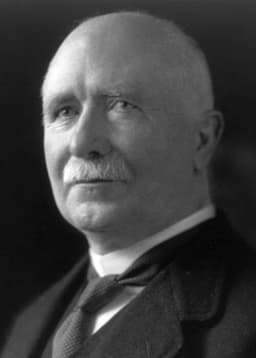
William Massey
Politician · Modern
55.3Total
Basic Information
Born
1925
1856
Died
—
1925
Era
Modern
Modern
Nationality
Italy
New Zealand
Occupation
Politician
Politician
Civilization
Western
Western
Score Comparison
Military (10%)
50.0
49.6
Political (20%)
68.0
60.0
Influence (20%)
55.7
52.5
Legacy (20%)
43.3
45.0
Leadership (15%)
64.0
85.0
Strategy (15%)
43.6
41.9
TOTAL
53.9
55.3
Giovanni Spadolini — Complete Timeline
1981 AD
Appointment as Prime Minister of ItalyPolitical Action◆ Major
Giovanni Spadolini became Prime Minister of Italy, the first non-Christian Democrat to hold the office since 1945. He led a coalition government of the Republican Party, Christian Democrats, and others, marking a political shift.
Prime MinisterRepublican PartyCoalition
Impact: nationalconstructive
Handling of the P2 Masonic Lodge ScandalPolitical Action◆ Major
Spadolini's government faced the scandal of the illegal P2 Masonic lodge, which had infiltrated state institutions. He took a firm stance, ordering investigations and pushing for the lodge's dissolution, though the scandal weakened the government.
P2 ScandalCorruptionInvestigations
Impact: nationalconstructive
1982 AD
Resignation as Prime MinisterPolitical Action
Spadolini resigned as Prime Minister after losing a confidence vote in the Senate over economic policy disagreements. His resignation ended his first term, though he briefly returned to the office later in 1982.
ResignationConfidence VotePolitical Crisis
Impact: national
1987 AD
Election as President of the SenatePolitical Action
Spadolini was elected President of the Italian Senate, a high-profile institutional role. He served in this position until 1994, overseeing legislative processes and representing the Senate in state affairs.
Senate PresidentInstitutional RoleLegislature
Impact: nationalconstructive
William Massey — Complete Timeline
1912 AD
Became Prime Minister of New ZealandPolitical Action◆ Major
Massey became Prime Minister on 10 July 1912, leading the Reform Party. He succeeded Joseph Ward and began a 13-year tenure that shaped New Zealand's early 20th-century politics.
Prime MinisterReform Party
Impact: national
1914 AD
Led New Zealand in World War IWar◆ Major
Massey led New Zealand through World War I, committing troops to the Allied cause. He supported the British Empire's war effort and oversaw the mobilization of New Zealand's military and economy.
World War IMilitary Mobilization
Impact: global
1919 AD
Signed the Treaty of VersaillesPolitical Action◆ Major
Massey attended the Paris Peace Conference and signed the Treaty of Versailles on behalf of New Zealand. He secured New Zealand's membership in the League of Nations, marking a step in its international recognition.
Treaty of VersaillesLeague of Nations
Impact: globalconstructive
1925 AD
Died in OfficePolitical Action◆ Major
Massey died in office on 10 May 1925, becoming the first New Zealand prime minister to die while serving. His death marked the end of the Reform Party's long dominance.
Death in OfficeEnd of Era
Impact: nationaltragic
Expert Analysis
Origins
Giovanni Spadolini was born on 21 June 1925 in Florence, Italy, into a middle-class family. His father was a professor, and Spadolini pursued an academic career, earning a degree in law and becoming a historian and journalist. He taught modern history at the University of Florence and later at the University of Bologna, establishing himself as a respected intellectual.
William Ferguson Massey was born on 26 March 1856 in Limavady, County Londonderry, Ireland. His family emigrated to New Zealand when he was a child, settling in Auckland. Massey worked as a farmer and became involved in local politics, representing the rural conservative interests. He had limited formal education but developed strong oratory skills and a pragmatic political style.
Rise to Power
Spadolini entered politics in the 1970s as a member of the Italian Republican Party (PRI), a small centrist party. He served as Minister of Cultural Heritage and later as Minister of Education. His big break came in 1981 when he became the first non-Christian Democrat Prime Minister of Italy since 1945, leading a coalition government. This marked a historic shift in Italy's post-war political landscape.
Massey rose through the ranks of the conservative opposition. He became leader of the Reform Party in 1903 and led it to victory in the 1911 election. On 10 July 1912, he became Prime Minister of New Zealand, beginning a 13-year tenure. His political base was the rural farming community, and he championed agricultural interests and conservative social policies.
Leadership & Governance
Spadolini's leadership style was intellectual and reformist. As prime minister, he confronted the P2 Masonic Lodge scandal, ordering investigations that revealed the lodge's infiltration of state institutions. He pushed for economic austerity and anti-inflation measures, but his coalition was fragile. His governance scored 64.0 in leadership and 68.0 in political skill, reflecting his ability to navigate Italy's complex party system.
Massey's leadership was authoritative and decisive, scoring 85.0 in leadership—the highest among the two. He centralized power and focused on agricultural development, land reform, and maintaining strong ties with Britain. During World War I, he mobilized New Zealand's resources and troops, supporting the British Empire's war effort. His governance was less concerned with institutional reform and more with practical outcomes.
Triumph & Tragedy
Spadolini's greatest triumph was breaking the Christian Democratic monopoly on power, demonstrating that non-DC coalitions were viable. His handling of the P2 scandal was praised for its firmness. However, his tragedy was his short tenure: he lost a confidence vote in 1982 over economic policy disagreements, ending his first government. He later served as President of the Senate, but his premiership was brief.
Massey's triumph was leading New Zealand through World War I and signing the Treaty of Versailles, securing New Zealand's membership in the League of Nations. His tragedy was his death in office on 10 May 1925, the first NZ prime minister to die while serving. His later years were marked by declining health and the end of the Reform Party's dominance.
Character & Destiny
Spadolini was a scholarly figure, known for his intellectual rigor and commitment to republican ideals. His character shaped his fate: he was a reformer in a system resistant to change, and his principled stance on the P2 scandal earned respect but also political enemies. His overall score of 53.9 reflects a solid but not transformative impact.
Massey was a pragmatic, stubborn leader, deeply loyal to the British Empire. His character—authoritarian and rural-focused—defined his governance. He was seen as a stabilizer during wartime, but his conservative policies limited social progress. His total score of 55.3 edges out Spadolini by 1.4 points.
Legacy
Spadolini's legacy is as a symbol of political pluralism in Italy. He proved that non-DC governments were possible, paving the way for future alternations. His role in exposing the P2 scandal strengthened Italian democracy. However, his immediate policy impacts were limited.
Massey's legacy is more concrete: he shaped New Zealand's identity as a loyal Dominion within the British Empire. His wartime leadership and signing of the Versailles Treaty gave New Zealand a place in international diplomacy. His Reform Party's agricultural policies influenced the country's economy for decades.
Conclusion
William Massey had a greater impact than Giovanni Spadolini, as reflected in his higher total score (55.3 vs 53.9). Massey's 13-year tenure, wartime leadership, and role in international diplomacy gave him lasting influence on New Zealand's national identity. Spadolini's historic premiership was important for Italian democracy, but his brief time in office and limited policy changes reduce his overall impact. Massey's legacy as a wartime leader and nation-builder gives him the edge.
Rankings
🥇
William MasseyLeader
Mil: 49.6Pol: 60.0Inf: 52.5
55.3
🥈
Giovanni Spadolini
Mil: 50.0Pol: 68.0Inf: 55.7
53.9
+1.4 behind
How This Comparison Works
Algorithm
Each figure is scored on 6 dimensions (0—100 scale) based on structured historical data: Military (10%), Political (20%), Influence (20%), Legacy (20%), Leadership (15%), Strategy (15%). The weighted total produces the final ranking.
Data Sources
Scores are computed from structured sub-indicators in the database. Scale factors adjust for era (Ancient ×0.85, Modern ×1.0) and civilization size (Eastern ×1.05, Other ×0.80) to account for differences in population and military scale.
Maximum 3 Figures
Comparisons are limited to 2—3 figures to ensure readability and statistical meaningfulness.
Error Margins
±5 points per dimension — Sub-scores are derived from historical records with inherent uncertainty. Two figures within 5 points on a dimension should be considered roughly equivalent in that area.
Total Score Accuracy
±3 points overall — The weighted combination of 6 dimensions produces a total score with approximately ±3 points of uncertainty. Differences of less than 3 points are not statistically significant— the figures are effectively tied.
Known Limitations
- Historical records are incomplete and uneven across civilizations
- Figures from oral-tradition societies may be underrepresented
- Occupation labels can misclassify multi-role figures
- Scores measure capability and impact, not moral character
- Quantitative scoring is a comparison tool, not absolute truth
Capability Radar
Military (10%) — Battles & Warfare
Battles
27
27
Win Rate
29
33
Expansion
32
36
Political (20%) — Governance & Reform
Reform
55
55
Diplomacy
60
60
Economy
50
50
Influence (20%) — Cultural & Global Reach
Cultural
30
30
Global
35
25
Legacy (20%) — Historical Impact
Historical
40
40
Longevity
20
30
Leadership (15%) — Power & Stability
Tenure
30
65
Stability
45
55
Strategy (15%) — Tactics & Innovation
Strategy
37
37
Tactics
42
38
Reform
47
45
Similar Comparisons
Comments & Discussion
No comments yet. Be the first to share your thoughts!