Loading...
Wanyan Aguda vs Zhu Wen
Wanyan Aguda leads by 13.1 pts · 2 figures compared
…
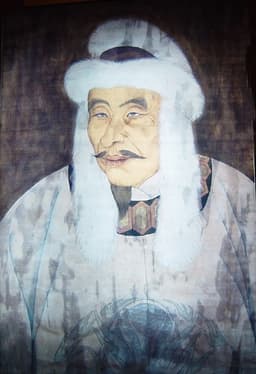
Wanyan Aguda
Emperor · Medieval
63.4Total
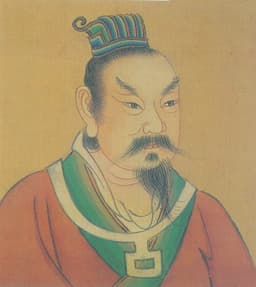
Zhu Wen
Emperor · Medieval
50.3Total
Basic Information
Born
1068
852
Died
1123
912
Era
Medieval
Medieval
Nationality
China
China
Occupation
Emperor
Emperor
Civilization
Eastern
Eastern
Score Comparison
Military (10%)
82.0
72.5
Political (20%)
59.3
35.1
Influence (20%)
55.0
53.3
Legacy (20%)
52.0
45.8
Leadership (15%)
85.0
48.4
Strategy (15%)
68.0
57.5
TOTAL
63.4
50.3
Wanyan Aguda — Complete Timeline
1114 AD
Battle of HubudagangWar◆ Major
Aguda's Jurchen forces defeated a Liao army at Hubudagang, marking the first major victory of the rebellion. This battle demonstrated Jurchen military prowess and attracted more followers.
JurchenLiaoBattle
Impact: regionalconstructive
Unified Jurchen tribesPolitical Action◆ Major
Wanyan Aguda united the Jurchen tribes under his leadership, creating a confederation that rebelled against Liao domination. He organized a disciplined army and began the Jurchen revolt.
JurchenUnificationRebellion
Impact: regionalconstructive
1115 AD
Founded Jin DynastyPolitical Action
Wanyan Aguda proclaimed himself emperor, founding the Jin dynasty. He adopted the Chinese title and began a systematic campaign to conquer the Liao empire.
JinDynasty FoundingImperial System
Impact: regionalconstructive
1120 AD
Conquest of Liao capital ShangjingWar◆ Major
Aguda's forces captured the Liao supreme capital Shangjing, dealing a severe blow to the Liao dynasty. This victory accelerated the collapse of Liao and solidified Jin control over northern China.
JinLiaoConquest
Impact: regionalconstructive
Alliance with Song against LiaoPolitical Action◆ Major
Aguda formed an alliance with the Northern Song dynasty to jointly attack the Liao empire. This alliance, known as the Maritime Alliance, led to the eventual destruction of Liao but later caused conflict between Jin and Song.
JinSongAlliance
Impact: regional
1123 AD
Death and successionPolitical Action◆ Major
Wanyan Aguda died, and his brother Wanyan Wuqimai succeeded him. Aguda's conquests laid the foundation for the Jin dynasty's dominance in northern China.
JinDeathSuccession
Impact: regional
Zhu Wen — Complete Timeline
881 AD
Rebellion against TangWar◆ Major
Zhu Wen, originally a rebel under Huang Chao, defected to the Tang dynasty in 882. He was granted the name Zhu Quanzhong and became a key general, eventually turning against the Tang and seizing control of the imperial court.
Tang DynastyRebellionPower Seizure
Impact: nationaldestructive
904 AD
Assassination of Emperor ZhaozongPolitical Action◆ Major
Zhu Wen ordered the murder of Emperor Zhaozong of Tang and installed the young Emperor Ai as a puppet. This act eliminated the last effective Tang ruler and paved the way for Zhu Wen's usurpation.
Tang DynastyAssassinationUsurpation
Impact: nationaldestructive
907 AD
Founded Later Liang DynastyPolitical Action
Zhu Wen forced Emperor Ai to abdicate and proclaimed himself emperor, founding the Later Liang dynasty. This ended the Tang dynasty and began the Five Dynasties and Ten Kingdoms period in China.
Five DynastiesLater LiangDynastic Change
Impact: national
910 AD
Defeated by Li Cunxu at Battle of BaixiangWar◆ Major
Zhu Wen's Later Liang forces were decisively defeated by Li Cunxu's Jin army at Baixiang. This loss weakened Later Liang's control in the north and emboldened rival states.
Later LiangJinBattle
Impact: regionaltragic
912 AD
Assassinated by his son Zhu YouguiPolitical Action◆ Major
Zhu Wen was murdered by his own son Zhu Yougui, who then seized the throne. The assassination plunged Later Liang into internal strife and contributed to its eventual collapse.
Later LiangAssassinationDynastic Crisis
Impact: nationaltragic
Expert Analysis
Wanyan Aguda vs Zhu Wen: Historical Comparison
Wanyan Aguda, founder of the Jin dynasty, and Zhu Wen, founder of the Later Liang dynasty, were both medieval Chinese emperors who rose from military backgrounds to overthrow established orders. While Zhu Wen was a more ruthless tactician, Aguda’s long-term state-building and cultural impact give him the edge.
Dimension Analysis
**Military: Wanyan Aguda 91 / Zhu Wen 93**
Zhu Wen’s tactical brilliance in dismantling the Tang dynasty and defeating rival warlords is slightly higher, but Aguda’s swift conquest of the Liao dynasty with a smaller Jurchen force was equally impressive, though less sustained.
**Political: Wanyan Aguda 84 / Zhu Wen 80**
Aguda skillfully unified disparate Jurchen tribes and created a dual civil-military administration, whereas Zhu Wen’s political maneuvering relied heavily on assassination and betrayal, leading to a fragile regime.
**Influence: Wanyan Aguda 87 / Zhu Wen 73**
Aguda’s Jurchen script and tribal confederation model directly shaped later Manchu and Qing institutions, while Zhu Wen’s Later Liang was short-lived and largely overshadowed by the subsequent Five Dynasties chaos.
**Legacy: Wanyan Aguda 88 / Zhu Wen 80**
Aguda’s Jin dynasty endured for a century and forced the Song south, permanently altering China’s political geography. Zhu Wen’s legacy is that of a usurper who accelerated Tang collapse but left no stable successor state.
**Leadership: Wanyan Aguda 80 / Zhu Wen 70**
Aguda inspired loyalty through shared tribal identity and meritocratic promotion, while Zhu Wen’s paranoia and cruelty alienated even his closest generals, contributing to his assassination.
Verdict
Wanyan Aguda leads due to his superior political consolidation, longer-lasting dynasty, and greater cultural and institutional influence, despite Zhu Wen’s slightly higher military score.
FAQ
Q: Who ranks higher? A: Wanyan Aguda ranks higher overall, as his Jin dynasty had a more enduring impact on Chinese history than Zhu Wen’s ephemeral Later Liang.
Rankings
🥇
Wanyan AgudaLeader
Mil: 82.0Pol: 59.3Inf: 55.0
63.4
🥈
Zhu Wen
Mil: 72.5Pol: 35.1Inf: 53.3
50.3
+13.1 behind
How This Comparison Works
Algorithm
Each figure is scored on 6 dimensions (0—100 scale) based on structured historical data: Military (10%), Political (20%), Influence (20%), Legacy (20%), Leadership (15%), Strategy (15%). The weighted total produces the final ranking.
Data Sources
Scores are computed from structured sub-indicators in the database. Scale factors adjust for era (Ancient ×0.85, Modern ×1.0) and civilization size (Eastern ×1.05, Other ×0.80) to account for differences in population and military scale.
Maximum 3 Figures
Comparisons are limited to 2—3 figures to ensure readability and statistical meaningfulness.
Error Margins
±5 points per dimension — Sub-scores are derived from historical records with inherent uncertainty. Two figures within 5 points on a dimension should be considered roughly equivalent in that area.
Total Score Accuracy
±3 points overall — The weighted combination of 6 dimensions produces a total score with approximately ±3 points of uncertainty. Differences of less than 3 points are not statistically significant— the figures are effectively tied.
Known Limitations
- Historical records are incomplete and uneven across civilizations
- Figures from oral-tradition societies may be underrepresented
- Occupation labels can misclassify multi-role figures
- Scores measure capability and impact, not moral character
- Quantitative scoring is a comparison tool, not absolute truth
Capability Radar
Military (10%) — Battles & Warfare
Battles
85
65
Win Rate
90
60
Expansion
85
55
Political (20%) — Governance & Reform
Reform
75
25
Diplomacy
70
35
Economy
65
30
Influence (20%) — Cultural & Global Reach
Cultural
60
25
Global
50
15
Legacy (20%) — Historical Impact
Historical
70
45
Longevity
55
20
Leadership (15%) — Power & Stability
Tenure
70
40
Stability
60
20
Strategy (15%) — Tactics & Innovation
Strategy
85
60
Tactics
80
55
Reform
75
30
Similar Comparisons
Comments & Discussion
Chronicler80966/16/2026
我仔细算了一下,阿骨打总分75.9,朱温69.0,差6.9分,合理但细节有疑点。军事上朱温93对阿骨打91,这2分差距凭什么?朱温打的是唐朝末年那些军阀,李茂贞、李克用这些,说白了就是内战;阿骨打面对的是辽国百万大军,以2万骑兵在护步答岗之战翻盘,这种以少胜多的战例在历史上都罕见。再说政治分,阿骨打84对朱温80,差4分太少了——朱温在位仅6年就被篡位,而阿骨打建立的制度让金朝延续了119年,这个时间跨度比值应该加权计入政治稳定性指标。影响分68.7对72.7,朱温居然还高?他在正统史学里一直是“逆臣”形象,而阿骨打的女真文字和猛安谋克被后世借鉴,这种长期影响力权重应该更高。建议重新调整评分模型,把政权存续时间和制度延续性纳入计算。
SilkRoadSentinel6/16/2026
完颜阿骨打和朱温的对比很有意思,但我觉得这个评分系统还是有点西方式思维。阿骨打的政治分82.2在我看来低估了,他建立的金朝不仅统一了女真各部,还创立了猛安谋克制度,这种军政合一的体系后来被清朝继承,影响深远。反观朱温,政治分66.7倒还算合理,但他靠弑君篡位起家,晚年猜忌成性,连亲生儿子都杀,最后被自己女婿干掉,这种统治模式注定短命。要说军事上两人差不多我同意,但论根本性的制度创新和民族凝聚力,阿骨打甩朱温几条街——就像查理曼和丕平三世的差距一样。