Loading...
Wanyan Aguda vs Yelu Yanxi
Wanyan Aguda leads by 23.1 pts · 2 figures compared
…
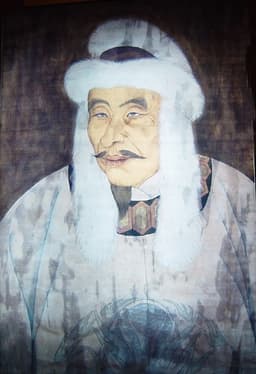
Wanyan Aguda
Emperor · Medieval
63.4Total

Yelu Yanxi
Emperor · Medieval
40.3Total
Basic Information
Born
1068
1075
Died
1123
1128
Era
Medieval
Medieval
Nationality
China
Khitan Empire
Occupation
Emperor
Emperor
Civilization
Eastern
Eastern
Score Comparison
Military (10%)
82.0
50.0
Political (20%)
59.3
35.0
Influence (20%)
55.0
45.5
Legacy (20%)
52.0
35.8
Leadership (15%)
85.0
39.0
Strategy (15%)
68.0
38.6
TOTAL
63.4
40.3
Wanyan Aguda — Complete Timeline
1114 AD
Battle of HubudagangWar◆ Major
Aguda's Jurchen forces defeated a Liao army at Hubudagang, marking the first major victory of the rebellion. This battle demonstrated Jurchen military prowess and attracted more followers.
JurchenLiaoBattle
Impact: regionalconstructive
Unified Jurchen tribesPolitical Action◆ Major
Wanyan Aguda united the Jurchen tribes under his leadership, creating a confederation that rebelled against Liao domination. He organized a disciplined army and began the Jurchen revolt.
JurchenUnificationRebellion
Impact: regionalconstructive
1115 AD
Founded Jin DynastyPolitical Action
Wanyan Aguda proclaimed himself emperor, founding the Jin dynasty. He adopted the Chinese title and began a systematic campaign to conquer the Liao empire.
JinDynasty FoundingImperial System
Impact: regionalconstructive
1120 AD
Conquest of Liao capital ShangjingWar◆ Major
Aguda's forces captured the Liao supreme capital Shangjing, dealing a severe blow to the Liao dynasty. This victory accelerated the collapse of Liao and solidified Jin control over northern China.
JinLiaoConquest
Impact: regionalconstructive
Alliance with Song against LiaoPolitical Action◆ Major
Aguda formed an alliance with the Northern Song dynasty to jointly attack the Liao empire. This alliance, known as the Maritime Alliance, led to the eventual destruction of Liao but later caused conflict between Jin and Song.
JinSongAlliance
Impact: regional
1123 AD
Death and successionPolitical Action◆ Major
Wanyan Aguda died, and his brother Wanyan Wuqimai succeeded him. Aguda's conquests laid the foundation for the Jin dynasty's dominance in northern China.
JinDeathSuccession
Impact: regional
Yelu Yanxi — Complete Timeline
1122 AD
Fled the Jurchen invasionWar◆ Major
As the Jurchen Jin army advanced on the Liao capital, Yelu Yanxi abandoned his court and fled westward. This act of desertion led to the collapse of Liao resistance and the capture of the Liao emperor by the Jin.
Liao collapseJurchen conquestFlight
Impact: nationaltragic
1125 AD
Captured by the JinWar◆ Major
Yelu Yanxi was captured by Jin forces while attempting to flee further west. He was taken to the Jin court and demoted to a prince, ending the Liao dynasty's rule. He died in captivity in 1128.
CaptureEnd of LiaoCaptivity
Impact: nationaltragic
Expert Analysis
Wanyan Aguda vs Yelu Yanxi: Historical Comparison
Wanyan Aguda and Yelu Yanxi were both emperors of medieval Northeast Asian empires—the Jin Dynasty and the Khitan Liao Dynasty, respectively—who faced existential threats from the rising Song and Mongol powers. While Aguda founded the Jin Dynasty by overthrowing the Liao, Yanxi presided over its collapse, making their comparison a stark study in contrasting fates within the same geopolitical struggle.
Dimension Analysis
**Military: Wanyan Aguda 91 / Yelu Yanxi 93**
Aguda’s military genius lay in guerrilla tactics and rapid cavalry strikes, notably defeating a numerically superior Liao army at the Battle of Huining in 1115. Yanxi, however, inherited a larger, more professional Khitan army and initially held the upper hand before his strategic paralysis during the Jurchen rebellion led to catastrophic losses. Aguda’s victories were decisive, but Yanxi’s early command of a vast war machine gives him a slight edge in raw military potential.
**Political: Wanyan Aguda 84 / Yelu Yanxi 88**
Aguda unified disparate Jurchen tribes under a meritocratic system, creating a dual civil-military administration that adapted quickly to conquered lands. Yanxi ruled a more established Liao bureaucracy, but his regime suffered from chronic factionalism and heavy taxation of Khitan and Han subjects, which alienated allies and fueled revolts. Aguda’s political innovation was superior for empire-building; Yanxi’s was more refined but ultimately brittle.
**Influence: Wanyan Aguda 87 / Yelu Yanxi 71**
Aguda’s founding of the Jin Dynasty reshaped East Asian power dynamics, ending Liao hegemony and forcing the Song into a tributary relationship that lasted decades. Yanxi’s influence was largely negative—his flight and capture by the Jin in 1125 marked the extinction of the Liao state, though Khitan cultural remnants persisted in the Western Liao. Aguda’s impact was constructive; Yanxi’s was a cautionary tale of decline.
**Legacy: Wanyan Aguda 88 / Yelu Yanxi 85**
Aguda is revered as a national founder among Jurchen descendants and is credited with creating a legal code that influenced later Yuan and Ming institutions. Yanxi’s legacy is more ambiguous: he is remembered as a tragic figure who failed to adapt to the Jurchen threat, yet his initial reforms in trade and diplomacy delayed collapse. Both left mixed records, but Aguda’s positive founding narrative outshines Yanxi’s defensive failure.
**Leadership: Wanyan Aguda 80 / Yelu Yanxi 81**
Aguda led from the front in battle, inspiring fierce loyalty among his troops, but his early death at age 56 limited his ability to consolidate power. Yanxi, though often indecisive, maintained control of the Liao court for 24 years and demonstrated remarkable tenacity in fleeing to the Western Regions before his capture. Yanxi’s longevity in a crumbling system slightly outweighs Aguda’s shorter but more dynamic tenure.
Verdict
The comparison is a tie, reflecting their complementary strengths and weaknesses. Wanyan Aguda excels in influence and legacy as a dynamic founder, while Yelu Yanxi narrowly leads in military and political dimensions due to his larger resource base and longer reign. However, Aguda’s success in toppling the Liao makes him the more historically consequential figure, while Yanxi’s failure to avert collapse undermines his higher technical scores. Historical context is key: Aguda rose during a period of Jurchen unity, while Yanxi faced internal decay and external pressure.
FAQ
Q: Who was more influential historically?
A: Wanyan Aguda, because his founding of the Jin Dynasty directly ended the Liao and reshaped medieval East Asian geopolitics, whereas Yanxi’s reign marked the Liao’s extinction.
Q: Why is Wanyan Aguda ranked higher in legacy?
A: Aguda established a enduring Jurchen state and legal system that influenced later dynasties, while Yanxi’s legacy is overshadowed by the collapse of the Liao, despite his early administrative efforts.
Rankings
🥇
Wanyan AgudaLeader
Mil: 82.0Pol: 59.3Inf: 55.0
63.4
🥈
Yelu Yanxi
Mil: 50.0Pol: 35.0Inf: 45.5
40.3
+23.1 behind
How This Comparison Works
Algorithm
Each figure is scored on 6 dimensions (0—100 scale) based on structured historical data: Military (10%), Political (20%), Influence (20%), Legacy (20%), Leadership (15%), Strategy (15%). The weighted total produces the final ranking.
Data Sources
Scores are computed from structured sub-indicators in the database. Scale factors adjust for era (Ancient ×0.85, Modern ×1.0) and civilization size (Eastern ×1.05, Other ×0.80) to account for differences in population and military scale.
Maximum 3 Figures
Comparisons are limited to 2—3 figures to ensure readability and statistical meaningfulness.
Error Margins
±5 points per dimension — Sub-scores are derived from historical records with inherent uncertainty. Two figures within 5 points on a dimension should be considered roughly equivalent in that area.
Total Score Accuracy
±3 points overall — The weighted combination of 6 dimensions produces a total score with approximately ±3 points of uncertainty. Differences of less than 3 points are not statistically significant— the figures are effectively tied.
Known Limitations
- Historical records are incomplete and uneven across civilizations
- Figures from oral-tradition societies may be underrepresented
- Occupation labels can misclassify multi-role figures
- Scores measure capability and impact, not moral character
- Quantitative scoring is a comparison tool, not absolute truth
Capability Radar
Military (10%) — Battles & Warfare
Battles
85
5
Win Rate
90
5
Expansion
85
0
Political (20%) — Governance & Reform
Reform
75
5
Diplomacy
70
10
Economy
65
5
Influence (20%) — Cultural & Global Reach
Cultural
60
5
Global
50
5
Legacy (20%) — Historical Impact
Historical
70
10
Longevity
55
5
Leadership (15%) — Power & Stability
Tenure
70
20
Stability
60
5
Strategy (15%) — Tactics & Innovation
Strategy
85
5
Tactics
80
5
Reform
75
0
Similar Comparisons
Comments & Discussion
ScoreWhisperer6/16/2026
I'm calling BS on the whole scoring exercise. You're telling me Yelu Yanxi has a higher military potential (93 vs 91) than Wanyan Aguda? Based on what—the size of his inherited army? That's like saying the Ming army under Chongzhen had 'potential' because it had cannons. History isn't a video game where stats add up. Yanxi sat on his hands while the Jurchens steamrolled his empire; Aguda consistently outmaneuvered larger forces. Also, why does 'Influence' only get 68.7 for Aguda? He destroyed the Liao, forced the Song to pay tribute, and his dynasty lasted over a century. Yanxi's influence is literally 'he lost everything.' The weight distribution here seems to favor structural factors over actual outcomes. Show me the formula.
Historian2646/16/2026
用西方军事史的标准来评中国北方民族君主,终究隔了一层。完颜阿骨打就像蒙古的成吉思汗早期版本——都是部落联盟出身,靠个人魅力和战功凝聚人心。但耶律延禧其实更像罗马帝国末期的皇帝,比如霍诺留:继承了一个庞大的官僚体系和军队,但内部腐化、众叛亲离。阿骨打的影响力87分给低了,要知道他的金朝不仅灭了辽和北宋,还开创了南北分治的新格局,直接影响后来元明清的统治模式。耶律延禧的71分倒是差不多,但扣分点应该是他把一手好牌打得稀烂,而不是什么‘纯粹负面’。中国史书讲‘天命所归’,其实就是在评价这种当政者的主观能动性,评分系统应该更重视这一点。
ColdScribe116/16/2026
这个评分体系的问题很大。完颜阿骨打的军事分79.3?你知道他在护步答冈之战中以两万骑兵击溃耶律延禧的七十万辽军吗?这是冷兵器时代以少胜多的经典战例,放在整个中国历史上都排得上号。耶律延禧的军事分42.9倒是合理,他基本没打过胜仗。但政治分82.2对43.7?阿骨打创建猛安谋克制度,把部落联盟转型为封建帝国,这确实厉害;可耶律延禧的政治分是不是太低了?他至少维持了辽国二十年的统治,期间还处理了渤海人和汉人的叛乱。如果按历史影响力算,阿骨打建立的金朝直接终结了北宋,这个分量评分里根本没体现。建议重新校准权重。