Loading...
Viktor Yushchenko vs Warren Hastings
Warren Hastings leads by 6.8 pts · 2 figures compared
…
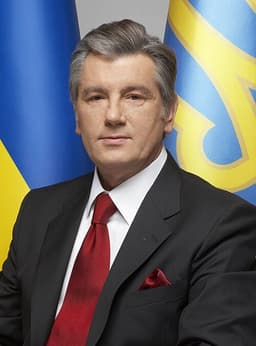
Viktor Yushchenko
Politician · Modern
51.4Total

Warren Hastings
Politician · Modern
58.2Total
Basic Information
Born
1954
1732
Died
—
1818
Era
Modern
Modern
Nationality
Ukraine
United Kingdom
Occupation
Politician
Politician
Civilization
Western
Western
Score Comparison
Military (10%)
49.8
45.0
Political (20%)
68.0
65.0
Influence (20%)
58.0
61.0
Legacy (20%)
46.7
54.0
Leadership (15%)
40.0
72.0
Strategy (15%)
40.7
43.7
TOTAL
51.4
58.2
Viktor Yushchenko — Complete Timeline
2004 AD
Orange Revolution and Election as PresidentPolitical Action
Yushchenko won the 2004 Ukrainian presidential election after the Orange Revolution overturned a fraudulent runoff. He defeated Viktor Yanukovych in a re-run election, taking office in January 2005.
Orange RevolutionElectionDemocracy
Impact: nationalconstructive
Dioxin PoisoningOther◆ Major
Yushchenko was poisoned with dioxin during the presidential campaign, causing severe facial disfigurement and health issues. The poisoning was widely attributed to political opponents, though no one was convicted.
PoisoningAssassination AttemptHealth
Impact: nationaltragic
2005 AD
Pro-European Union PoliciesPolitical Action◆ Major
Yushchenko pursued EU and NATO integration for Ukraine, though progress was slow. He advocated for democratic reforms and anti-corruption measures, but faced internal political opposition.
EUNATOReform
Impact: nationalconstructive
2007 AD
Political Crisis and Early ElectionsPolitical Action◆ Major
Yushchenko dissolved parliament and called early elections after a prolonged political crisis with Prime Minister Viktor Yanukovych. The crisis weakened his presidency and led to a loss of public support.
Political CrisisEarly ElectionsYanukovych
Impact: nationaldestructive
2010 AD
Lost Re-election to Viktor YanukovychPolitical Action◆ Major
Yushchenko lost the 2010 Ukrainian presidential election, receiving only 5.5% of the vote in the first round. Viktor Yanukovych won the presidency, marking a reversal of the Orange Revolution.
ElectionDefeatOrange Revolution
Impact: nationaltragic
Warren Hastings — Complete Timeline
1773 AD
Regulating Act of 1773Reform◆ Major
Hastings implemented the Regulating Act of 1773, which established the office of Governor-General and a Supreme Court in Calcutta. This act aimed to curb corruption and bring British rule in India under greater parliamentary oversight, though it led to conflicts between the Governor-General and the Council.
LegislationGovernanceReform
Impact: regional
Appointed First Governor-General of BengalPolitical Action◆ Major
Warren Hastings was appointed the first Governor-General of Bengal in 1773 under the Regulating Act. He centralized British administration in India and oversaw the East India Company's territories, implementing judicial and revenue reforms that shaped British colonial governance.
Governor-GeneralAdministrationReform
Impact: regional
1774 AD
Rohilla WarWar
Hastings authorized the East India Company's military intervention in the Rohilla War, supporting the Nawab of Awadh against the Rohilla Afghans. The war resulted in the annexation of Rohilkhand and was later criticized as an unjust aggression, contributing to Hastings' impeachment charges.
WarAnnexationControversy
Impact: regionaldestructive
1788 AD
Impeachment TrialPolitical Action◆ Major
Hastings was impeached by the British Parliament in 1788 on charges of corruption, extortion, and mismanagement during his tenure in India. The trial, led by Edmund Burke, lasted seven years and became a landmark in British legal history. Hastings was ultimately acquitted in 1795.
ImpeachmentTrialBurke
Impact: national
Expert Analysis
Origins
Viktor Yushchenko (born 1954) grew up in Soviet Ukraine, the son of a teacher and a veteran. He studied economics and worked in banking, rising to head the National Bank of Ukraine in 1993. His technocratic background shaped his governance style. Warren Hastings (1732–1818) was born in England, orphaned young, and joined the British East India Company at 17. He learned Persian and Bengali, immersing himself in Indian culture. His early career in India exposed him to the complexities of colonial administration.
Rise to Power
Yushchenko's political ascent began with his appointment as Prime Minister in 1999 under President Leonid Kuchma. He implemented economic reforms but resigned in 2001 after losing a no-confidence vote. His rise culminated in the 2004 presidential election. After a fraudulent runoff favoring Viktor Yanukovych, Yushchenko led the Orange Revolution, a series of mass protests. The Supreme Court annulled the result, and Yushchenko won the re-run with 52% of the vote. Warren Hastings rose through the ranks of the East India Company, becoming a member of the Calcutta Council in 1761. His appointment as Governor-General of Bengal in 1773 under the Regulating Act centralized British authority. He expanded Company influence through treaties and military interventions, such as the Rohilla War (1774), where he supported the Nawab of Awadh.
Leadership & Governance
Yushchenko's leadership style was democratic but indecisive. He pursued pro-European integration, seeking EU and NATO membership, but faced opposition from pro-Russian factions. His anti-corruption efforts were hampered by political infighting. He dissolved parliament in 2007 after a crisis with Prime Minister Yanukovych, leading to early elections that weakened his position. Hastings governed with a firm hand, centralizing administration and revenue collection. He implemented the Regulating Act of 1773, establishing a Supreme Court in Calcutta, but his methods were often autocratic. He used divide-and-rule tactics, playing Indian princes against each other. Both leaders faced criticism: Yushchenko for failing to deliver reforms, Hastings for corruption and extortion.
Triumph & Tragedy
Yushchenko's triumph was the Orange Revolution, a peaceful transfer of power that inspired pro-democracy movements. His tragedy was his failure to consolidate reforms. The 2010 election saw him win only 5.5% of the vote, a collapse from 52% in 2004. His dioxin poisoning in 2004, which disfigured his face, became a symbol of his struggle but also a distraction. Hastings' triumphs include stabilizing British rule in Bengal and expanding territory. His tragedy was the impeachment trial (1788–1795), where he was charged with corruption and mismanagement. Although acquitted, the trial ruined his reputation and highlighted the abuses of colonial rule.
Character & Destiny
Yushchenko was cautious and legalistic, often paralyzed by consensus-building. His poisoning left him physically weakened, affecting his stamina. He scored 40.0 in Leadership and 40.7 in Strategy, reflecting his inability to assert control. Hastings was shrewd and resilient, with a Leadership score of 72.0. He navigated complex Indian politics but his arrogance made enemies. Historian Thomas Macaulay described him as having 'a mind of great power' but 'a temper not to be controlled.' His character led to both his successes and his impeachment.
Legacy
Yushchenko's legacy is mixed. The Orange Revolution set a precedent for peaceful protest in Ukraine, but his presidency failed to meet expectations. Ukraine's path to EU integration stalled. He scored 46.7 in Legacy. Hastings left a more lasting impact: the Regulating Act laid the foundation for British imperial governance in India. His administrative reforms, like the revenue system, were adopted by later Governor-Generals. He also patronized Orientalist scholarship, preserving Indian texts. However, his legacy is tainted by colonial exploitation. His total score of 58.2 reflects a greater historical footprint.
Conclusion
Warren Hastings had greater impact than Viktor Yushchenko. Hastings' governance model shaped British India for decades, influencing colonial administration worldwide. Yushchenko's moment of triumph, the Orange Revolution, was significant but fleeting. Hastings scored 58.2 total, with high Leadership (72.0) and Influence (61.0), while Yushchenko scored 51.4 total. Despite his impeachment, Hastings' structural changes outlasted his tenure. Yushchenko's failure to institutionalize reforms limits his legacy. In the balance of historical impact, Hastings' long-term influence surpasses Yushchenko's short-lived democratic breakthrough.
Rankings
🥇
Warren HastingsLeader
Mil: 45.0Pol: 65.0Inf: 61.0
58.2
🥈
Viktor Yushchenko
Mil: 49.8Pol: 68.0Inf: 58.0
51.4
+6.8 behind
How This Comparison Works
Algorithm
Each figure is scored on 6 dimensions (0—100 scale) based on structured historical data: Military (10%), Political (20%), Influence (20%), Legacy (20%), Leadership (15%), Strategy (15%). The weighted total produces the final ranking.
Data Sources
Scores are computed from structured sub-indicators in the database. Scale factors adjust for era (Ancient ×0.85, Modern ×1.0) and civilization size (Eastern ×1.05, Other ×0.80) to account for differences in population and military scale.
Maximum 3 Figures
Comparisons are limited to 2—3 figures to ensure readability and statistical meaningfulness.
Error Margins
±5 points per dimension — Sub-scores are derived from historical records with inherent uncertainty. Two figures within 5 points on a dimension should be considered roughly equivalent in that area.
Total Score Accuracy
±3 points overall — The weighted combination of 6 dimensions produces a total score with approximately ±3 points of uncertainty. Differences of less than 3 points are not statistically significant— the figures are effectively tied.
Known Limitations
- Historical records are incomplete and uneven across civilizations
- Figures from oral-tradition societies may be underrepresented
- Occupation labels can misclassify multi-role figures
- Scores measure capability and impact, not moral character
- Quantitative scoring is a comparison tool, not absolute truth
Capability Radar
Military (10%) — Battles & Warfare
Battles
32
20
Win Rate
31
25
Expansion
33
50
Political (20%) — Governance & Reform
Reform
55
70
Diplomacy
50
60
Economy
40
75
Influence (20%) — Cultural & Global Reach
Cultural
45
40
Global
45
55
Legacy (20%) — Historical Impact
Historical
50
60
Longevity
30
55
Leadership (15%) — Power & Stability
Tenure
60
65
Stability
35
45
Strategy (15%) — Tactics & Innovation
Strategy
37
30
Tactics
39
15
Reform
42
40
Similar Comparisons
Comments & Discussion
No comments yet. Be the first to share your thoughts!