Loading...
Lord Ripon vs Viktor Yushchenko
Lord Ripon leads by 3.9 pts · 2 figures compared
…

Lord Ripon
Politician · Modern
55.3Total
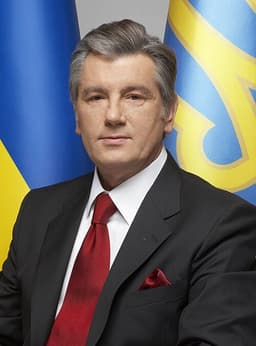
Viktor Yushchenko
Politician · Modern
51.4Total
Basic Information
Born
1827
1954
Died
1909
—
Era
Modern
Modern
Nationality
United Kingdom
Ukraine
Occupation
Politician
Politician
Civilization
Western
Western
Score Comparison
Military (10%)
49.3
49.8
Political (20%)
60.0
68.0
Influence (20%)
56.4
58.0
Legacy (20%)
49.2
46.7
Leadership (15%)
72.0
40.0
Strategy (15%)
41.5
40.7
TOTAL
55.3
51.4
Lord Ripon — Complete Timeline
1881 AD
Factory Act of 1881Reform◆ Major
Lord Ripon's government passed the first Factory Act in India, which regulated child labor by prohibiting employment of children under age seven and limiting working hours for those under twelve. It also required basic safety measures in factories. The act was a pioneering labor reform in colonial India.
IndiaLabor ReformChild Labor
Impact: nationalprogressive
1882 AD
Resolution on Local Self-GovernmentReform
Lord Ripon issued a resolution that laid the foundation for local self-government in India. It established municipal and local boards with elected Indian members, aiming to increase Indian participation in administration. This is often called the 'Magna Carta of local self-government' in India.
IndiaLocal GovernmentDecentralization
Impact: nationalprogressive
Repeal of the Vernacular Press ActReform◆ Major
Lord Ripon repealed the Vernacular Press Act of 1878, which had restricted the freedom of Indian-language newspapers. This action restored press freedom and was welcomed by Indian nationalists, though it was criticized by some British officials as weakening control.
IndiaPress FreedomCivil Liberties
Impact: nationalprogressive
1883 AD
Passed the Ilbert BillReform◆ Major
Lord Ripon introduced the Ilbert Bill, which sought to allow Indian judges to try European British subjects in criminal cases. The bill faced intense opposition from the European community in India and was ultimately passed in a diluted form, but it marked a significant step toward judicial equality.
IndiaJudicial ReformRacial Equality
Impact: nationalprogressive
Viktor Yushchenko — Complete Timeline
2004 AD
Orange Revolution and Election as PresidentPolitical Action
Yushchenko won the 2004 Ukrainian presidential election after the Orange Revolution overturned a fraudulent runoff. He defeated Viktor Yanukovych in a re-run election, taking office in January 2005.
Orange RevolutionElectionDemocracy
Impact: nationalconstructive
Dioxin PoisoningOther◆ Major
Yushchenko was poisoned with dioxin during the presidential campaign, causing severe facial disfigurement and health issues. The poisoning was widely attributed to political opponents, though no one was convicted.
PoisoningAssassination AttemptHealth
Impact: nationaltragic
2005 AD
Pro-European Union PoliciesPolitical Action◆ Major
Yushchenko pursued EU and NATO integration for Ukraine, though progress was slow. He advocated for democratic reforms and anti-corruption measures, but faced internal political opposition.
EUNATOReform
Impact: nationalconstructive
2007 AD
Political Crisis and Early ElectionsPolitical Action◆ Major
Yushchenko dissolved parliament and called early elections after a prolonged political crisis with Prime Minister Viktor Yanukovych. The crisis weakened his presidency and led to a loss of public support.
Political CrisisEarly ElectionsYanukovych
Impact: nationaldestructive
2010 AD
Lost Re-election to Viktor YanukovychPolitical Action◆ Major
Yushchenko lost the 2010 Ukrainian presidential election, receiving only 5.5% of the vote in the first round. Viktor Yanukovych won the presidency, marking a reversal of the Orange Revolution.
ElectionDefeatOrange Revolution
Impact: nationaltragic
Expert Analysis
Origins
**Lord Ripon** (George Robinson, 1st Marquess of Ripon) was born on October 24, 1827, into an aristocratic British family. He was educated at Harrow and Oxford, and entered politics as a Liberal. His early career included serving as Secretary of State for War and for India. Appointed Viceroy of India in 1880, he brought a liberal reformist agenda shaped by his progressive views.
**Viktor Yushchenko** was born on February 23, 1954, in Khoruzhivka, Ukraine, then part of the Soviet Union. He studied economics at the Ternopil Finance and Economics Institute and later worked in banking. He served as Prime Minister of Ukraine from 1999 to 2001, gaining a reputation as a reformer before running for president in 2004.
Rise to Power
Lord Ripon's rise was through the British political establishment. He was appointed Viceroy of India in 1880 by Prime Minister William Gladstone, a fellow Liberal. His tenure was defined by his commitment to liberal reforms, notably the Resolution on Local Self-Government in 1882, which laid the foundation for elected local bodies in India.
Viktor Yushchenko rose to prominence as a reformist Prime Minister under President Leonid Kuchma. After being dismissed in 2001, he became the leader of the opposition. His rise culminated in the 2004 presidential election, where he defeated the pro-Russian candidate Viktor Yanukovych after the Orange Revolution overturned a fraudulent runoff. This turning point saw Yushchenko score 68.0 in political acumen, while Ripon scored 60.0.
Leadership & Governance
Lord Ripon's governance style was reformist and consultative. He passed the Factory Act of 1881, limiting child labor, and repealed the repressive Vernacular Press Act of 1878, restoring press freedom. His most controversial move was the Ilbert Bill (1883), which sought to allow Indian judges to try European British subjects. The bill faced intense opposition from the British community and was ultimately watered down, but it demonstrated his commitment to racial equality. His leadership score of 72.0 reflects his principled approach, though his strategy score of 41.5 indicates limited political maneuvering.
Viktor Yushchenko governed as a pro-Western democrat, pursuing EU and NATO integration. He faced a divided parliament and a powerful Prime Minister in Yanukovych. His leadership was hampered by factional infighting and slow reforms. His leadership score of 40.0 and strategy of 40.7 reflect his difficulties in consolidating power. He dissolved parliament in 2007 to call early elections, but the crisis weakened his authority.
Triumph & Tragedy
Lord Ripon's greatest success was the Resolution on Local Self-Government, which introduced elected local boards and empowered Indian participation. His repeal of the Vernacular Press Act restored press freedoms. However, his failure to pass the Ilbert Bill intact revealed the limits of liberal reform under colonial constraints. The controversy also galvanized British opposition and damaged his reputation.
Yushchenko's triumph was leading the Orange Revolution, a peaceful mass protest that overturned a stolen election and brought democratic change. His dioxin poisoning during the campaign made him a symbol of resistance. However, his presidency was marked by political infighting, economic stagnation, and failure to curb corruption. His re-election loss in 2010 with only 5.5% of the vote was a stark reversal from his 2004 victory. His legacy score of 46.7 reflects this mixed outcome.
Character & Destiny
Lord Ripon was principled and idealistic, often clashing with British imperial interests. His character shaped his destiny as a reformer who pushed boundaries but faced backlash. He was respected by Indian nationalists but criticized by conservatives. His total score of 55.3 reflects a moderate impact within the constraints of his role.
Viktor Yushchenko was seen as a democratic hero but also as indecisive and weak in executing reforms. His character led to initial triumph but subsequent decline. His poisoning and subsequent disfigurement added a tragic dimension. His total score of 51.4 is slightly lower, reflecting his unfulfilled potential.
Legacy
Lord Ripon's legacy endures in the municipal governance structures of India. The local self-government system he initiated evolved into the Panchayati Raj system. His measures on press freedom and labor rights set precedents. He is remembered as the 'Father of Local Self-Government' in India.
Yushchenko's legacy is tied to the Orange Revolution, which demonstrated the power of civil society. However, Ukraine's subsequent political trajectory under Yanukovych and later the Euromaidan revolution overshadowed his achievements. His pro-European stance laid groundwork for future integration efforts, but his presidency is often seen as a missed opportunity.
Conclusion
Lord Ripon had a greater impact than Viktor Yushchenko. Despite serving as a colonial viceroy, his reforms had lasting institutional effects in India, particularly in local governance and press freedom. His total score of 55.3 exceeds Yushchenko's 51.4. Yushchenko's Orange Revolution was a pivotal event, but his presidency failed to deliver sustained change. Ripon's legacy outlasted his tenure, while Yushchenko's faded quickly. Therefore, Lord Ripon stands as the more influential figure.
Rankings
🥇
Lord RiponLeader
Mil: 49.3Pol: 60.0Inf: 56.4
55.3
🥈
Viktor Yushchenko
Mil: 49.8Pol: 68.0Inf: 58.0
51.4
+3.9 behind
How This Comparison Works
Algorithm
Each figure is scored on 6 dimensions (0—100 scale) based on structured historical data: Military (10%), Political (20%), Influence (20%), Legacy (20%), Leadership (15%), Strategy (15%). The weighted total produces the final ranking.
Data Sources
Scores are computed from structured sub-indicators in the database. Scale factors adjust for era (Ancient ×0.85, Modern ×1.0) and civilization size (Eastern ×1.05, Other ×0.80) to account for differences in population and military scale.
Maximum 3 Figures
Comparisons are limited to 2—3 figures to ensure readability and statistical meaningfulness.
Error Margins
±5 points per dimension — Sub-scores are derived from historical records with inherent uncertainty. Two figures within 5 points on a dimension should be considered roughly equivalent in that area.
Total Score Accuracy
±3 points overall — The weighted combination of 6 dimensions produces a total score with approximately ±3 points of uncertainty. Differences of less than 3 points are not statistically significant— the figures are effectively tied.
Known Limitations
- Historical records are incomplete and uneven across civilizations
- Figures from oral-tradition societies may be underrepresented
- Occupation labels can misclassify multi-role figures
- Scores measure capability and impact, not moral character
- Quantitative scoring is a comparison tool, not absolute truth
Capability Radar
Military (10%) — Battles & Warfare
Battles
30
32
Win Rate
33
31
Expansion
33
33
Political (20%) — Governance & Reform
Reform
75
55
Diplomacy
65
50
Economy
55
40
Influence (20%) — Cultural & Global Reach
Cultural
40
45
Global
40
45
Legacy (20%) — Historical Impact
Historical
50
50
Longevity
45
30
Leadership (15%) — Power & Stability
Tenure
60
60
Stability
60
35
Strategy (15%) — Tactics & Innovation
Strategy
38
37
Tactics
39
39
Reform
42
42
Similar Comparisons
Comments & Discussion
No comments yet. Be the first to share your thoughts!