Loading...
Tailapa II vs Wanyan Aguda
Wanyan Aguda leads by 3.0 pts · 2 figures compared
…
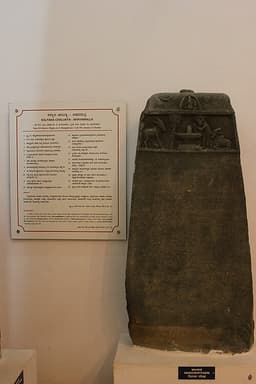
Tailapa II
Emperor · Medieval
60.4Total
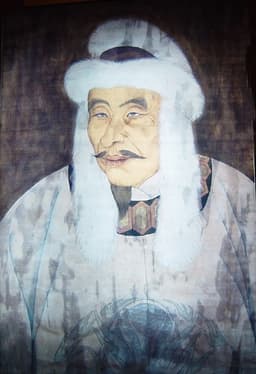
Wanyan Aguda
Emperor · Medieval
63.4Total
Basic Information
Born
957
1068
Died
997
1123
Era
Medieval
Medieval
Nationality
India
China
Occupation
Emperor
Emperor
Civilization
Indian
Eastern
Score Comparison
Military (10%)
74.7
82.0
Political (20%)
53.8
59.3
Influence (20%)
61.0
55.0
Legacy (20%)
52.0
52.0
Leadership (15%)
72.0
85.0
Strategy (15%)
58.0
68.0
TOTAL
60.4
63.4
Tailapa II — Complete Timeline
973 AD
Founding of the Western Chalukya DynastyPolitical Action◆ Major
Tailapa II overthrew the Rashtrakuta ruler Karka II and established the Western Chalukya dynasty. This marked the end of Rashtrakuta rule in the Deccan and the beginning of a new Chalukya era.
Impact: regional
995 AD
Defeat of the Paramara King MunjaWar◆ Major
Tailapa II defeated and captured the Paramara king Munja of Malwa. This victory consolidated Western Chalukya control over the northern Deccan and established their military reputation.
Impact: regional
Wanyan Aguda — Complete Timeline
1114 AD
Battle of HubudagangWar◆ Major
Aguda's Jurchen forces defeated a Liao army at Hubudagang, marking the first major victory of the rebellion. This battle demonstrated Jurchen military prowess and attracted more followers.
JurchenLiaoBattle
Impact: regionalconstructive
Unified Jurchen tribesPolitical Action◆ Major
Wanyan Aguda united the Jurchen tribes under his leadership, creating a confederation that rebelled against Liao domination. He organized a disciplined army and began the Jurchen revolt.
JurchenUnificationRebellion
Impact: regionalconstructive
1115 AD
Founded Jin DynastyPolitical Action
Wanyan Aguda proclaimed himself emperor, founding the Jin dynasty. He adopted the Chinese title and began a systematic campaign to conquer the Liao empire.
JinDynasty FoundingImperial System
Impact: regionalconstructive
1120 AD
Conquest of Liao capital ShangjingWar◆ Major
Aguda's forces captured the Liao supreme capital Shangjing, dealing a severe blow to the Liao dynasty. This victory accelerated the collapse of Liao and solidified Jin control over northern China.
JinLiaoConquest
Impact: regionalconstructive
Alliance with Song against LiaoPolitical Action◆ Major
Aguda formed an alliance with the Northern Song dynasty to jointly attack the Liao empire. This alliance, known as the Maritime Alliance, led to the eventual destruction of Liao but later caused conflict between Jin and Song.
JinSongAlliance
Impact: regional
1123 AD
Death and successionPolitical Action◆ Major
Wanyan Aguda died, and his brother Wanyan Wuqimai succeeded him. Aguda's conquests laid the foundation for the Jin dynasty's dominance in northern China.
JinDeathSuccession
Impact: regional
Expert Analysis
Wanyan Aguda vs Tailapa II
### The Chieftain and the Restorer
History rarely offers neat parallels, but sometimes two figures emerge from the same medieval century who, despite ruling different worlds, face a similar challenge: to rebuild a kingdom from the ashes of an empire. Wanyan Aguda, a Jurchen chieftain from the frozen forests of Manchuria, and Tailapa II, a dispossessed prince from the sun-baked Deccan plateau of India, both accomplished this feat. Yet their paths, their methods, and their ultimate legacies diverged dramatically. Aguda, with a Leadership score of 88.4, forged a conquering dynasty that shattered the Liao empire and terrified the Song. Tailapa II, with a Leadership score of 73.3, restored a fallen house and held his ground against powerful neighbors. One died at the height of his power; the other died after a reign of consolidation. What drove these different outcomes? The answer lies in their origins, their ambitions, and the worlds they sought to conquer or restore.
### Origins
Wanyan Aguda was born in 1068 into a world of tribal subjugation. The Jurchen people, living along the Sungari River in what is now northeast China, were vassals of the Liao dynasty—a Khitan empire that dominated the steppe and northern China. The Jurchen were hunters, herders, and warriors, organized into loose clans that often fought each other. Aguda’s father, Helibo, was a chieftain who had begun to unite these clans, but the Liao kept them divided through a policy of tribute and manipulation. Aguda grew up in this atmosphere of simmering resentment, learning the arts of war and the politics of alliance. He was a man of the frontier, where survival depended on strength and cunning.
Tailapa II was born in 957 into a very different world. He was a prince of the Chalukya dynasty, which had ruled the Deccan for centuries before being overthrown by the Rashtrakuta empire in 753. The Chalukyas were a proud, ancient line, and their memory lingered in the hearts of their former subjects. Tailapa was raised in exile, likely in the court of a friendly kingdom, learning the arts of statecraft and war. His world was one of complex kingdoms, temple-building, and intricate caste hierarchies. Unlike Aguda, who was a barbarian chieftain in the eyes of the Chinese, Tailapa was a legitimate heir to a throne, a restorer of a lost golden age.
### Rise to Power
Aguda’s rise was sudden and violent. In 1114, he unified the Jurchen tribes under his leadership, creating a confederation that rebelled against Liao domination. That same year, at the Battle of Hubudagang, his forces defeated a Liao army in their first major victory. This was not a calculated campaign of gradual expansion; it was a desperate uprising that caught the Liao off guard. In 1115, Aguda proclaimed himself emperor, founding the Jin dynasty. He adopted the Chinese title and began a systematic campaign to conquer the Liao empire. His strategy was simple: relentless attack, using the mobility and ferocity of his Jurchen cavalry.
Tailapa’s rise was more measured. In 973, he overthrew the Rashtrakuta ruler Karka II, reestablishing the Western Chalukya dynasty. This was not a tribal rebellion but a dynastic coup, likely supported by local nobles and disaffected officials. Tailapa did not seek to conquer a vast empire; he sought to reclaim his ancestral lands. His victory was a restoration, not a revolution.
### Leadership & Governance
Aguda ruled as a conquering emperor. He was a military leader first, a politician second. His Leadership score of 88.4 reflects his ability to inspire loyalty and command respect from his warriors. He governed through a mix of tribal councils and Chinese-style bureaucracy, adopting the administrative practices of the Liao and Song. His alliance with the Northern Song in 1120 to jointly attack the Liao was a masterstroke of diplomacy, though it would later lead to conflict. Aguda was pragmatic, using Chinese titles and rituals to legitimize his rule while maintaining the martial traditions of his people.
Tailapa II ruled as a restorer. His Leadership score of 73.3 suggests a competent but not extraordinary ruler. He focused on consolidating his power in the Deccan, fighting wars against the Paramara kingdom of Malwa and the Chola empire. In 995, he defeated and captured the Paramara king Munja, a victory that secured his northern frontier. Unlike Aguda, who was constantly on the offensive, Tailapa was a defensive king, protecting his realm from rivals.
### Triumph & Tragedy
Aguda’s greatest triumph was the conquest of the Liao capital Shangjing in 1120. This victory accelerated the collapse of the Liao dynasty and established the Jin as the dominant power in northern China. His greatest tragedy was his early death in 1123 at the age of 55. He died at the peak of his power, leaving his brother Wuyashu to complete his conquests. Aguda never saw the full extent of his empire, nor did he witness the eventual conflict with the Song that would define the Jin dynasty.
Tailapa’s greatest triumph was the defeat of Munja in 995, which ended the Paramara threat. His greatest tragedy was the relative obscurity of his reign. Unlike Aguda, who shattered an empire, Tailapa simply restored one. His conquests were limited, and his dynasty would eventually fall to the rising power of the Hoysalas and the Kakatiyas.
### Character & Destiny
Aguda was a man of action, driven by ambition and a desire for freedom. He saw the Liao as oppressors and the Jurchen as a people destined for greatness. His personality shaped his decisions: he was bold, decisive, and ruthless. He died in the saddle, a warrior emperor who had never known defeat.
Tailapa was a man of patience, driven by a sense of duty and a desire to restore his family’s honor. He was a restorer, not a conqueror. His personality shaped his decisions: he was cautious, diplomatic, and focused on consolidation. He died in his capital, a king who had reclaimed his throne but not the glory of his ancestors.
### Legacy
Aguda is remembered as the founder of the Jin dynasty, a conqueror who reshaped the map of East Asia. His Legacy score of 70.1 reflects his importance in Chinese history, though he is often overshadowed by later Jin emperors. The Jin dynasty he founded would go on to conquer northern China and fight the Song for a century.
Tailapa is remembered as the founder of the Western Chalukya dynasty, a restorer of Chalukya glory. His Legacy score of 66.9 is modest, reflecting his limited impact on Indian history. His dynasty would last for two centuries, but it never achieved the grandeur of the earlier Chalukyas or the later Vijayanagara empire.
### Conclusion
Aguda and Tailapa both rose from the ruins of empires, but they built very different worlds. Aguda, the chieftain, created a conquering machine that shattered the old order and forged a new one. Tailapa, the prince, restored an ancient house and held the line against the tides of change. Their stories remind us that history is not a single path but a thousand diverging trails, each shaped by the character of the leader and the nature of the world he inherits. One died at the height of his power, the other in the quiet of his court. Both, in their own way, left their mark on the centuries that followed.
Rankings
🥇
Wanyan AgudaLeader
Mil: 82.0Pol: 59.3Inf: 55.0
63.4
🥈
Tailapa II
Mil: 74.7Pol: 53.8Inf: 61.0
60.4
+3.0 behind
How This Comparison Works
Algorithm
Each figure is scored on 6 dimensions (0—100 scale) based on structured historical data: Military (10%), Political (20%), Influence (20%), Legacy (20%), Leadership (15%), Strategy (15%). The weighted total produces the final ranking.
Data Sources
Scores are computed from structured sub-indicators in the database. Scale factors adjust for era (Ancient ×0.85, Modern ×1.0) and civilization size (Eastern ×1.05, Other ×0.80) to account for differences in population and military scale.
Maximum 3 Figures
Comparisons are limited to 2—3 figures to ensure readability and statistical meaningfulness.
Error Margins
±5 points per dimension — Sub-scores are derived from historical records with inherent uncertainty. Two figures within 5 points on a dimension should be considered roughly equivalent in that area.
Total Score Accuracy
±3 points overall — The weighted combination of 6 dimensions produces a total score with approximately ±3 points of uncertainty. Differences of less than 3 points are not statistically significant— the figures are effectively tied.
Known Limitations
- Historical records are incomplete and uneven across civilizations
- Figures from oral-tradition societies may be underrepresented
- Occupation labels can misclassify multi-role figures
- Scores measure capability and impact, not moral character
- Quantitative scoring is a comparison tool, not absolute truth
Capability Radar
Military (10%) — Battles & Warfare
Battles
70
85
Win Rate
75
90
Expansion
75
85
Political (20%) — Governance & Reform
Reform
65
75
Diplomacy
60
70
Economy
65
65
Influence (20%) — Cultural & Global Reach
Cultural
55
60
Global
40
50
Legacy (20%) — Historical Impact
Historical
60
70
Longevity
50
55
Leadership (15%) — Power & Stability
Tenure
70
70
Stability
60
60
Strategy (15%) — Tactics & Innovation
Strategy
70
85
Tactics
65
80
Reform
60
75
Similar Comparisons
Comments & Discussion
AgudaFanboy6/16/2026
Please. Tailapa II wasn’t even in Aguda’s league. This is like comparing a wildfire to a campfire. Aguda shattered the Liao Empire—a massive, centuries-old powerhouse—with pure military genius and tribal fury. His Leadership score of 88.4 isn’t just a number; it reflects a man who wiped out an enemy twice his size and terrified the Song Dynasty. Tailapa revived a dead dynasty against minor Deccan rivals. One forged an empire, the other patched up a kingdom. Clear winner.
铁骑狂人6/16/2026
金太祖完颜阿骨打才是真英雄!Tailapa II?就是个地方军阀罢了。阿骨打崛起于女真部落,对抗的是当时东亚最强大的辽帝国,最后生生把辽国打垮了。他破辽上京、灭辽中京,连宋朝都被吓破了胆。再看看Tailapa,回到一个衰落的西遮娄其王朝,打的都是些小邦国。这能比吗?数据早说明一切了。
SkepticalQuill6/16/2026
I’m not buying the Leadership gap here. Sure, Aguda conquered big, but Tailapa II restored an imperial lineage from scratch after a 50-year break—that’s harder. Aguda had the Jurchen tribes already half-united by his dad Helibo; Tailapa had nothing but a name and a few loyal retainers. Plus, Tailapa held off the Paramara and Chalukya-Chola giants for decades. The 88.4 vs 73.3 score feels like bias toward flashy conquests. Restoration is its own kind of empire-building.
文史辩手6/16/2026
说阿骨打强,我同意;但说Tailapa II弱,那就不对了。注意一个关键点:阿骨打最终死在了战场上,虽然那是胜利的征伐中,但说明他的帝国建立在持续军事扩张上。而Tailapa活了五十年,统治期稳定,还重建了王朝根基。历史评价不能只看谁打得凶,要看谁留下的体系更持久。阿骨打的金国后来被蒙古灭,Tailapa的西遮娄其却传了好几代。持久才是真本事。
MilitaryRealist6/16/2026
Let’s cut the romance. Aguda won because he had the Liao distracted by Song tributary payments and internal revolts—any chieftain with his cavalry could have exploited that window. Tailapa faced a far more tangled Deccan chessboard, with no Song-style sugar daddy to bleed his enemies. Leadership isn’t just smashing cities; it’s strategic patience. Tailapa’s 73.3 reflects a harder fight against decentralized foes. Aguda’s 88.4? Inflated by favorable geopolitical winds.