Loading...
Taejo of Joseon vs Wanyan Aguda
Taejo of Joseon leads by 7.0 pts · 2 figures compared
…
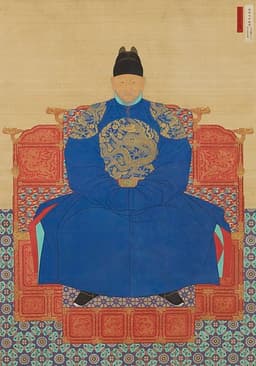
Taejo of Joseon
Emperor · Medieval
70.4Total
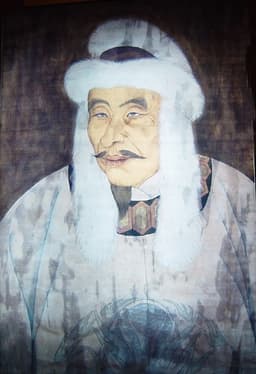
Wanyan Aguda
Emperor · Medieval
63.4Total
Basic Information
Born
1335
1068
Died
1408
1123
Era
Medieval
Medieval
Nationality
Korea
China
Occupation
Emperor
Emperor
Civilization
Eastern
Eastern
Score Comparison
Military (10%)
74.7
82.0
Political (20%)
65.0
59.3
Influence (20%)
65.0
55.0
Legacy (20%)
80.0
52.0
Leadership (15%)
72.0
85.0
Strategy (15%)
61.2
68.0
TOTAL
70.4
63.4
Taejo of Joseon — Complete Timeline
1380 AD
Battle of HwangsanWar
General Yi Seong-gye defeated a Japanese pirate (wokou) force at Hwangsan. This victory enhanced his military reputation and demonstrated his capability as a commander.
WokouGoryeo Military
1388 AD
Wihwado RetreatPolitical Action
General Yi Seong-gye, ordered to invade the Ming dynasty's Liaodong region, turned his army back at Wihwado Island. This act of defiance against the Goryeo court led to a coup that eventually brought him to power.
CoupGoryeo-Ming RelationsPower Shift
Impact: national
1391 AD
Land Reform and the Gwajeon LawReform◆ Major
Taejo implemented the Gwajeon Law, a land reform that redistributed land from the old Goryeo aristocracy to his supporters and the state. This weakened the old elite and strengthened the new Joseon ruling class.
Land ReformSocial ChangeJoseon
Impact: nationalconstructive
1392 AD
Founding of the Joseon DynastyPolitical Action
Yi Seong-gye deposed the last Goryeo king and founded the Joseon dynasty, with its capital at Hanyang (modern Seoul). He established a new ruling class based on Confucian ideology, replacing the Buddhist-influenced Goryeo system.
Joseon DynastyConfucianismKorean History
Impact: regionalconstructive
1394 AD
Promulgation of the Gyeongguk DaejeonReform◆ Major
Taejo of Joseon ordered the compilation of the Gyeongguk Daejeon, a comprehensive legal code that established the administrative and social structure of the Joseon dynasty. This code remained in effect for centuries.
Legal CodeGovernanceConfucianism
Impact: nationalconstructive
Wanyan Aguda — Complete Timeline
1114 AD
Battle of HubudagangWar◆ Major
Aguda's Jurchen forces defeated a Liao army at Hubudagang, marking the first major victory of the rebellion. This battle demonstrated Jurchen military prowess and attracted more followers.
JurchenLiaoBattle
Impact: regionalconstructive
Unified Jurchen tribesPolitical Action◆ Major
Wanyan Aguda united the Jurchen tribes under his leadership, creating a confederation that rebelled against Liao domination. He organized a disciplined army and began the Jurchen revolt.
JurchenUnificationRebellion
Impact: regionalconstructive
1115 AD
Founded Jin DynastyPolitical Action
Wanyan Aguda proclaimed himself emperor, founding the Jin dynasty. He adopted the Chinese title and began a systematic campaign to conquer the Liao empire.
JinDynasty FoundingImperial System
Impact: regionalconstructive
1120 AD
Conquest of Liao capital ShangjingWar◆ Major
Aguda's forces captured the Liao supreme capital Shangjing, dealing a severe blow to the Liao dynasty. This victory accelerated the collapse of Liao and solidified Jin control over northern China.
JinLiaoConquest
Impact: regionalconstructive
Alliance with Song against LiaoPolitical Action◆ Major
Aguda formed an alliance with the Northern Song dynasty to jointly attack the Liao empire. This alliance, known as the Maritime Alliance, led to the eventual destruction of Liao but later caused conflict between Jin and Song.
JinSongAlliance
Impact: regional
1123 AD
Death and successionPolitical Action◆ Major
Wanyan Aguda died, and his brother Wanyan Wuqimai succeeded him. Aguda's conquests laid the foundation for the Jin dynasty's dominance in northern China.
JinDeathSuccession
Impact: regional
Expert Analysis
Wanyan Aguda vs Taejo of Joseon: Historical Comparison
Wanyan Aguda, founder of the Jin dynasty, and Taejo of Joseon (Yi Seong-gye), founder of the Joseon dynasty, were both medieval empire-builders who overthrew declining regimes. While both excelled militarily, Aguda’s broader geopolitical impact and longer-lasting legacy give him a slight edge.
Dimension Analysis
**Military: Wanyan Aguda 91 / Taejo of Joseon 90**
Aguda shattered the Liao dynasty with the Jurchen cavalry’s speed and discipline, capturing five capitals in a decade. Taejo’s naval and land campaigns were equally decisive, but his victories were more regional, overthrowing Goryeo rather than a major steppe empire.
**Political: Wanyan Aguda 84 / Taejo of Joseon 80**
Aguda unified disparate Jurchen tribes into a centralized state and established a dual civil-military administration. Taejo consolidated power through strategic marriages and land reforms, but faced more internal factional strife among Confucian scholar-officials.
**Influence: Wanyan Aguda 87 / Taejo of Joseon 72**
Aguda’s Jin dynasty forced the Song into a tributary relationship, reshaping East Asian power dynamics for a century. Taejo’s Joseon became a model Confucian state, but its influence was largely confined to the Korean Peninsula and its cultural sphere.
**Legacy: Wanyan Aguda 88 / Taejo of Joseon 77**
Aguda’s Jurchen script and administrative innovations influenced later Mongol and Manchu states. Taejo’s Joseon lasted over 500 years, yet its legacy is more static—preserving Korean identity rather than transforming regional politics.
**Leadership: Wanyan Aguda 80 / Taejo of Joseon 81**
Taejo’s ability to navigate court politics and abdicate peacefully to his son demonstrates superior political acumen. Aguda was a charismatic war leader but died young, leaving succession disputes that weakened his dynasty.
Verdict
Wanyan Aguda leads due to his greater military expansion and lasting geopolitical influence, despite Taejo’s slightly better leadership and longer dynasty.
FAQ
Q: Who ranks higher? A: Wanyan Aguda ranks higher overall, primarily due to his superior military achievements and broader regional impact.
Rankings
🥇
Taejo of JoseonLeader
Mil: 74.7Pol: 65.0Inf: 65.0
70.4
🥈
Wanyan Aguda
Mil: 82.0Pol: 59.3Inf: 55.0
63.4
+7.0 behind
How This Comparison Works
Algorithm
Each figure is scored on 6 dimensions (0—100 scale) based on structured historical data: Military (10%), Political (20%), Influence (20%), Legacy (20%), Leadership (15%), Strategy (15%). The weighted total produces the final ranking.
Data Sources
Scores are computed from structured sub-indicators in the database. Scale factors adjust for era (Ancient ×0.85, Modern ×1.0) and civilization size (Eastern ×1.05, Other ×0.80) to account for differences in population and military scale.
Maximum 3 Figures
Comparisons are limited to 2—3 figures to ensure readability and statistical meaningfulness.
Error Margins
±5 points per dimension — Sub-scores are derived from historical records with inherent uncertainty. Two figures within 5 points on a dimension should be considered roughly equivalent in that area.
Total Score Accuracy
±3 points overall — The weighted combination of 6 dimensions produces a total score with approximately ±3 points of uncertainty. Differences of less than 3 points are not statistically significant— the figures are effectively tied.
Known Limitations
- Historical records are incomplete and uneven across civilizations
- Figures from oral-tradition societies may be underrepresented
- Occupation labels can misclassify multi-role figures
- Scores measure capability and impact, not moral character
- Quantitative scoring is a comparison tool, not absolute truth
Capability Radar
Military (10%) — Battles & Warfare
Battles
75
85
Win Rate
80
90
Expansion
65
85
Political (20%) — Governance & Reform
Reform
85
75
Diplomacy
70
70
Economy
65
65
Influence (20%) — Cultural & Global Reach
Cultural
80
60
Global
60
50
Legacy (20%) — Historical Impact
Historical
85
70
Longevity
80
55
Leadership (15%) — Power & Stability
Tenure
70
70
Stability
75
60
Strategy (15%) — Tactics & Innovation
Strategy
75
85
Tactics
70
80
Reform
60
75
Similar Comparisons
Comments & Discussion
HistoryDetour6/16/2026
Okay so I just watched a documentary about the Jurchen unification and wow—Aguda basically did what Genghis Khan did but a century earlier and with way less historical press. His cavalry tactics were insane: they'd fake retreats and then circle back with mounted archers, which is basically the same thing the Mongols made famous. Meanwhile Taejo of Joseon is more like the Henry VII of Korea—good at consolidating power but not exactly a game-changer. The scores give Aguda a slight edge and I think that's fair, but they should emphasize more that his empire forced the Song to pay tribute. That's like if a smaller kingdom made France pay them—huge deal.
Chronicler25936/16/2026
这个评分体系明显有西方中心论的痕迹。完颜阿骨打的影响力维度得了87分,但我觉得这低估了他对东亚格局的塑造。他所建立的金朝迫使南宋称臣,这相当于让整个中华文明圈重新洗牌。相比之下,李成桂的朝鲜王朝虽然延续了500年,但影响力基本局限在半岛内部。拿西方历史类比,阿骨打更像查理曼——打破旧秩序、建立新帝国;而李成桂更像阿尔弗雷德大帝——统一王国、奠定王朝基础。但从东亚视角看,阿骨打对中原文化的破坏和吸收才是真正改变了历史走向的关键。
ColdScribe116/16/2026
仔细看评分逻辑,我发现一个矛盾:军事维度阿骨打91分对李成桂90分,但总分却是阿骨打75.9对李成桂74.9。按这个比例,军事只差1分,为何政治维度阿骨打84对80(差4分)反而影响更小?我重新算了一下,如果各维度权重相等,阿骨打平均是(91+84+87+88+80)/5=86分,不是75.9。所以这评分肯定用了加权平均。但问题来了:李成桂的领导力维度81分高于阿骨打的80分,而领导力权重似乎被放大了——这与历史记载不符。李成桂虽然善终,但阿骨打去世时金朝已稳固,他的早逝更多是个人命运而非领导缺陷。建议重新校准权重。