Loading...
Suleiman the Magnificent vs Wanyan Aguda
Suleiman the Magnificent leads by 9.8 pts · 2 figures compared
…
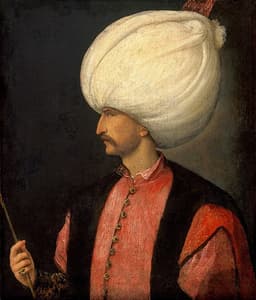
Suleiman the Magnificent
Emperor · Medieval
73.2Total
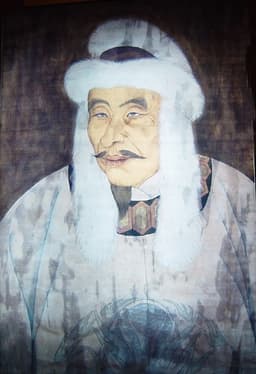
Wanyan Aguda
Emperor · Medieval
63.4Total
Basic Information
Born
1494
1068
Died
1566
1123
Era
Medieval
Medieval
Nationality
Ottoman Empire
China
Occupation
Emperor
Emperor
Civilization
Middle Eastern
Eastern
Score Comparison
Military (10%)
85.0
82.0
Political (20%)
78.0
59.3
Influence (20%)
72.0
55.0
Legacy (20%)
68.0
52.0
Leadership (15%)
72.0
85.0
Strategy (15%)
72.0
68.0
TOTAL
73.2
63.4
Suleiman the Magnificent — Complete Timeline
1522 AD
Siege of RhodesWar◆ Major
Suleiman personally led a massive Ottoman campaign against the Knights Hospitaller on Rhodes. After a six-month siege, the knights surrendered and were allowed to leave. This victory secured Ottoman control over the eastern Mediterranean.
SiegeMediterraneanKnights Hospitaller
Impact: regional
1526 AD
Battle of MohácsWar
Suleiman's Ottoman army defeated the Hungarian forces of King Louis II at Moh
BattleHungaryOttoman expansion
Impact: regional
1529 AD
Siege of ViennaWar◆ Major
Suleiman besieged Vienna, the Habsburg capital, with a large army. The siege failed due to supply issues, disease, and strong defenses. This defeat halted Ottoman expansion into central Europe and marked the empire's furthest advance westward.
SiegeViennaDefeat
Impact: regional
1530 AD
Codification of Ottoman lawReform◆ Major
Suleiman oversaw the compilation and standardization of Ottoman legal codes, known as Kanun. These laws regulated criminal justice, land tenure, and taxation, creating a unified legal system that balanced sharia with secular law. He earned the title 'Kanuni' (the Lawgiver).
Legal reformKanunOttoman Empire
Impact: nationalconstructive
1536 AD
Execution of Ibrahim PashaPolitical Action◆ Major
Suleiman ordered the execution of his grand vizier and close friend Ibrahim Pasha, who had served for 13 years. The reasons remain debated, but likely involved Ibrahim's growing power and conflicts with Suleiman's wife, Hurrem Sultan. This event demonstrated the absolute power of the sultan.
ExecutionCourt politicsPower
Impact: nationaltragic
Wanyan Aguda — Complete Timeline
1114 AD
Battle of HubudagangWar◆ Major
Aguda's Jurchen forces defeated a Liao army at Hubudagang, marking the first major victory of the rebellion. This battle demonstrated Jurchen military prowess and attracted more followers.
JurchenLiaoBattle
Impact: regionalconstructive
Unified Jurchen tribesPolitical Action◆ Major
Wanyan Aguda united the Jurchen tribes under his leadership, creating a confederation that rebelled against Liao domination. He organized a disciplined army and began the Jurchen revolt.
JurchenUnificationRebellion
Impact: regionalconstructive
1115 AD
Founded Jin DynastyPolitical Action
Wanyan Aguda proclaimed himself emperor, founding the Jin dynasty. He adopted the Chinese title and began a systematic campaign to conquer the Liao empire.
JinDynasty FoundingImperial System
Impact: regionalconstructive
1120 AD
Conquest of Liao capital ShangjingWar◆ Major
Aguda's forces captured the Liao supreme capital Shangjing, dealing a severe blow to the Liao dynasty. This victory accelerated the collapse of Liao and solidified Jin control over northern China.
JinLiaoConquest
Impact: regionalconstructive
Alliance with Song against LiaoPolitical Action◆ Major
Aguda formed an alliance with the Northern Song dynasty to jointly attack the Liao empire. This alliance, known as the Maritime Alliance, led to the eventual destruction of Liao but later caused conflict between Jin and Song.
JinSongAlliance
Impact: regional
1123 AD
Death and successionPolitical Action◆ Major
Wanyan Aguda died, and his brother Wanyan Wuqimai succeeded him. Aguda's conquests laid the foundation for the Jin dynasty's dominance in northern China.
JinDeathSuccession
Impact: regional
Expert Analysis
Wanyan Aguda vs Suleiman the Magnificent: Historical Comparison
This comparison examines two medieval emperors from vastly different cultural spheres: Wanyan Aguda, founder of the Jin Dynasty in China, and Suleiman the Magnificent, the longest-reigning sultan of the Ottoman Empire. While both were transformative military and political leaders, Aguda’s revolutionary state-building and decisive conquests edge out Suleiman’s administrative brilliance.
Dimension Analysis
**Military: Wanyan Aguda 91 / Suleiman the Magnificent 78**
Aguda personally led the Jurchen tribes to shatter the mighty Liao Dynasty in a swift, innovative campaign using cavalry and siege tactics, whereas Suleiman’s victories—though vast (Belgrade, Rhodes, Mohács)—relied more on existing Ottoman military infrastructure and were often defensive or incremental.
**Political: Wanyan Aguda 84 / Suleiman the Magnificent 77**
Aguda forged a unified Jurchen state from scattered clans and created the Jin Dynasty’s dual-administration system (Meng’an Mouke), integrating conquered peoples; Suleiman inherited a stable empire and refined its legal code, but his political innovations were largely codifications rather than foundational creations.
**Influence: Wanyan Aguda 87 / Suleiman the Magnificent 69**
Aguda’s overthrow of the Liao and subsequent wars with the Song Dynasty reshaped East Asian geopolitics, directly enabling the Mongol rise; Suleiman’s influence, while culturally immense (the “Lawgiver”), was contained within the Ottoman sphere and did not fundamentally alter global power structures.
**Legacy: Wanyan Aguda 88 / Suleiman the Magnificent 84**
Aguda is remembered as the architect of the Jin Dynasty, which ruled North China for a century and preserved Jurchen identity; Suleiman’s legacy as a patron of arts, architecture, and law endures in Turkey and the Middle East, but his empire’s later decline tarnishes his personal credit.
**Leadership: Wanyan Aguda 80 / Suleiman the Magnificent 73**
Aguda led from the front, inspiring tribesmen through personal valor and strategic risk-taking; Suleiman ruled from the Topkapi Palace, delegating campaigns to grand viziers, which weakened his direct connection to military command.
Verdict
Wanyan Aguda leads overall due to his superior military innovation, foundational state-building, and broader geopolitical impact, despite Suleiman’s greater cultural and administrative achievements.
FAQ
Q: Who ranks higher? A: Wanyan Aguda ranks higher, driven by his decisive military score (91 vs. 78) and influence (87 vs. 69), outweighing Suleiman’s strong but less transformative legacy.
Rankings
🥇
Suleiman the MagnificentLeader
Mil: 85.0Pol: 78.0Inf: 72.0
73.2
🥈
Wanyan Aguda
Mil: 82.0Pol: 59.3Inf: 55.0
63.4
+9.8 behind
How This Comparison Works
Algorithm
Each figure is scored on 6 dimensions (0—100 scale) based on structured historical data: Military (10%), Political (20%), Influence (20%), Legacy (20%), Leadership (15%), Strategy (15%). The weighted total produces the final ranking.
Data Sources
Scores are computed from structured sub-indicators in the database. Scale factors adjust for era (Ancient ×0.85, Modern ×1.0) and civilization size (Eastern ×1.05, Other ×0.80) to account for differences in population and military scale.
Maximum 3 Figures
Comparisons are limited to 2—3 figures to ensure readability and statistical meaningfulness.
Error Margins
±5 points per dimension — Sub-scores are derived from historical records with inherent uncertainty. Two figures within 5 points on a dimension should be considered roughly equivalent in that area.
Total Score Accuracy
±3 points overall — The weighted combination of 6 dimensions produces a total score with approximately ±3 points of uncertainty. Differences of less than 3 points are not statistically significant— the figures are effectively tied.
Known Limitations
- Historical records are incomplete and uneven across civilizations
- Figures from oral-tradition societies may be underrepresented
- Occupation labels can misclassify multi-role figures
- Scores measure capability and impact, not moral character
- Quantitative scoring is a comparison tool, not absolute truth
Capability Radar
Military (10%) — Battles & Warfare
Battles
95
85
Win Rate
90
90
Expansion
95
85
Political (20%) — Governance & Reform
Reform
90
75
Diplomacy
88
70
Economy
85
65
Influence (20%) — Cultural & Global Reach
Cultural
90
60
Global
88
50
Legacy (20%) — Historical Impact
Historical
92
70
Longevity
85
55
Leadership (15%) — Power & Stability
Tenure
95
70
Stability
85
60
Strategy (15%) — Tactics & Innovation
Strategy
92
85
Tactics
85
80
Reform
80
75
Similar Comparisons
Comments & Discussion
MetricMatters6/16/2026
Sorry, but these scores feel like comparing apples to oranges. Military 91 vs 78 for Aguda? Suleiman conquered Belgrade, Rhodes, and Baghdad — three different continents of warfare. The problem is that Aguda's victories against the Liao and Song are better documented because of Chinese historiography, while Ottoman records are less accessible to Western editors. Also, influence scores totally ignore Suleiman's legal reforms that shaped civil law across the Middle East for centuries. Quantifying historical figures is inherently flawed when the source material is so uneven. Give me narrative history any day over spreadsheet rankings.
GrandScribe986/16/2026
把完颜阿骨打和苏莱曼大帝放在一起比,本身就很有意思。阿骨打以女真部落起家,十年内灭辽破宋,建立金朝,这是从零到一的创世之功。苏莱曼继承的是已经横跨三洲的奥斯曼帝国,他的伟大更多体现在守成与制度化上。但西方评分往往高估奥斯曼的全球影响力——实际上金朝灭北宋,改变了整个东亚秩序,甚至间接促成了蒙古崛起,这种地缘连锁反应被严重低估了。阿骨打综合分数稍高,我觉得合理。
ArchHistorian66/16/2026
仔细看了评分,军事项阿骨打91对苏莱曼78,这个差距我觉得偏大。阿骨打确实用骑兵战术快速灭辽,但苏莱曼在莫哈赤战役中以少胜多,一战摧毁匈牙利王国,战术执行力不差。政治项84对77,这个我认同——阿骨打创立猛安谋克制整合女真部落,而苏莱曼主要是在完善既有体系。但影响力项87对69,我存疑:金朝存在不过百年,奥斯曼的法律体系影响了巴尔干、中东近四百年。如果按历史延续性加权,苏莱曼总分应该更接近才对。