Loading...
This comparison has not been analyzed yet.
One-time AI generation (~1 minute). Scores and timeline are already available below.
Stepan Shaumyan vs Tadeusz Rejtan
Tadeusz Rejtan leads by 1.0 pts · 2 figures compared
…

Stepan Shaumyan
Politician · Modern
41.6Total
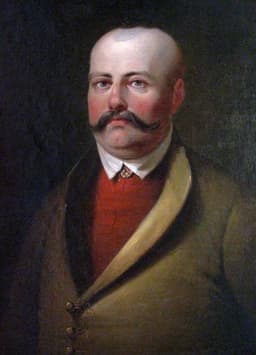
Tadeusz Rejtan
Politician · Modern
42.6Total
Basic Information
Born
1878
1742
Died
1918
1780
Era
Modern
Modern
Nationality
Armenia
Poland-Lithuania
Occupation
Politician
Politician
Civilization
Western
Western
Score Comparison
Military (10%)
36.6
50.0
Political (20%)
29.3
27.9
Influence (20%)
49.4
51.0
Legacy (20%)
40.8
43.3
Leadership (15%)
38.1
38.1
Strategy (15%)
52.8
41.6
TOTAL
41.6
42.6
Stepan Shaumyan — Complete Timeline
1917 AD
Appointment as Extraordinary Commissar for the CaucasusPolitical Action◆ Major
Shaumyan was appointed by Lenin as the Extraordinary Commissar for the Caucasus in December 1917, tasked with spreading Bolshevik influence and organizing Soviet power in the region.
BolshevikCaucasusRevolution
Impact: regionalconstructive
1918 AD
Defense of Baku against Ottoman forcesWar◆ Major
Shaumyan led the defense of Baku against the advancing Ottoman Army and Azerbaijani forces from June to September 1918. The city fell on September 15, leading to the collapse of the Baku Commune.
World War ICaucasus CampaignMilitary Defeat
Impact: regionaldestructive
Leadership of the Baku CommunePolitical Action◆ Major
Shaumyan became the chairman of the Baku Council of People's Commissars (the Baku Commune) in April 1918, leading the Bolshevik government in the city. He implemented Soviet policies and organized defense against Ottoman forces.
Russian Civil WarBolshevikSoviet Power
Impact: regionalconstructive
Execution of the 26 Baku CommissarsOther
Shaumyan was captured by anti-Bolshevik forces after the fall of the Baku Commune in September 1918. He was executed by a firing squad near Krasnovodsk along with 25 other commissars, becoming a martyr for the Bolshevik cause.
ExecutionRussian Civil WarMartyrdom
Impact: regionaltragic
Tadeusz Rejtan — Complete Timeline
1773 AD
Opposed the First Partition of Poland in the SejmPolitical Action◆ Major
As a deputy to the Partition Sejm, Tadeusz Rejtan vehemently opposed the First Partition of Poland. He attempted to block the proceedings by lying down in front of the door to the chamber, a dramatic act of protest.
PartitionProtest
Impact: nationalprogressive
1780 AD
Committed suicide in protestOther◆ Major
Overcome by despair over the partition and the failure of his protest, Rejtan committed suicide. His death became a symbol of patriotic resistance and the tragedy of Poland's decline.
SuicidePatriotism
Impact: nationaltragic
This comparison has not been analyzed yet.
One-time AI generation (~1 minute). Scores and timeline are already available below.
Rankings
🥇
Tadeusz RejtanLeader
Mil: 50.0Pol: 27.9Inf: 51.0
42.6
🥈
Stepan Shaumyan
Mil: 36.6Pol: 29.3Inf: 49.4
41.6
+1.0 behind
How This Comparison Works
Algorithm
Each figure is scored on 6 dimensions (0—100 scale) based on structured historical data: Military (10%), Political (20%), Influence (20%), Legacy (20%), Leadership (15%), Strategy (15%). The weighted total produces the final ranking.
Data Sources
Scores are computed from structured sub-indicators in the database. Scale factors adjust for era (Ancient ×0.85, Modern ×1.0) and civilization size (Eastern ×1.05, Other ×0.80) to account for differences in population and military scale.
Maximum 3 Figures
Comparisons are limited to 2—3 figures to ensure readability and statistical meaningfulness.
Error Margins
±5 points per dimension — Sub-scores are derived from historical records with inherent uncertainty. Two figures within 5 points on a dimension should be considered roughly equivalent in that area.
Total Score Accuracy
±3 points overall — The weighted combination of 6 dimensions produces a total score with approximately ±3 points of uncertainty. Differences of less than 3 points are not statistically significant— the figures are effectively tied.
Known Limitations
- Historical records are incomplete and uneven across civilizations
- Figures from oral-tradition societies may be underrepresented
- Occupation labels can misclassify multi-role figures
- Scores measure capability and impact, not moral character
- Quantitative scoring is a comparison tool, not absolute truth
Capability Radar
Military (10%) — Battles & Warfare
Battles
5
27
Win Rate
5
32
Expansion
5
33
Political (20%) — Governance & Reform
Reform
20
10
Diplomacy
20
15
Economy
15
5
Influence (20%) — Cultural & Global Reach
Cultural
15
30
Global
20
15
Legacy (20%) — Historical Impact
Historical
25
35
Longevity
20
25
Leadership (15%) — Power & Stability
Tenure
15
20
Stability
10
5
Strategy (15%) — Tactics & Innovation
Strategy
5
35
Tactics
5
38
Reform
5
46
Similar Comparisons
Comments & Discussion
No comments yet. Be the first to share your thoughts!