Loading...
Souvanna Phouma vs Viktor Yanukovych
Souvanna Phouma leads by 8.6 pts · 2 figures compared
…
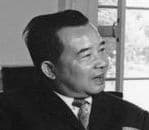
Souvanna Phouma
Politician · Modern
49.5Total

Viktor Yanukovych
Politician · Modern
40.9Total
Basic Information
Born
1901
1950
Died
1984
—
Era
Modern
Modern
Nationality
Laos
Ukraine
Occupation
Politician
Politician
Civilization
Eastern
Western
Score Comparison
Military (10%)
11.1
48.5
Political (20%)
68.0
25.0
Influence (20%)
53.3
47.9
Legacy (20%)
45.0
37.5
Leadership (15%)
65.0
45.0
Strategy (15%)
38.9
41.9
TOTAL
49.5
40.9
Souvanna Phouma — Complete Timeline
1951 AD
First term as Prime MinisterPolitical Action◆ Major
Souvanna Phouma became Prime Minister of Laos for the first time, leading a neutralist government. He sought to maintain Laos's neutrality in the Cold War, balancing between communist Pathet Lao and right-wing factions.
Prime MinisterNeutralityCold War
Impact: nationalconstructive
1962 AD
Geneva Accords of 1962Political Action◆ Major
Souvanna Phouma signed the Geneva Accords, which established Laos as a neutral state and created a coalition government. The agreement was intended to end the Laotian Civil War but ultimately failed to prevent further conflict.
Geneva AccordsNeutralityCoalition
Impact: regionalconstructive
1973 AD
Formation of coalition governmentPolitical Action◆ Major
Souvanna Phouma helped form a new coalition government with the Pathet Lao after the Vientiane Agreement. This government aimed to end the civil war but was short-lived as the Pathet Lao seized full power in 1975.
CoalitionCivil warVientiane Agreement
Impact: nationalconstructive
1975 AD
Resignation after Pathet Lao takeoverPolitical Action◆ Major
Souvanna Phouma resigned as Prime Minister after the Pathet Lao took control of Laos, ending the monarchy. He remained in Laos as an advisor to the new communist government until his death.
ResignationPathet LaoCommunist takeover
Impact: nationaltragic
Viktor Yanukovych — Complete Timeline
2010 AD
Yanukovych's election as President of UkrainePolitical Action◆ Major
Yanukovych won the presidential election, defeating Yulia Tymoshenko in a runoff. His victory was seen as a shift toward closer ties with Russia and a reversal of Orange Revolution policies.
ElectionUkrainePresidency
Impact: national
2013 AD
Yanukovych's rejection of the EU Association AgreementPolitical Action
Yanukovych abruptly suspended preparations for signing an association agreement with the European Union, opting instead for closer ties with Russia. This decision triggered the Euromaidan protests.
EUUkraineEuromaidan
Impact: regionaldestructive
2014 AD
Yanukovych's ousting during EuromaidanPolitical Action
After months of protests and violent clashes, Yanukovych fled Kyiv for Russia. The Ukrainian parliament voted to remove him from office. His ousting led to the Russian annexation of Crimea and the war in Donbas.
EuromaidanOustingUkraine
Impact: globaldestructive
Yanukovych's exile in RussiaPolitical Action◆ Major
Yanukovych settled in Russia, where he claimed to still be the legitimate president of Ukraine. He was tried in absentia and convicted of treason by a Ukrainian court. He remains a fugitive.
ExileRussiaTreason
Impact: nationaldestructive
Expert Analysis
Origins
Souvanna Phouma was born on October 7, 1901, in Luang Prabang, Laos, into the royal family. He was the son of Prince Bounkhong, the last viceroy of Luang Prabang. Educated in France, he studied engineering and architecture at the University of Paris and the École des Ponts et Chaussées. His background gave him a cosmopolitan outlook, but also a deep connection to Laotian traditions. In contrast, Viktor Yanukovych was born on July 9, 1950, in Yenakiieve, Ukraine, to a working-class family. His mother was a nurse, and his father a railway worker. He faced a difficult childhood, with his mother dying when he was young. He was convicted of robbery and assault in his youth, serving time in prison. Later, he worked as an electrician and studied mechanical engineering at the Donetsk Polytechnic Institute. His rise from poverty shaped his pragmatic and often ruthless approach to politics.
Rise to Power
Souvanna Phouma entered politics in the 1930s as a civil engineer and later became a member of the Lao Issara government after World War II. He first became Prime Minister in 1951, advocating for a neutralist policy to keep Laos out of the Cold War conflict. His key turning point came with the Geneva Accords of 1962, which he helped negotiate, establishing a coalition government with the Pathet Lao. However, the coalition was fragile, and he repeatedly tried to balance the rightist and communist factions. Yanukovych rose to power in the post-Soviet era through the Donetsk industrial clan. He served as Governor of Donetsk Oblast from 1997 to 2002, then became Prime Minister in 2002 under President Leonid Kuchma. His political career was marked by allegations of corruption and electoral fraud. In 2004, he ran for president but lost the Orange Revolution after widespread protests. He returned to win the presidency in 2010, defeating Yulia Tymoshenko in a runoff. His rise was built on oligarchic support and a base in eastern Ukraine.
Leadership & Governance
Souvanna Phouma's leadership style was diplomatic and conciliatory. He consistently pursued a policy of neutrality, seeking to balance the competing interests of the United States, the Soviet Union, North Vietnam, and China. He formed three coalition governments between 1951 and 1974, each time trying to include the Pathet Lao. However, his governance was weak on military control and economic development. Laos remained impoverished and dependent on foreign aid. Yanukovych's leadership was authoritarian and centralized. He consolidated power by undermining democratic institutions, jailing opponents like Tymoshenko, and concentrating wealth among his allies. His governance focused on maintaining control over eastern Ukraine and securing favorable gas deals with Russia. He rejected the EU Association Agreement in 2013, sparking the Euromaidan protests. His approach polarized the country, deepening regional divides. While Souvanna scored 65.0 in Leadership, Yanukovych scored 45.0, reflecting his inability to maintain legitimacy.
Triumph & Tragedy
Souvanna Phouma's greatest triumph was the 1962 Geneva Accords, which temporarily stabilized Laos and recognized its neutrality. He also managed to keep Laos from being fully absorbed into the Vietnam War, albeit with heavy bombing. His tragedy was the eventual collapse of his neutralist vision: the Pathet Lao took full control in 1975, ending the monarchy and forcing him to resign. He stayed in Laos as an advisor, but his life's work was undone. Yanukovych's triumph was winning the presidency in 2010 with a clear mandate, and he oversaw economic growth in 2011-2012. His tragedy was his ousting in 2014 after the Euromaidan protests, fleeing to Russia and being convicted of treason in absentia. His rejection of the EU deal triggered a chain reaction leading to Russia's annexation of Crimea and the war in Donbas. His legacy is one of catastrophic failure.
Character & Destiny
Souvanna Phouma was a pragmatist and idealist, believing in neutrality as the only path for a small country. He was known for his patience and willingness to negotiate, but also for indecisiveness. His character led him to be respected but not feared, and his lack of a strong military base left him vulnerable. Yanukovych was secretive and ruthless, with a criminal past that shaped his distrust of others. He was stubborn and corrupt, ignoring public sentiment. His character made him unable to compromise, leading to his downfall. Historical assessments often view Souvanna as a tragic figure who tried to steer a neutral course in a polarized world, while Yanukovych is seen as a self-serving leader who failed to adapt to democratic norms.
Legacy
Souvanna Phouma's legacy is mixed. His neutralism failed, but he is remembered as the "father of Laotian neutrality." The Geneva Accords set a precedent for small-state diplomacy. His influence score of 53.3 reflects his role in Cold War history. Yanukovych's legacy is overwhelmingly negative. He is remembered as the president who lost his country to revolution and triggered a war. His total score of 40.9 is lower than Souvanna's 49.5. Yanukovych's actions directly led to the annexation of Crimea and the ongoing conflict in eastern Ukraine, making his impact more destructive than constructive.
Conclusion
Souvanna Phouma, with a total score of 49.5, had greater impact in terms of diplomatic effort and maintaining sovereignty despite overwhelming odds. Yanukovych, scoring 40.9, failed as a leader and left a trail of devastation. While Souvanna's neutralism did not ultimately succeed, his attempt to chart an independent course for a small nation was more principled and less harmful than Yanukovych's corrupt and divisive rule. Therefore, Souvanna Phouma had greater impact, as measured by his political skill (68.0 vs 25.0) and leadership (65.0 vs 45.0).
Rankings
🥇
Souvanna PhoumaLeader
Mil: 11.1Pol: 68.0Inf: 53.3
49.5
🥈
Viktor Yanukovych
Mil: 48.5Pol: 25.0Inf: 47.9
40.9
+8.6 behind
How This Comparison Works
Algorithm
Each figure is scored on 6 dimensions (0—100 scale) based on structured historical data: Military (10%), Political (20%), Influence (20%), Legacy (20%), Leadership (15%), Strategy (15%). The weighted total produces the final ranking.
Data Sources
Scores are computed from structured sub-indicators in the database. Scale factors adjust for era (Ancient ×0.85, Modern ×1.0) and civilization size (Eastern ×1.05, Other ×0.80) to account for differences in population and military scale.
Maximum 3 Figures
Comparisons are limited to 2—3 figures to ensure readability and statistical meaningfulness.
Error Margins
±5 points per dimension — Sub-scores are derived from historical records with inherent uncertainty. Two figures within 5 points on a dimension should be considered roughly equivalent in that area.
Total Score Accuracy
±3 points overall — The weighted combination of 6 dimensions produces a total score with approximately ±3 points of uncertainty. Differences of less than 3 points are not statistically significant— the figures are effectively tied.
Known Limitations
- Historical records are incomplete and uneven across civilizations
- Figures from oral-tradition societies may be underrepresented
- Occupation labels can misclassify multi-role figures
- Scores measure capability and impact, not moral character
- Quantitative scoring is a comparison tool, not absolute truth
Capability Radar
Military (10%) — Battles & Warfare
Battles
14
31
Win Rate
19
32
Expansion
22
35
Political (20%) — Governance & Reform
Reform
40
10
Diplomacy
55
15
Economy
30
15
Influence (20%) — Cultural & Global Reach
Cultural
25
5
Global
25
10
Legacy (20%) — Historical Impact
Historical
40
10
Longevity
30
5
Leadership (15%) — Power & Stability
Tenure
60
30
Stability
20
5
Strategy (15%) — Tactics & Innovation
Strategy
21
38
Tactics
28
41
Reform
29
42
Similar Comparisons
Comments & Discussion
No comments yet. Be the first to share your thoughts!