Loading...
Shapur I vs Wang Mang
Shapur I leads by 17.0 pts · 2 figures compared
…
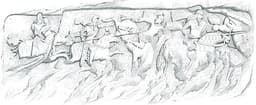
Shapur I
Emperor · Ancient
61.8Total

Wang Mang
Emperor · Ancient
44.8Total
Basic Information
Born
215
-45
Died
270
23
Era
Ancient
Ancient
Nationality
Sassanid Empire
China
Occupation
Emperor
Emperor
Civilization
Middle Eastern
Eastern
Score Comparison
Military (10%)
78.0
21.2
Political (20%)
55.0
62.7
Influence (20%)
56.7
50.2
Legacy (20%)
56.0
45.8
Leadership (15%)
72.0
38.1
Strategy (15%)
68.1
35.7
TOTAL
61.8
44.8
Shapur I — Complete Timeline
244 AD
Battle of MisicheWar◆ Major
Shapur I defeated the Roman emperor Gordian III at Misiche in Mesopotamia. Gordian died during or shortly after the battle, and his successor Philip the Arab signed a peace treaty favorable to the Sassanids, paying a large ransom.
Roman-Persian WarsBattleSassanid Empire
Impact: regional
260 AD
Capture of Emperor ValerianWar
Shapur I captured the Roman emperor Valerian in battle near Edessa. Valerian was taken prisoner and spent the rest of his life in Persian captivity, a humiliation unprecedented in Roman history. Shapur used this victory to extract tribute and territory.
Roman-Persian WarsCaptureSassanid Empire
Impact: global
Sack of AntiochWar◆ Major
Following the capture of Valerian, Shapur I invaded Syria and sacked the city of Antioch, a major Roman center. The Sassanid army plundered the city and deported many inhabitants to Persia, demonstrating the empire's military reach.
Roman-Persian WarsSackAntioch
Impact: regionaldestructive
262 AD
Construction of Naqsh-e Rostam InscriptionsCultural
Shapur I commissioned rock reliefs and inscriptions at Naqsh-e Rostam, depicting his victories over Roman emperors. The trilingual inscription (Middle Persian, Parthian, Greek) details his campaigns and the extent of his empire, serving as a key historical source.
InscriptionPropagandaSassanid Empire
Impact: nationalconstructive
266 AD
Foundation of BishapurCultural
Shapur I founded the city of Bishapur in Fars province, modeled partly on Roman urban planning. The city featured a palace with mosaics and reliefs celebrating his victories, becoming a major Sassanid administrative and cultural center.
City FoundationArchitectureSassanid Empire
Impact: regionalconstructive
Wang Mang — Complete Timeline
7 AD
Wang Mang's Currency ReformsReform◆ Major
Wang Mang introduced a series of complex and frequently changing currency systems, including new coinages and the demonetization of older coins. These reforms caused severe economic disruption, inflation, and widespread hardship.
Currency ReformEconomic CrisisInflation
Impact: nationaldestructive
9 AD
Wang Mang's Land Reform (Wangtian System)Reform◆ Major
Wang Mang nationalized all land, declaring it 'king's land' (wangtian), and abolished private land ownership. He redistributed land to peasant families in an attempt to reduce inequality and stabilize the economy.
Land ReformEconomic PolicySocial Reform
Impact: nationalprogressive
Abolition of SlaveryReform◆ Major
Wang Mang issued an edict abolishing slavery, declaring that all slaves were to be freed and their sale prohibited. This radical measure was met with resistance from the elite and was poorly enforced, contributing to social instability.
Slavery AbolitionSocial ReformHuman Rights
Impact: nationalprogressive
Wang Mang's Coup and Establishment of the Xin DynastyPolitical Action
Wang Mang, a Han dynasty regent, forced the child emperor Liu Ying to abdicate and proclaimed himself emperor, founding the Xin dynasty. This ended the Western Han dynasty and began a period of radical reform.
CoupDynastic ChangeUsurpation
Impact: national
18 AD
Outbreak of the Chimei RebellionWar
Widespread peasant revolts, most notably the Red Eyebrows (Chimei), erupted across China in response to Wang Mang's failed reforms, famine, and conscription. These rebellions rapidly grew into a massive insurgency that destabilized the Xin dynasty.
Peasant RevoltCivil WarRebellion
Impact: nationaldestructive
23 AD
Battle of KunyangWar
A Han loyalist army led by Liu Xiu (later Emperor Guangwu) decisively defeated a much larger Xin dynasty force at Kunyang. This victory broke the back of Wang Mang's military power and paved the way for the restoration of the Han dynasty.
BattleHan RestorationDecisive Victory
Impact: national
Death of Wang Mang in the Fall of Chang'anOther◆ Major
As rebel forces stormed the capital Chang'an, Wang Mang was killed in a melee in the Weiyang Palace. His head was taken and displayed, and the Xin dynasty was extinguished, ending his 14-year reign.
DeathDynasty FallCapital Sacked
Impact: nationaltragic
Expert Analysis
Origins
**Shapur I** (born ca. 215 CE) was the son of Ardashir I, founder of the Sassanid Empire. He grew up in the royal court of Persis (modern Fars, Iran), receiving training in military command and Zoroastrian traditions. His father had unified Persia after defeating the Parthians, and Shapur was groomed to continue expansion. He was appointed co-regent before his father's death, ensuring a smooth succession.
**Wang Mang** (born 45 BCE) was a nephew of Empress Wang Zhengjun, a powerful consort of the Han dynasty. He was raised in a scholarly Confucian environment, excelling in classical learning. His family dominated the court, and he used his position to build a reputation for humility and virtue. Unlike Shapur, Wang Mang had no military background; his rise was purely political.
Rise to Power
Shapur I became king of kings in 240 CE after his father's death. He immediately faced Roman aggression: Emperor Gordian III invaded Mesopotamia in 243. At the Battle of Misiche (244), Shapur defeated the Roman army; Gordian died (possibly killed by his own men), and his successor Philip the Arab paid a huge ransom and ceded territory. This victory established Shapur's reputation. In 260, he achieved his greatest triumph: capturing Emperor Valerian near Edessa. Valerian was taken prisoner and died in captivity, a humiliation Rome never forgot.
Wang Mang rose through the Han bureaucracy. As regent for the child emperor Liu Ying (6-9 CE), he consolidated power, eliminating rivals. In 9 CE, he forced Liu Ying to abdicate and proclaimed himself emperor, founding the Xin dynasty. His claim was based on the mandate of heaven, but many Han loyalists viewed him as a usurper. His rise was bloodless, relying on political machination rather than military force.
Leadership & Governance
Shapur I was a warrior-king who personally led campaigns. His governance focused on consolidating his empire through building cities (like Bishapur, founded ca. 262), commissioning rock reliefs to celebrate victories, and promoting Zoroastrianism as a unifying faith. He adopted Roman administrative techniques and used captured engineers to build infrastructure. His rule was autocratic but effective in maintaining control over diverse territories.
Wang Mang was a radical reformer. He implemented sweeping changes: nationalizing land as 'king's fields,' abolishing slavery (9 CE), regulating prices, and introducing new currency. These reforms were ideologically driven by Confucian ideals but poorly executed. The land reforms angered landowners, the currency changes caused inflation, and the abolition of slavery disrupted the economy. His leadership score of 38.1 reflects his inability to manage the consequences; Shapur's 72.0 shows his effectiveness.
Triumph & Tragedy
Shapur I's greatest triumph was the capture of Valerian, a feat unmatched by any Persian king before or since. He also sacked Antioch and expanded Sassanid territory into Syria and Anatolia. His tragedy was the failure to hold these gains permanently; after his death, Roman counterattacks reclaimed much territory. Additionally, his reliance on military expansion strained resources.
Wang Mang's triumph was briefly uniting China under a new dynasty and attempting reforms that anticipated later policies (like land redistribution). His tragedy was total failure: the Chimei (Red Eyebrows) rebellion erupted, and at the Battle of Kunyang (23 CE), Han loyalist Liu Xiu defeated his army despite being outnumbered. Wang Mang was killed in the fall of Chang'an, his dynasty ending after only 14 years. His military score of 21.2 contrasts sharply with Shapur's 78.0.
Character & Destiny
Shapur I was pragmatic and ambitious. His inscriptions at Naqsh-e Rostam show a king who celebrated his victories but also acknowledged the power of the gods. He was decisive in battle but also a builder, blending Persian and Roman influences. His character shaped a destiny of expansion and cultural synthesis.
Wang Mang was idealistic and rigid. He believed his reforms would create a utopia but ignored practical realities. His Confucian moralism made him intolerant of opposition, and he surrounded himself with sycophants. His character led to a tragic downfall: a reformer undone by his own reforms.
Legacy
Shapur I left a lasting impact on Persian identity. His Naqsh-e Rostam inscriptions are key historical sources, and his victories over Rome became legendary in Persian tradition. The Sassanid Empire he strengthened lasted until the Arab conquest in 651 CE. His influence score of 56.7 reflects his role in shaping the rivalry between Rome and Persia.
Wang Mang's legacy is more ambiguous. He is often seen as a well-intentioned but incompetent ruler. His reforms were undone by the restored Han dynasty, but some ideas (like land reform) reappeared later. His legacy score of 45.8 is lower, partly because his dynasty was so short-lived. However, he is remembered as a cautionary tale about ideological extremism.
Conclusion
Shapur I had greater impact than Wang Mang. His military achievements (score 78.0) reshaped the Roman-Persian balance, and his administrative and building projects strengthened the Sassanid Empire for centuries. Wang Mang's reforms failed catastrophically, and his dynasty collapsed quickly. While Wang Mang's political maneuvering was skilled (score 62.7), his lack of military capability (21.2) and flawed governance (leadership 38.1) led to disaster. Shapur I's total score of 61.8 vs. Wang Mang's 44.8 reflects a more effective and lasting influence. The Persian king's victories and foundations outlasted the Chinese emperor's ephemeral reforms.
Rankings
🥇
Shapur ILeader
Mil: 78.0Pol: 55.0Inf: 56.7
61.8
🥈
Wang Mang
Mil: 21.2Pol: 62.7Inf: 50.2
44.8
+17.0 behind
How This Comparison Works
Algorithm
Each figure is scored on 6 dimensions (0—100 scale) based on structured historical data: Military (10%), Political (20%), Influence (20%), Legacy (20%), Leadership (15%), Strategy (15%). The weighted total produces the final ranking.
Data Sources
Scores are computed from structured sub-indicators in the database. Scale factors adjust for era (Ancient ×0.85, Modern ×1.0) and civilization size (Eastern ×1.05, Other ×0.80) to account for differences in population and military scale.
Maximum 3 Figures
Comparisons are limited to 2—3 figures to ensure readability and statistical meaningfulness.
Error Margins
±5 points per dimension — Sub-scores are derived from historical records with inherent uncertainty. Two figures within 5 points on a dimension should be considered roughly equivalent in that area.
Total Score Accuracy
±3 points overall — The weighted combination of 6 dimensions produces a total score with approximately ±3 points of uncertainty. Differences of less than 3 points are not statistically significant— the figures are effectively tied.
Known Limitations
- Historical records are incomplete and uneven across civilizations
- Figures from oral-tradition societies may be underrepresented
- Occupation labels can misclassify multi-role figures
- Scores measure capability and impact, not moral character
- Quantitative scoring is a comparison tool, not absolute truth
Capability Radar
Military (10%) — Battles & Warfare
Battles
85
10
Win Rate
80
5
Expansion
85
5
Political (20%) — Governance & Reform
Reform
70
85
Diplomacy
80
40
Economy
65
60
Influence (20%) — Cultural & Global Reach
Cultural
60
40
Global
65
20
Legacy (20%) — Historical Impact
Historical
70
55
Longevity
60
30
Leadership (15%) — Power & Stability
Tenure
75
30
Stability
70
15
Strategy (15%) — Tactics & Innovation
Strategy
80
15
Tactics
75
10
Reform
70
20
Similar Comparisons
Comments & Discussion
No comments yet. Be the first to share your thoughts!