Loading...
Shapur I vs Valens
Shapur I leads by 15.6 pts · 2 figures compared
…
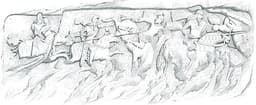
Shapur I
Emperor · Ancient
61.8Total

Valens
Emperor · Ancient
46.2Total
Basic Information
Born
215
328
Died
270
378
Era
Ancient
Ancient
Nationality
Sassanid Empire
Roman Empire
Occupation
Emperor
Emperor
Civilization
Middle Eastern
Western
Score Comparison
Military (10%)
78.0
20.0
Political (20%)
55.0
42.3
Influence (20%)
56.7
52.5
Legacy (20%)
56.0
41.7
Leadership (15%)
72.0
65.7
Strategy (15%)
68.1
45.0
TOTAL
61.8
46.2
Shapur I — Complete Timeline
244 AD
Battle of MisicheWar◆ Major
Shapur I defeated the Roman emperor Gordian III at Misiche in Mesopotamia. Gordian died during or shortly after the battle, and his successor Philip the Arab signed a peace treaty favorable to the Sassanids, paying a large ransom.
Roman-Persian WarsBattleSassanid Empire
Impact: regional
260 AD
Capture of Emperor ValerianWar
Shapur I captured the Roman emperor Valerian in battle near Edessa. Valerian was taken prisoner and spent the rest of his life in Persian captivity, a humiliation unprecedented in Roman history. Shapur used this victory to extract tribute and territory.
Roman-Persian WarsCaptureSassanid Empire
Impact: global
Sack of AntiochWar◆ Major
Following the capture of Valerian, Shapur I invaded Syria and sacked the city of Antioch, a major Roman center. The Sassanid army plundered the city and deported many inhabitants to Persia, demonstrating the empire's military reach.
Roman-Persian WarsSackAntioch
Impact: regionaldestructive
262 AD
Construction of Naqsh-e Rostam InscriptionsCultural
Shapur I commissioned rock reliefs and inscriptions at Naqsh-e Rostam, depicting his victories over Roman emperors. The trilingual inscription (Middle Persian, Parthian, Greek) details his campaigns and the extent of his empire, serving as a key historical source.
InscriptionPropagandaSassanid Empire
Impact: nationalconstructive
266 AD
Foundation of BishapurCultural
Shapur I founded the city of Bishapur in Fars province, modeled partly on Roman urban planning. The city featured a palace with mosaics and reliefs celebrating his victories, becoming a major Sassanid administrative and cultural center.
City FoundationArchitectureSassanid Empire
Impact: regionalconstructive
Valens — Complete Timeline
368 AD
Construction of the Aqueduct of ValensCultural
Valens completed the Aqueduct of Valens in Constantinople, a major infrastructure project that supplied water to the city. The aqueduct remained in use for centuries and is a lasting monument of his reign.
InfrastructureConstantinoplePublic Works
constructive
376 AD
Gothic WarWar◆ Major
Valens allowed the Goths to cross the Danube into Roman territory to escape the Huns. Mismanagement and corruption by Roman officials led to a Gothic revolt, escalating into a full-scale war that culminated in the Battle of Adrianople.
Gothic WarMigrationBarbarian Invasions
Impact: regionaldestructive
378 AD
Battle of AdrianopleWar
Valens led the Eastern Roman army against the Gothic rebels near Adrianople. The Roman forces were routed, and Valens was killed in the battle. This defeat was a major disaster for the Roman Empire, leading to the permanent settlement of Goths within imperial borders.
Gothic WarMilitary DisasterBarbarian Invasions
Impact: globaltragic
Expert Analysis
Origins
Shapur I, born around 215 AD, was the second ruler of the Sassanid Empire. He was the son of Ardashir I, the founder of the dynasty. Little is known of his early life, but he was groomed for kingship, accompanying his father on campaigns and learning the arts of war and governance. He ascended the throne in 240 AD after his father's death.
Valens, born in 328 AD in Cibalae (modern Croatia), came from a humble military family. His older brother Valentinian I became emperor in 364 AD and appointed Valens as co-emperor for the East. Valens had little formal education but gained military experience as a soldier in the Roman army. His rise was due entirely to family connection, not personal merit.
Rise to Power
Shapur I became king of kings upon Ardashir's death in 240 AD. He immediately faced Roman aggression: Emperor Gordian III invaded Mesopotamia in 243 AD. At the Battle of Misiche in 244 AD, Shapur decisively defeated the Romans; Gordian died under unclear circumstances, and his successor Philip the Arab paid a large ransom for peace. This victory established Shapur's reputation. He then turned east, securing borders against the Kushans and expanding Sassanid influence.
Valens became emperor in 364 AD when his brother Valentinian I chose him as co-ruler for the Eastern provinces. Valens had no prior claim to power; his appointment was nepotistic. He faced immediate challenges: the usurper Procopius revolted in 365 AD, but Valens suppressed him by 366 AD. He then campaigned against the Goths across the Danube, achieving modest successes. His most significant early action was allowing the Goths to cross the Danube in 376 AD, a decision that would prove catastrophic.
Leadership & Governance
Shapur I ruled as an absolute monarch with a centralized administration. He founded the city of Bishapur, designed with Roman-inspired urban planning, and commissioned rock reliefs at Naqsh-e Rostam to glorify his victories. He promoted Zoroastrianism as the state religion but tolerated other faiths. His governance focused on consolidating Sassanid power through military expansion and monumental architecture.
Valens governed the Eastern Roman Empire with a focus on financial austerity. He completed the Aqueduct of Valens in Constantinople, a vital infrastructure project that supplied water to the capital for centuries. He was an Arian Christian and persecuted Nicene Christians, creating religious tensions. His administrative reforms were limited, and he relied heavily on corrupt officials. His greatest failing was the mismanagement of the Gothic settlement, where Roman greed and incompetence drove the Goths to revolt.
Triumph & Tragedy
Shapur I's greatest triumph was the capture of Emperor Valerian in 260 AD near Edessa. This unprecedented event—a Roman emperor taken alive—humiliated Rome and boosted Sassanid prestige. He followed up by sacking Antioch and other Roman cities. However, his later campaigns were less successful; he failed to hold captured territories permanently, and the Palmyrene ruler Odaenathus pushed back against Sassanid forces. Shapur's score of 78.0 in military reflects his battlefield prowess but also his inability to sustain conquests.
Valens' tragedy is the Battle of Adrianople in 378 AD. He rashly engaged the Gothic army without waiting for Western reinforcements, leading to a catastrophic defeat where he and two-thirds of the Eastern field army perished. This battle exposed the vulnerability of the Roman Empire and foreshadowed its decline. Valens' only significant triumph was the completion of the aqueduct, but his military score of 20.0 underscores his incompetence.
Character & Destiny
Shapur I was ambitious, strategic, and ruthless. He used propaganda effectively, immortalizing his victories in inscriptions. His capture of Valerian was a masterstroke of psychological warfare. However, his overconfidence led to overextension, and he failed to capitalize on his victories. His character combined the cunning of a diplomat with the aggression of a conqueror.
Valens was indecisive and short-sighted. He allowed the Goths into the empire without adequate planning, ignored warnings, and made a fatal tactical error at Adrianople. His brother Valentinian had been the stronger leader; Valens seemed overshadowed and insecure. His death was the result of poor judgment and a lack of strategic foresight.
Legacy
Shapur I's legacy is enduring. His rock reliefs and inscriptions at Naqsh-e Rostam provided a model for Sassanid royal propaganda. His military successes against Rome set a precedent for future Sassanid kings. The city of Bishapur remained a cultural center. His influence score of 56.7 reflects his role in shaping Persian identity and challenging Roman supremacy.
Valens' legacy is largely negative. The Battle of Adrianople is studied as a turning point in Roman military history, demonstrating the decline of the legions. The aqueduct bears his name but his reign is remembered as a failure. His political score of 42.3 and legacy score of 41.7 indicate limited positive impact.
Conclusion
Shapur I clearly had greater impact on history. His military score of 78.0 versus Valens' 20.0, and total score of 61.8 versus 46.2, reflect a decisive gap. Shapur I humiliated Rome and expanded the Sassanid Empire, while Valens presided over a disaster that weakened the Eastern Empire. Shapur I's victories were strategic and symbolic; Valens' defeat was a tactical catastrophe. Therefore, Shapur I stands as the more consequential and capable leader.
Rankings
🥇
Shapur ILeader
Mil: 78.0Pol: 55.0Inf: 56.7
61.8
🥈
Valens
Mil: 20.0Pol: 42.3Inf: 52.5
46.2
+15.6 behind
How This Comparison Works
Algorithm
Each figure is scored on 6 dimensions (0—100 scale) based on structured historical data: Military (10%), Political (20%), Influence (20%), Legacy (20%), Leadership (15%), Strategy (15%). The weighted total produces the final ranking.
Data Sources
Scores are computed from structured sub-indicators in the database. Scale factors adjust for era (Ancient ×0.85, Modern ×1.0) and civilization size (Eastern ×1.05, Other ×0.80) to account for differences in population and military scale.
Maximum 3 Figures
Comparisons are limited to 2—3 figures to ensure readability and statistical meaningfulness.
Error Margins
±5 points per dimension — Sub-scores are derived from historical records with inherent uncertainty. Two figures within 5 points on a dimension should be considered roughly equivalent in that area.
Total Score Accuracy
±3 points overall — The weighted combination of 6 dimensions produces a total score with approximately ±3 points of uncertainty. Differences of less than 3 points are not statistically significant— the figures are effectively tied.
Known Limitations
- Historical records are incomplete and uneven across civilizations
- Figures from oral-tradition societies may be underrepresented
- Occupation labels can misclassify multi-role figures
- Scores measure capability and impact, not moral character
- Quantitative scoring is a comparison tool, not absolute truth
Capability Radar
Military (10%) — Battles & Warfare
Battles
85
45
Win Rate
80
30
Expansion
85
40
Political (20%) — Governance & Reform
Reform
70
40
Diplomacy
80
35
Economy
65
40
Influence (20%) — Cultural & Global Reach
Cultural
60
25
Global
65
30
Legacy (20%) — Historical Impact
Historical
70
40
Longevity
60
20
Leadership (15%) — Power & Stability
Tenure
75
55
Stability
70
30
Strategy (15%) — Tactics & Innovation
Strategy
80
30
Tactics
75
35
Reform
70
20
Similar Comparisons
Comments & Discussion
No comments yet. Be the first to share your thoughts!