Loading...
This comparison has not been analyzed yet.
One-time AI generation (~1 minute). Scores and timeline are already available below.
Sepp Dietrich vs Takeda Katsuyori
Sepp Dietrich leads by 1.6 pts · 2 figures compared
…

Sepp Dietrich
General · Modern
42.2Total
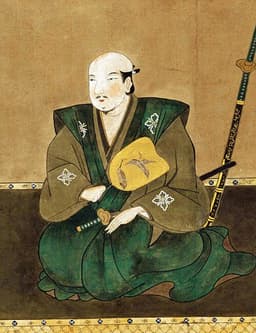
Takeda Katsuyori
General · Modern
40.6Total
Basic Information
Born
1892
1546
Died
1966
1582
Era
Modern
Modern
Nationality
Germany
Japan
Occupation
General
General
Civilization
Western
Eastern
Score Comparison
Military (10%)
50.0
35.0
Political (20%)
26.4
29.3
Influence (20%)
48.6
49.4
Legacy (20%)
40.0
40.8
Leadership (15%)
47.3
40.4
Strategy (15%)
39.6
41.0
TOTAL
42.2
40.6
Sepp Dietrich — Complete Timeline
1928 AD
Appointment as Hitler's Bodyguard CommanderPolitical Action◆ Major
Dietrich became commander of Hitler's personal bodyguard unit, the SS-Stabswache Berlin. This role gave him direct access to Hitler and helped him rise in the SS hierarchy.
Nazi GermanySSHitler
Impact: national
1933 AD
Command of the Leibstandarte SS Adolf HitlerPolitical Action◆ Major
Dietrich commanded the Leibstandarte SS Adolf Hitler, which grew from a bodyguard unit into a full division. He led it in the invasions of Poland, France, and the Balkans.
World War IIWaffen-SSLeibstandarte
Impact: regional
1946 AD
Malmedy Massacre Trial ConvictionPolitical Action◆ Major
Dietrich was tried at the Dachau trials for the Malmedy Massacre and other war crimes. He was sentenced to life imprisonment, but was released in 1955.
War Crimes TrialPost-War Justice
Impact: national
Takeda Katsuyori — Complete Timeline
1573 AD
Succeeded Takeda ShingenPolitical Action◆ Major
Katsuyori became the head of the Takeda clan after the death of his father, Takeda Shingen. He inherited a powerful domain but faced challenges from Oda Nobunaga and Tokugawa Ieyasu.
SuccessionTakedaLeadership
Impact: regional
1575 AD
Battle of NagashinoWar
Katsuyori led the Takeda army against Oda Nobunaga and Tokugawa Ieyasu at the Battle of Nagashino. His forces were decisively defeated by Nobunaga's use of arquebusiers behind palisades, leading to the loss of many key Takeda commanders.
BattleDefeatTakeda
Impact: nationaldestructive
1582 AD
Destruction of the Takeda clanWar◆ Major
Katsuyori was defeated by Oda Nobunaga and Tokugawa Ieyasu at the Battle of Tenmokuzan. He committed seppuku, and the Takeda clan was destroyed, ending their influence in the Sengoku period.
DefeatSeppukuTakeda
Impact: nationaltragic
This comparison has not been analyzed yet.
One-time AI generation (~1 minute). Scores and timeline are already available below.
Rankings
🥇
Sepp DietrichLeader
Mil: 50.0Pol: 26.4Inf: 48.6
42.2
🥈
Takeda Katsuyori
Mil: 35.0Pol: 29.3Inf: 49.4
40.6
+1.6 behind
How This Comparison Works
Algorithm
Each figure is scored on 6 dimensions (0—100 scale) based on structured historical data: Military (10%), Political (20%), Influence (20%), Legacy (20%), Leadership (15%), Strategy (15%). The weighted total produces the final ranking.
Data Sources
Scores are computed from structured sub-indicators in the database. Scale factors adjust for era (Ancient ×0.85, Modern ×1.0) and civilization size (Eastern ×1.05, Other ×0.80) to account for differences in population and military scale.
Maximum 3 Figures
Comparisons are limited to 2—3 figures to ensure readability and statistical meaningfulness.
Error Margins
±5 points per dimension — Sub-scores are derived from historical records with inherent uncertainty. Two figures within 5 points on a dimension should be considered roughly equivalent in that area.
Total Score Accuracy
±3 points overall — The weighted combination of 6 dimensions produces a total score with approximately ±3 points of uncertainty. Differences of less than 3 points are not statistically significant— the figures are effectively tied.
Known Limitations
- Historical records are incomplete and uneven across civilizations
- Figures from oral-tradition societies may be underrepresented
- Occupation labels can misclassify multi-role figures
- Scores measure capability and impact, not moral character
- Quantitative scoring is a comparison tool, not absolute truth
Capability Radar
Military (10%) — Battles & Warfare
Battles
20
30
Win Rate
15
20
Expansion
5
20
Political (20%) — Governance & Reform
Reform
5
10
Diplomacy
10
15
Economy
5
15
Influence (20%) — Cultural & Global Reach
Cultural
10
15
Global
10
10
Legacy (20%) — Historical Impact
Historical
20
20
Longevity
10
15
Leadership (15%) — Power & Stability
Tenure
40
25
Stability
5
10
Strategy (15%) — Tactics & Innovation
Strategy
10
15
Tactics
10
25
Reform
5
10
Similar Comparisons
Comments & Discussion
No comments yet. Be the first to share your thoughts!