Loading...
This comparison has not been analyzed yet.
One-time AI generation (~1 minute). Scores and timeline are already available below.
Mengistu Haile Mariam vs Takeda Katsuyori
Mengistu Haile Mariam leads by 4.8 pts · 2 figures compared
…
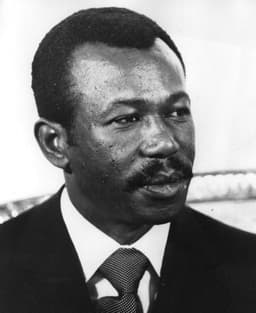
Mengistu Haile Mariam
General · Modern
45.4Total
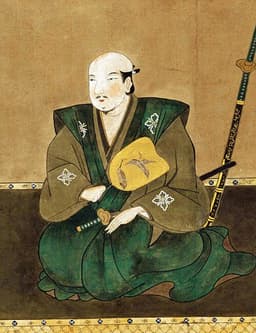
Takeda Katsuyori
General · Modern
40.6Total
Basic Information
Born
1937
1546
Died
—
1582
Era
Modern
Modern
Nationality
Ethiopia
Japan
Occupation
General
General
Civilization
Other
Eastern
Score Comparison
Military (10%)
50.0
35.0
Political (20%)
26.4
29.3
Influence (20%)
51.0
49.4
Legacy (20%)
40.8
40.8
Leadership (15%)
61.1
40.4
Strategy (15%)
43.7
41.0
TOTAL
45.4
40.6
Mengistu Haile Mariam — Complete Timeline
1974 AD
Derg seizure of powerPolitical Action◆ Major
Mengistu Haile Mariam, as a member of the Derg military committee, participated in the coup that overthrew Emperor Haile Selassie. The Derg abolished the monarchy and established a Marxist-Leninist military government, with Mengistu emerging as its chairman by 1977.
CoupEthiopian RevolutionDerg
Impact: nationaldestructive
1977 AD
Ogaden WarWar◆ Major
Mengistu led Ethiopia in a war against Somalia over the Ogaden region. With massive military aid from the Soviet Union and Cuba, Ethiopian forces repelled the Somali invasion by March 1978, securing the disputed territory.
Ethio-Somali WarCold WarTerritorial Conflict
Impact: regional
Red Terror campaignPolitical Action◆ Major
Mengistu ordered a violent crackdown against political opponents, primarily the Ethiopian People's Revolutionary Party (EPRP). Thousands were killed, tortured, or imprisoned in Addis Ababa and other cities, consolidating Mengistu's absolute control over Ethiopia.
Political RepressionCivil WarHuman Rights
Impact: nationaldestructive
1984 AD
1984-1985 famine responsePolitical Action◆ Major
During a severe famine that killed an estimated 1 million Ethiopians, Mengistu's government was criticized for prioritizing military spending and forced resettlement programs over relief. The regime's response was widely condemned internationally.
FamineHumanitarian CrisisResettlement
Impact: nationaltragic
1991 AD
Fall of the Derg regimePolitical Action◆ Major
After years of civil war, rebel forces led by the Ethiopian People's Revolutionary Democratic Front (EPRDF) captured Addis Ababa. Mengistu fled to Zimbabwe, ending 17 years of his dictatorship and leading to the establishment of a transitional government.
Civil WarRegime ChangeExile
Impact: national
Takeda Katsuyori — Complete Timeline
1573 AD
Succeeded Takeda ShingenPolitical Action◆ Major
Katsuyori became the head of the Takeda clan after the death of his father, Takeda Shingen. He inherited a powerful domain but faced challenges from Oda Nobunaga and Tokugawa Ieyasu.
SuccessionTakedaLeadership
Impact: regional
1575 AD
Battle of NagashinoWar
Katsuyori led the Takeda army against Oda Nobunaga and Tokugawa Ieyasu at the Battle of Nagashino. His forces were decisively defeated by Nobunaga's use of arquebusiers behind palisades, leading to the loss of many key Takeda commanders.
BattleDefeatTakeda
Impact: nationaldestructive
1582 AD
Destruction of the Takeda clanWar◆ Major
Katsuyori was defeated by Oda Nobunaga and Tokugawa Ieyasu at the Battle of Tenmokuzan. He committed seppuku, and the Takeda clan was destroyed, ending their influence in the Sengoku period.
DefeatSeppukuTakeda
Impact: nationaltragic
This comparison has not been analyzed yet.
One-time AI generation (~1 minute). Scores and timeline are already available below.
Rankings
🥇
Mengistu Haile MariamLeader
Mil: 50.0Pol: 26.4Inf: 51.0
45.4
🥈
Takeda Katsuyori
Mil: 35.0Pol: 29.3Inf: 49.4
40.6
+4.8 behind
How This Comparison Works
Algorithm
Each figure is scored on 6 dimensions (0—100 scale) based on structured historical data: Military (10%), Political (20%), Influence (20%), Legacy (20%), Leadership (15%), Strategy (15%). The weighted total produces the final ranking.
Data Sources
Scores are computed from structured sub-indicators in the database. Scale factors adjust for era (Ancient ×0.85, Modern ×1.0) and civilization size (Eastern ×1.05, Other ×0.80) to account for differences in population and military scale.
Maximum 3 Figures
Comparisons are limited to 2—3 figures to ensure readability and statistical meaningfulness.
Error Margins
±5 points per dimension — Sub-scores are derived from historical records with inherent uncertainty. Two figures within 5 points on a dimension should be considered roughly equivalent in that area.
Total Score Accuracy
±3 points overall — The weighted combination of 6 dimensions produces a total score with approximately ±3 points of uncertainty. Differences of less than 3 points are not statistically significant— the figures are effectively tied.
Known Limitations
- Historical records are incomplete and uneven across civilizations
- Figures from oral-tradition societies may be underrepresented
- Occupation labels can misclassify multi-role figures
- Scores measure capability and impact, not moral character
- Quantitative scoring is a comparison tool, not absolute truth
Capability Radar
Military (10%) — Battles & Warfare
Battles
20
30
Win Rate
15
20
Expansion
10
20
Political (20%) — Governance & Reform
Reform
20
10
Diplomacy
15
15
Economy
10
15
Influence (20%) — Cultural & Global Reach
Cultural
15
15
Global
20
10
Legacy (20%) — Historical Impact
Historical
25
20
Longevity
10
15
Leadership (15%) — Power & Stability
Tenure
60
25
Stability
5
10
Strategy (15%) — Tactics & Innovation
Strategy
15
15
Tactics
10
25
Reform
30
10
Similar Comparisons
Comments & Discussion
No comments yet. Be the first to share your thoughts!