Loading...
Scipio Aemilianus vs Wei Qing
Scipio Aemilianus leads by 4.1 pts · 2 figures compared
…
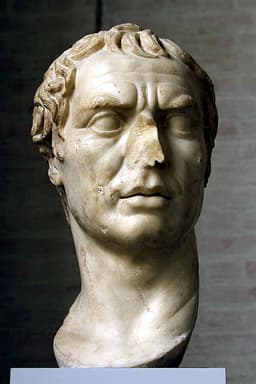
Scipio Aemilianus
General · Ancient
64.7Total

Wei Qing
General · Ancient
60.6Total
Basic Information
Born
-185
-140
Died
-129
-106
Era
Ancient
Ancient
Nationality
Roman Republic
China
Occupation
General
General
Civilization
Western
Eastern
Score Comparison
Military (10%)
90.0
88.0
Political (20%)
68.0
45.1
Influence (20%)
55.0
56.7
Legacy (20%)
55.0
52.0
Leadership (15%)
72.0
71.0
Strategy (15%)
72.0
72.0
TOTAL
64.7
60.6
Scipio Aemilianus — Complete Timeline
146 BC
Destroyed Carthage in the Third Punic WarWar
Scipio Aemilianus, as Roman consul, led the final assault on Carthage. After a three-year siege, his forces breached the walls, captured the city, and systematically destroyed it. The surviving population was enslaved, and the territory became the Roman province of Africa.
Third Punic WarCarthageDestruction
Impact: globaldestructive
134 BC
Elected Consul for the Second TimePolitical Action
Scipio Aemilianus was elected consul for a second time, despite legal restrictions, to command the war in Spain. His election reflected his popularity and the Senate's trust in his military abilities to end the Numantine War.
ConsulshipRoman PoliticsMilitary Command
Impact: nationalconstructive
133 BC
Captured Numantia, Ending the Numantine WarWar◆ Major
Scipio Aemilianus besieged the Celtiberian city of Numantia in Spain. After a prolonged blockade, the starving city surrendered. Scipio razed Numantia, ending the Numantine War and consolidating Roman control over Hispania.
Numantine WarSpainSiege
Impact: regionaldestructive
129 BC
Died Under Suspicious CircumstancesOther◆ Major
Scipio Aemilianus was found dead in his bed, possibly murdered by political opponents. His death occurred amid political turmoil over land reforms proposed by Tiberius Gracchus, whom Scipio had opposed. The cause of death remains disputed.
DeathRoman PoliticsGracchi
Impact: nationaltragic
Wei Qing — Complete Timeline
124 BC
Appointment as Grand GeneralPolitical Action◆ Major
Emperor Wu of Han appointed Wei Qing as Grand General, the highest military rank, after his victories against the Xiongnu. This made him the most powerful military commander in the Han empire.
AppointmentHan DynastyMilitary
Impact: nationalconstructive
121 BC
Battle of HexiWar◆ Major
Wei Qing and his nephew Huo Qubing led campaigns in the Hexi Corridor, defeating the Xiongnu and securing the region for the Han dynasty. This opened the Silk Road trade routes.
CampaignHan DynastyXiongnuSilk Road
Impact: regionalconstructive
119 BC
Battle of MobeiWar◆ Major
Wei Qing led a Han army deep into the Gobi Desert to engage the Xiongnu. He defeated the Xiongnu forces under Yizhixie Chanyu, killing or capturing over 19,000 enemy troops. This victory weakened the Xiongnu.
BattleHan DynastyXiongnu
Impact: regionalconstructive
106 BC
Death and LegacyOther
Wei Qing died in 106 BC. His seven victories against the Xiongnu had significantly expanded Han territory and secured the northern frontier. He was buried in a grand tomb near Emperor Wu's mausoleum.
DeathHan DynastyLegacy
Impact: national
Expert Analysis
Origins
Scipio Aemilianus (185–129 BC) was born into the prominent Cornelian family of Rome, but as the biological son of Lucius Aemilius Paullus Macedonicus, he was adopted by Publius Cornelius Scipio Africanus's son. This dual heritage gave him elite connections and a martial tradition. He received a thorough education in Greek and Roman culture, and his formative experiences included serving under his father at the Battle of Pydna (168 BC), which ended the Third Macedonian War. Wei Qing (unknown birth year, died 106 BC) was born into humble circumstances in the Han dynasty. He was a slave or low-born servant in the household of Princess Pingyang, where his half-sister Wei Zifu served as a singer. His rise began when Emperor Wu of Han took Wei Zifu as a consort, elevating the family's status. Wei Qing received no formal military training but learned warfare through direct experience.
Rise to Power
Scipio Aemilianus first gained prominence during the Third Punic War (149–146 BC). Despite his youth and lack of senior command experience, he was elected consul in 147 BC due to his reputation for discipline and bravery. He took command of the Roman forces besieging Carthage, restored morale, and tightened the blockade. In spring 146 BC, he led the final assault, capturing the city after six days of street fighting. The Senate rewarded him with a triumph and the agnomen "Aemilianus." Wei Qing's rise was more gradual. Initially serving as a palace attendant, he was appointed as a general in the campaigns against the Xiongnu around 129 BC. His first major victory came at the Battle of Longcheng (129 BC), where he led a raid deep into Xiongnu territory, surprising the enemy and capturing supplies. Emperor Wu, impressed by his success, promoted him to commander of multiple armies. By 124 BC, after a series of victories, he was appointed Grand General (Da Jiangjun), the highest military rank.
Leadership & Governance
Scipio Aemilianus embodied the Roman ideal of the soldier-statesman. He was known for his strict discipline and personal integrity. During the siege of Carthage, he reorganized the demoralized Roman army, enforcing harsh penalties for slackness. He also showed mercy when practical, allowing many Carthaginian deserters to surrender. Politically, he supported the conservative optimates faction, opposing the Gracchan land reforms. His governance style was traditional, favoring senatorial authority. Wei Qing's leadership was marked by strategic caution and careful planning. He relied on mobility and surprise, using fast-moving cavalry to strike Xiongnu camps. He also integrated captured Xiongnu soldiers into his forces, learning their tactics. Politically, Wei Qing remained loyal to Emperor Wu and avoided court intrigues. His rise from slave to general exemplified the Han meritocratic ideals, but his power depended entirely on imperial favor.
Triumph & Tragedy
Scipio Aemilianus's greatest triumph was the destruction of Carthage in 146 BC, ending the Punic Wars and securing Roman dominance in the Mediterranean. He also captured Numantia in 133 BC, crushing the Celtiberian resistance. However, his tragedy came in politics. He defended the Italian allies against land confiscations, but his opposition to the Gracchi made him enemies. In 129 BC, he was found dead in his bed, possibly murdered by political rivals. His death cut short a promising political career. Wei Qing's greatest triumph was the Battle of Mobei (119 BC), where he led 50,000 cavalry deep into the Gobi Desert, defeated the Xiongnu chanyu, and killed or captured 19,000 enemies. This battle broke Xiongnu power and secured the Han northern frontier. However, his later campaigns were less successful. In 111 BC, a campaign against the Xiongnu in the Ordos region failed to achieve decisive results. He also faced criticism for nepotism, promoting his nephew Huo Qubing. His death in 106 BC was natural, but his family later fell from power.
Character & Destiny
Scipio Aemilianus was known for his cultured intellect and relentless determination. He admired Greek philosophy and surrounded himself with scholars. His decision to destroy Carthage was pragmatic, removing a rival, but also reflected Roman ruthlessness. His fate—possible murder—shows the dangers of Roman politics. Wei Qing was humble and cautious, avoiding the arrogance that plagued many generals. He maintained good relations with Emperor Wu and other officials. His destiny was shaped by his connection to the imperial family; when his half-sister fell out of favor, his influence waned. Historians note that Wei Qing's military record (seven victories) is undefeated, but his political skills were limited.
Legacy
Scipio Aemilianus left a mixed legacy. His destruction of Carthage is seen as a military achievement but also as a brutal act of genocide. He was praised by Roman historians like Polybius for his character. The fall of Carthage allowed Rome to become the undisputed Mediterranean power. In military terms, he scored 90.0, while Wei Qing scored 88.0. Wei Qing's legacy is more positive in Chinese historiography. He is celebrated as a national hero who defended the Han dynasty from nomadic threats. His campaigns opened the Silk Road and expanded Han territory. He is often paired with his nephew Huo Qubing. His military score of 88.0 reflects his consistent success, but his political score of 45.1 shows his weaker influence outside the battlefield.
Conclusion
Scipio Aemilianus had a greater impact on world history due to the scale of his conquests. The destruction of Carthage removed Rome's only serious rival, enabling the rise of the Roman Empire. Wei Qing's victories, while significant, were part of a longer struggle against the Xiongnu that continued after his death. Scipio's total score of 64.7 edges out Wei Qing's 60.6, reflecting his superior military and political achievements. Scipio's influence shaped the Mediterranean world for centuries, while Wei Qing's impact was more regional. Therefore, Scipio Aemilianus is the more consequential figure.
Rankings
🥇
Scipio AemilianusLeader
Mil: 90.0Pol: 68.0Inf: 55.0
64.7
🥈
Wei Qing
Mil: 88.0Pol: 45.1Inf: 56.7
60.6
+4.1 behind
How This Comparison Works
Algorithm
Each figure is scored on 6 dimensions (0—100 scale) based on structured historical data: Military (10%), Political (20%), Influence (20%), Legacy (20%), Leadership (15%), Strategy (15%). The weighted total produces the final ranking.
Data Sources
Scores are computed from structured sub-indicators in the database. Scale factors adjust for era (Ancient ×0.85, Modern ×1.0) and civilization size (Eastern ×1.05, Other ×0.80) to account for differences in population and military scale.
Maximum 3 Figures
Comparisons are limited to 2—3 figures to ensure readability and statistical meaningfulness.
Error Margins
±5 points per dimension — Sub-scores are derived from historical records with inherent uncertainty. Two figures within 5 points on a dimension should be considered roughly equivalent in that area.
Total Score Accuracy
±3 points overall — The weighted combination of 6 dimensions produces a total score with approximately ±3 points of uncertainty. Differences of less than 3 points are not statistically significant— the figures are effectively tied.
Known Limitations
- Historical records are incomplete and uneven across civilizations
- Figures from oral-tradition societies may be underrepresented
- Occupation labels can misclassify multi-role figures
- Scores measure capability and impact, not moral character
- Quantitative scoring is a comparison tool, not absolute truth
Capability Radar
Military (10%) — Battles & Warfare
Battles
85
85
Win Rate
90
90
Expansion
75
80
Political (20%) — Governance & Reform
Reform
65
50
Diplomacy
75
65
Economy
60
55
Influence (20%) — Cultural & Global Reach
Cultural
65
65
Global
75
60
Legacy (20%) — Historical Impact
Historical
80
75
Longevity
70
70
Leadership (15%) — Power & Stability
Tenure
70
70
Stability
70
60
Strategy (15%) — Tactics & Innovation
Strategy
85
85
Tactics
80
80
Reform
60
60
Similar Comparisons
Comments & Discussion
No comments yet. Be the first to share your thoughts!