Loading...
Gaius Suetonius Paulinus vs Scipio Aemilianus
Scipio Aemilianus leads by 12.9 pts · 2 figures compared
…

Gaius Suetonius Paulinus
General · Ancient
51.8Total
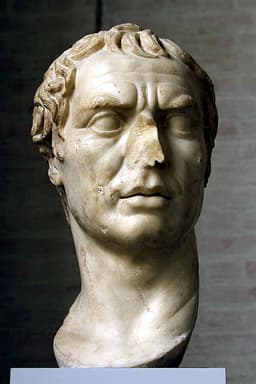
Scipio Aemilianus
General · Ancient
64.7Total
Basic Information
Born
10
-185
Died
68
-129
Era
Ancient
Ancient
Nationality
Roman Empire
Roman Republic
Occupation
General
General
Civilization
Western
Western
Score Comparison
Military (10%)
74.0
90.0
Political (20%)
26.4
68.0
Influence (20%)
55.7
55.0
Legacy (20%)
49.2
55.0
Leadership (15%)
54.2
72.0
Strategy (15%)
61.3
72.0
TOTAL
51.8
64.7
Gaius Suetonius Paulinus — Complete Timeline
60 AD
Sack of Mona (Anglesey)War
Suetonius Paulinus led a campaign against the druid stronghold of Mona (modern Anglesey). Roman forces crossed the Menai Strait, overwhelmed the druids and their supporters, and destroyed the sacred groves, suppressing Celtic religious resistance in Britain.
Roman BritainDruidsCampaign
Impact: regionaldestructive
61 AD
Defeat of Boudica at the Battle of Watling StreetWar◆ Major
Suetonius Paulinus, as governor of Britain, commanded a smaller Roman force against the massive Iceni rebellion led by Boudica. His tactical use of terrain and disciplined legionaries resulted in a decisive Roman victory, ending the revolt and securing Roman control over Britain.
Roman BritainIceni RebellionBattle
Impact: regional
Recall to Rome after Boudica's RevoltPolitical Action
Despite his victory at Watling Street, Suetonius Paulinus was recalled to Rome by Emperor Nero. His harsh punitive measures against the Britons were deemed excessive by the new procurator, leading to his replacement and a more conciliatory policy in the province.
Roman BritainGovernorshipRecall
Impact: regional
66 AD
Consulship under NeroPolitical Action
Suetonius Paulinus served as consul ordinarius for the year 66 AD, a high honor in the Roman state. This appointment recognized his military service and placed him among the senatorial elite during the later years of Nero's reign.
Roman PoliticsConsulshipNero
Impact: national
Scipio Aemilianus — Complete Timeline
146 BC
Destroyed Carthage in the Third Punic WarWar
Scipio Aemilianus, as Roman consul, led the final assault on Carthage. After a three-year siege, his forces breached the walls, captured the city, and systematically destroyed it. The surviving population was enslaved, and the territory became the Roman province of Africa.
Third Punic WarCarthageDestruction
Impact: globaldestructive
134 BC
Elected Consul for the Second TimePolitical Action
Scipio Aemilianus was elected consul for a second time, despite legal restrictions, to command the war in Spain. His election reflected his popularity and the Senate's trust in his military abilities to end the Numantine War.
ConsulshipRoman PoliticsMilitary Command
Impact: nationalconstructive
133 BC
Captured Numantia, Ending the Numantine WarWar◆ Major
Scipio Aemilianus besieged the Celtiberian city of Numantia in Spain. After a prolonged blockade, the starving city surrendered. Scipio razed Numantia, ending the Numantine War and consolidating Roman control over Hispania.
Numantine WarSpainSiege
Impact: regionaldestructive
129 BC
Died Under Suspicious CircumstancesOther◆ Major
Scipio Aemilianus was found dead in his bed, possibly murdered by political opponents. His death occurred amid political turmoil over land reforms proposed by Tiberius Gracchus, whom Scipio had opposed. The cause of death remains disputed.
DeathRoman PoliticsGracchi
Impact: nationaltragic
Expert Analysis
Origins
Gaius Suetonius Paulinus (c. 10 AD – after 69 AD) was a Roman general and governor from an Italian municipal family. He was born in the early 1st century AD, likely in Umbria or Picenum, and rose through the equestrian order. His early career included military tribunates and a praetorship before becoming governor of Britain in 58 AD. His formative experiences included campaigns in Mauretania (modern Morocco) as a legate, where he reputedly crossed the Atlas Mountains—a feat that earned him early recognition.
Scipio Aemilianus (185–129 BC) was born into the Cornelian gens, the most prestigious patrician family in Rome. He was the biological son of Lucius Aemilius Paullus Macedonicus, the conqueror of Macedon, but was adopted by Publius Cornelius Scipio, the son of Scipio Africanus. This dual heritage placed him at the center of Rome's military aristocracy. He received a thorough Greek education, studying philosophy and rhetoric, and was a close friend of the historian Polybius, who accompanied him on campaigns.
Rise to Power
Suetonius Paulinus's rise came through provincial commands. As governor of Mauretania (c. 42 AD), he led expeditions against mountain tribes, gaining a reputation for discipline and tactical skill. His major promotion was to the governorship of Britain in 58 AD, where he immediately launched a campaign to subdue the druid stronghold of Mona (Anglesey) in 60 AD. He crossed the Menai Strait with specially constructed flat-bottomed boats, defeated the druids and their supporters, and destroyed their sacred groves. This action was intended to break the spiritual resistance of the Britons. However, while he was occupied in the west, the Iceni queen Boudica sparked a massive revolt, sacking Camulodunum (Colchester), Londinium (London), and Verulamium (St. Albans). Suetonius rushed back with a small force of about 10,000 men, facing an estimated 100,000 rebels.
Scipio Aemilianus's rise was accelerated by his family connections. He served as a military tribune in Spain under his father in 151 BC, where he distinguished himself by his courage and diplomacy. In the Third Punic War (149–146 BC), he served as a senior officer under consuls who failed to take Carthage. In 147 BC, despite being underage for the consulship, he was elected consul by popular demand to lead the war. He restored discipline to the demoralized legions, built a fortified mole to block Carthage's harbor, and starved the city into submission. His capture and destruction of Carthage in 146 BC earned him the cognomen 'Aemilianus' and a triumph. Later, he was elected consul again in 134 BC to end the Numantine War in Spain, where he besieged Numantia for 15 months, forcing its surrender by starvation.
Leadership & Governance
Suetonius Paulinus was a strict disciplinarian who demanded obedience from his troops. His leadership style was aggressive and decisive, as seen in his rapid march to confront Boudica and his tactical deployment at Watling Street. He chose a narrow defile protected by woods, forcing the larger enemy force into a confined space where Roman discipline could prevail. His governance of Britain after the revolt was harsh—he employed punitive measures, destroying rebel strongholds and enslaving thousands. This brutality, however, alarmed the imperial administration in Rome, leading to his recall by Nero in 61 AD. His successor, Publius Petronius Turpilianus, adopted a more conciliatory approach.
Scipio Aemilianus was known for his personal integrity and moral rectitude. He restored traditional Roman discipline in the army by expelling camp followers, reducing baggage, and enforcing strict training. At the siege of Carthage, he personally led assaults and shared hardships with his men. His governance extended to politics: as censor in 142 BC, he attempted to reform public morals by curbing luxury and removing unworthy members from the Senate. He opposed the populist reforms of Tiberius Gracchus, believing they undermined the authority of the Senate. His political stance made him enemies among the populares, but he remained a respected figure due to his military achievements.
Triumph & Tragedy
Suetonius Paulinus's greatest triumph was the Battle of Watling Street (c. 61 AD), where he crushed the Iceni rebellion with a smaller force. His tactical acumen saved the Roman province of Britain from collapse. His sack of Mona also removed a center of druidic resistance. However, his greatest failure was the initial misjudgment that allowed the revolt to erupt while he was campaigning in Anglesey. His brutal reprisals after the victory led to his recall, effectively ending his governorship. He later served as consul in 66 AD and possibly as governor of other provinces, but he never again held a major command. His reputation was overshadowed by the magnitude of the revolt he suppressed.
Scipio Aemilianus's triumphs were monumental: he destroyed Carthage, Rome's greatest rival, ending the Punic Wars decisively. He also captured Numantia, demonstrating his mastery of siege warfare. His tragedies include his suspicious death at age 56, likely murdered by political opponents amid the Gracchan crisis. He also failed to achieve lasting political reform; his conservative stance did not prevent the rise of populism and civil strife. His destruction of Carthage and Numantia were total—both cities were razed, and the populations enslaved—which some historians view as excessive ruthlessness.
Character & Destiny
Suetonius Paulinus was a capable commander but lacked political finesse. His decision to punish the Britons harshly after Watling Street showed a rigid, unforgiving character that contrasted with the more diplomatic approach of his successor. His career after Britain suggests he was not a major player in imperial politics; he remained loyal to Nero and later supported Otho during the Year of the Four Emperors (69 AD), but his influence waned. His destiny was to be a footnote in the larger story of Roman Britain, remembered primarily for one battle.
Scipio Aemilianus was a man of principle and intellectual depth. He cultivated friendships with Greek scholars and was a patron of the arts. His character was marked by a stern moralism that earned him both admiration and enmity. His destiny was shaped by his adoption into the Scipio family, which brought immense expectations. He fulfilled those expectations militarily but could not navigate the turbulent politics of the late Republic. His death—possibly at the hands of his wife or political rivals—symbolized the growing violence that would eventually destroy the Republic.
Legacy
Suetonius Paulinus's legacy is tied to the survival of Roman rule in Britain. His victory at Watling Street ended the most serious challenge to Roman authority until the late 4th century. However, his name is less known than that of his adversary Boudica, who became a symbol of British resistance. In military terms, his use of terrain and discipline at Watling Street is studied in tactical histories. His overall legacy score of 49.2 reflects his limited long-term impact.
Scipio Aemilianus's legacy is immense. By destroying Carthage, he ensured Roman dominance in the western Mediterranean. His methods of siege warfare influenced later Roman commanders. In Spanish history, his destruction of Numantia became a symbol of heroic resistance. His patronage of Greek culture helped solidify the Hellenization of Roman elite. However, his political conservatism contributed to the polarization that led to the fall of the Republic. His legacy score of 55.0 is higher, reflecting his broader impact on Roman history.
Conclusion
While both were accomplished Roman generals, Scipio Aemilianus clearly had a greater impact. His military score of 90.0 dwarfs Suetonius Paulinus's 74.0, and his political score of 68.0 far exceeds Paulinus's 26.4. Scipio Aemilianus destroyed Carthage and Numantia, shaping the geopolitical landscape of the Mediterranean for centuries. Paulinus, despite a brilliant tactical victory, operated on a smaller stage and his influence ended with his recall. The total score gap of 12.9 points (64.7 vs 51.8) reflects this disparity. Scipio Aemilianus's actions had consequences that endured for generations, whereas Paulinus's victory, while crucial, was ultimately a defensive action that maintained the status quo. Therefore, Scipio Aemilianus is the more significant historical figure.
Rankings
🥇
Scipio AemilianusLeader
Mil: 90.0Pol: 68.0Inf: 55.0
64.7
🥈
Gaius Suetonius Paulinus
Mil: 74.0Pol: 26.4Inf: 55.7
51.8
+12.9 behind
How This Comparison Works
Algorithm
Each figure is scored on 6 dimensions (0—100 scale) based on structured historical data: Military (10%), Political (20%), Influence (20%), Legacy (20%), Leadership (15%), Strategy (15%). The weighted total produces the final ranking.
Data Sources
Scores are computed from structured sub-indicators in the database. Scale factors adjust for era (Ancient ×0.85, Modern ×1.0) and civilization size (Eastern ×1.05, Other ×0.80) to account for differences in population and military scale.
Maximum 3 Figures
Comparisons are limited to 2—3 figures to ensure readability and statistical meaningfulness.
Error Margins
±5 points per dimension — Sub-scores are derived from historical records with inherent uncertainty. Two figures within 5 points on a dimension should be considered roughly equivalent in that area.
Total Score Accuracy
±3 points overall — The weighted combination of 6 dimensions produces a total score with approximately ±3 points of uncertainty. Differences of less than 3 points are not statistically significant— the figures are effectively tied.
Known Limitations
- Historical records are incomplete and uneven across civilizations
- Figures from oral-tradition societies may be underrepresented
- Occupation labels can misclassify multi-role figures
- Scores measure capability and impact, not moral character
- Quantitative scoring is a comparison tool, not absolute truth
Capability Radar
Military (10%) — Battles & Warfare
Battles
65
85
Win Rate
70
90
Expansion
60
75
Political (20%) — Governance & Reform
Reform
30
65
Diplomacy
40
75
Economy
35
60
Influence (20%) — Cultural & Global Reach
Cultural
40
65
Global
35
75
Legacy (20%) — Historical Impact
Historical
55
80
Longevity
40
70
Leadership (15%) — Power & Stability
Tenure
50
70
Stability
45
70
Strategy (15%) — Tactics & Innovation
Strategy
70
85
Tactics
75
80
Reform
30
60
Similar Comparisons
Comments & Discussion
No comments yet. Be the first to share your thoughts!