Loading...
Sargon of Akkad vs Shutruk-Nahhunte I
Sargon of Akkad leads by 11.8 pts · 2 figures compared
…
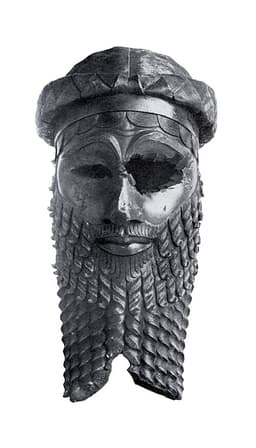
Sargon of Akkad
Emperor · Ancient
69.6Total

Shutruk-Nahhunte I
Emperor · Ancient
57.8Total
Basic Information
Born
-2334
-1190
Died
-2279
-1155
Era
Ancient
Ancient
Nationality
Akkadian Empire
Elam
Occupation
Emperor
Emperor
Civilization
Middle Eastern
Middle Eastern
Score Comparison
Military (10%)
75.0
80.0
Political (20%)
72.0
68.0
Influence (20%)
65.0
58.0
Legacy (20%)
65.0
50.0
Leadership (15%)
79.8
40.0
Strategy (15%)
68.0
66.3
TOTAL
69.6
57.8
Sargon of Akkad — Complete Timeline
2334 BC
Conquest of SumerWar
Sargon of Akkad conquered the Sumerian city-states, including Uruk and Ur, unifying Mesopotamia under his rule. This marked the creation of the world's first empire, the Akkadian Empire.
ConquestEmpireMesopotamia
Impact: global
Foundation of AkkadOther◆ Major
Sargon established the city of Akkad as his capital, likely near modern Baghdad. The city became the administrative and cultural center of the Akkadian Empire, though its exact location remains unknown.
City FoundationCapitalAkkad
Impact: regionalconstructive
2330 BC
Campaigns into AnatoliaWar◆ Major
Sargon led military campaigns into Anatolia (modern Turkey), reaching the Taurus Mountains and the Mediterranean coast. These expeditions expanded Akkadian influence and secured trade routes for timber and metals.
Military CampaignAnatoliaTrade
Impact: regional
2325 BC
Suppression of revoltsWar◆ Major
Sargon faced widespread revolts across his empire in his later years. He suppressed rebellions in Sumer, Elam, and other regions, but the unrest foreshadowed the empire's eventual collapse after his death.
RevoltEmpireInstability
Impact: regionaldestructive
Shutruk-Nahhunte I — Complete Timeline
1165 BC
Campaigns in MesopotamiaWar
Shutruk-Nahhunte I conducted multiple military campaigns into Mesopotamia, expanding Elamite influence. He attacked cities such as Eshnunna and Sippar, weakening the Kassite dynasty of Babylon.
Elamite ExpansionMesopotamiaKassites
Impact: regionaldestructive
1160 BC
Conquest of BabylonWar◆ Major
Shutruk-Nahhunte I led an Elamite invasion of Babylonia, capturing the city of Babylon. He plundered the city and removed the stele of Hammurabi, taking it to Susa as a trophy of war.
Elamite ConquestBabylonHammurabi Stele
Impact: regionaldestructive
Removal of the Stele of HammurabiCultural◆ Major
After conquering Babylon, Shutruk-Nahhunte I ordered the removal of the stele inscribed with the Code of Hammurabi. The stele was transported to Susa, the Elamite capital, where it remained until its rediscovery in 1901.
Cultural LootingHammurabiSusa
Impact: global
Expert Analysis
Origins
Sargon of Akkad, born around 2334 BCE, claimed to be the son of a gardener and a priestess, though his early life is shrouded in legend. He served as a cupbearer to King Ur-Zababa of Kish before seizing power. His humble beginnings contrasted with his later achievements. Shutruk-Nahhunte I, who ruled Elam from 1184 to 1155 BCE, was the son of Hallutush-Inshushinak, a previous Elamite king. He inherited a stable kingdom in southwestern Iran, with Susa as its capital. Unlike Sargon, Shutruk-Nahhunte was born into royalty and had a solid base for expansion.
Rise to Power
Sargon's rise began when he overthrew Ur-Zababa and established himself as king of Kish. He then systematically conquered the Sumerian city-states, including Uruk and Ur, unifying Mesopotamia by 2334 BCE. His military campaigns extended to the Mediterranean coast and Anatolia. Sargon scored 68.0 in strategy, reflecting his ability to coordinate multiple fronts. Shutruk-Nahhunte rose to prominence by launching a major invasion of Babylonia around 1158 BCE. He captured Babylon, plundered its treasures, and removed the Stele of Hammurabi to Susa. His military score of 80.0 is higher than Sargon's 75.0, but his political score of 68.0 is lower, indicating less success in consolidating gains.
Leadership & Governance
Sargon's leadership score of 79.8 reflects his innovative governance. He appointed loyal governors from his own family to rule Sumerian cities, replaced local rulers with Akkadians, and standardized weights and measures. He also established a standing army, a first in Mesopotamia. In contrast, Shutruk-Nahhunte's leadership score of 40.0 is the lowest among his attributes, indicating poor governance. After conquering Babylon, he did not integrate it into a lasting empire but instead returned to Susa with spoils. His Elamite rule was exploitative, focusing on tribute rather than administrative reform. Sargon's political score of 72.0 shows a more effective consolidation of power.
Triumph & Tragedy
Sargon's greatest triumph was creating the first empire, stretching from the Persian Gulf to the Mediterranean. His total score of 69.6 is the highest among early Mesopotamian rulers. However, his later years were marred by revolts across Sumer, Elam, and other regions, which he suppressed with difficulty. The empire weakened after his death. Shutruk-Nahhunte's triumph was capturing Babylon and removing the Code of Hammurabi, a symbolic act that demonstrated Elamite power. His tragedy was failing to build a durable empire; after his death, Elamite influence declined. His legacy score of 50.0 is significantly lower than Sargon's 65.0.
Character & Destiny
Sargon was ambitious and ruthless, as seen in his suppression of revolts. His decision to centralize power in Akkad created resentment among conquered peoples. His character shaped his destiny: he built an empire but also sowed the seeds of its fragility. Shutruk-Nahhunte was a conqueror who preferred plunder to governance. His removal of the stele shows a focus on symbolic prestige rather than sustainable rule. Historical assessments note his military prowess but lack of political acumen. Sargon's strategy score of 68.0 and leadership of 79.8 indicate a more balanced approach than Shutruk-Nahhunte's 66.3 and 40.0.
Legacy
Sargon's legacy is profound: he established the first empire, influenced later imperial models (e.g., Assyrian and Babylonian), and his dynasty lasted over a century. The Akkadian language became the lingua franca for centuries. His influence score of 65.0 reflects this. Shutruk-Nahhunte's legacy is more limited: he is remembered for moving the stele, but his empire did not endure. The Elamites continued but never matched his conquests. His legacy score of 50.0 is the lowest among his scores, indicating a minor long-term impact compared to Sargon.
Conclusion
Sargon of Akkad had a greater impact than Shutruk-Nahhunte I. With a total score of 69.6 versus 57.8, Sargon outperforms in every category except military, where Shutruk-Nahhunte scores 80.0 to Sargon's 75.0. However, Sargon's leadership (79.8 vs 40.0), political acumen (72.0 vs 68.0), and legacy (65.0 vs 50.0) are decisively higher. Sargon founded the first empire, a concept that shaped world history, while Shutruk-Nahhunte's conquests were ephemeral. Thus, Sargon's overall influence and enduring impact make him the greater historical figure.
Rankings
🥇
Sargon of AkkadLeader
Mil: 75.0Pol: 72.0Inf: 65.0
69.6
🥈
Shutruk-Nahhunte I
Mil: 80.0Pol: 68.0Inf: 58.0
57.8
+11.8 behind
How This Comparison Works
Algorithm
Each figure is scored on 6 dimensions (0—100 scale) based on structured historical data: Military (10%), Political (20%), Influence (20%), Legacy (20%), Leadership (15%), Strategy (15%). The weighted total produces the final ranking.
Data Sources
Scores are computed from structured sub-indicators in the database. Scale factors adjust for era (Ancient ×0.85, Modern ×1.0) and civilization size (Eastern ×1.05, Other ×0.80) to account for differences in population and military scale.
Maximum 3 Figures
Comparisons are limited to 2—3 figures to ensure readability and statistical meaningfulness.
Error Margins
±5 points per dimension — Sub-scores are derived from historical records with inherent uncertainty. Two figures within 5 points on a dimension should be considered roughly equivalent in that area.
Total Score Accuracy
±3 points overall — The weighted combination of 6 dimensions produces a total score with approximately ±3 points of uncertainty. Differences of less than 3 points are not statistically significant— the figures are effectively tied.
Known Limitations
- Historical records are incomplete and uneven across civilizations
- Figures from oral-tradition societies may be underrepresented
- Occupation labels can misclassify multi-role figures
- Scores measure capability and impact, not moral character
- Quantitative scoring is a comparison tool, not absolute truth
Capability Radar
Military (10%) — Battles & Warfare
Battles
85
70
Win Rate
90
75
Expansion
90
75
Political (20%) — Governance & Reform
Reform
85
45
Diplomacy
75
55
Economy
80
50
Influence (20%) — Cultural & Global Reach
Cultural
85
60
Global
85
50
Legacy (20%) — Historical Impact
Historical
90
65
Longevity
95
55
Leadership (15%) — Power & Stability
Tenure
80
60
Stability
70
55
Strategy (15%) — Tactics & Innovation
Strategy
85
70
Tactics
80
65
Reform
75
40
Similar Comparisons
Comments & Discussion
No comments yet. Be the first to share your thoughts!