Loading...
Alyattes of Lydia vs Sargon of Akkad
Sargon of Akkad leads by 14.9 pts · 2 figures compared
…

Alyattes of Lydia
Emperor · Ancient
54.7Total
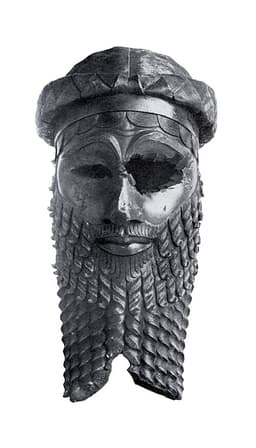
Sargon of Akkad
Emperor · Ancient
69.6Total
Basic Information
Born
-610
-2334
Died
-560
-2279
Era
Ancient
Ancient
Nationality
Lydia
Akkadian Empire
Occupation
Emperor
Emperor
Civilization
Middle Eastern
Middle Eastern
Score Comparison
Military (10%)
50.0
75.0
Political (20%)
60.0
72.0
Influence (20%)
55.0
65.0
Legacy (20%)
52.0
65.0
Leadership (15%)
53.2
79.8
Strategy (15%)
60.0
68.0
TOTAL
54.7
69.6
Alyattes of Lydia — Complete Timeline
600 BC
Conquest of SmyrnaWar
Alyattes captured and destroyed the Greek city of Smyrna (modern Izmir) after a prolonged siege. This conquest extended Lydian control over the Ionian coast and demonstrated Lydian military power against Greek city-states.
ConquestGreek CityIonia
Impact: regionaldestructive
Introduction of Standardized CoinageInvention
Alyattes introduced the first standardized coinage in Lydia, minting electrum coins stamped with a lion's head. This innovation facilitated trade and taxation, establishing Lydia as a commercial power and influencing monetary systems across the ancient world.
CoinageEconomic ReformInnovation
Impact: globalconstructive
590 BC
War with the MedesWar◆ Major
Alyattes waged a five-year war against the Median king Cyaxares over control of eastern Anatolia. The conflict culminated in the Battle of the Eclipse in 585 BC, which ended in a truce and the marriage of Alyattes' daughter to Cyaxares' son Astyages.
WarMedesPeace Treaty
Impact: regional
575 BC
Construction of the Temple of Artemis at EphesusCultural◆ Major
Alyattes funded the construction of the Temple of Artemis at Ephesus, one of the Seven Wonders of the Ancient World. The temple became a major religious and cultural center, reflecting Lydian wealth and influence in the region.
TempleArchitectureReligion
Impact: regionalconstructive
Sargon of Akkad — Complete Timeline
2334 BC
Conquest of SumerWar
Sargon of Akkad conquered the Sumerian city-states, including Uruk and Ur, unifying Mesopotamia under his rule. This marked the creation of the world's first empire, the Akkadian Empire.
ConquestEmpireMesopotamia
Impact: global
Foundation of AkkadOther◆ Major
Sargon established the city of Akkad as his capital, likely near modern Baghdad. The city became the administrative and cultural center of the Akkadian Empire, though its exact location remains unknown.
City FoundationCapitalAkkad
Impact: regionalconstructive
2330 BC
Campaigns into AnatoliaWar◆ Major
Sargon led military campaigns into Anatolia (modern Turkey), reaching the Taurus Mountains and the Mediterranean coast. These expeditions expanded Akkadian influence and secured trade routes for timber and metals.
Military CampaignAnatoliaTrade
Impact: regional
2325 BC
Suppression of revoltsWar◆ Major
Sargon faced widespread revolts across his empire in his later years. He suppressed rebellions in Sumer, Elam, and other regions, but the unrest foreshadowed the empire's eventual collapse after his death.
RevoltEmpireInstability
Impact: regionaldestructive
Expert Analysis
Origins
Alyattes of Lydia, born around 620 BCE, was the fourth king of the Mermnad dynasty. His father, Sadyattes, left him a kingdom in western Anatolia centered on Sardis. The Lydian economy relied on trade, and Alyattes inherited a state rich in gold from the Pactolus River. He likely received training in military command and administration, typical for a royal heir.
Sargon of Akkad, born around 2334 BCE, had a more obscure origin. Legend claims he was the son of a priestess and a gardener, set adrift in a basket on the Euphrates. He rose from humble beginnings to become cupbearer to King Ur-Zababa of Kish. Sargon's early life instilled ambition and adaptability, traits that defined his rule.
Rise to Power
Alyattes ascended the Lydian throne around 610 BCE after his father's death. He consolidated power by waging war against the Medes, a conflict that lasted five years and ended with a diplomatic marriage after the Battle of the Eclipse (585 BCE). This battle, predicted by Thales, forced a truce. Alyattes also conquered Smyrna around 600 BCE, destroying the Greek city and extending Lydian control over Ionian coast.
Sargon seized power in 2334 BCE by overthrowing Ur-Zababa, exploiting internal strife in Kish. He then conquered the Sumerian city-states, including Uruk and Ur, unifying Mesopotamia. His founding of Akkad as a new capital symbolized his break from tradition. Sargon's rise was rapid and violent, leveraging military innovation and strategic alliances.
Leadership & Governance
Alyattes ruled Lydia as a monarch with a focus on economic development. He introduced standardized coinage around 600 BCE, minting electrum coins stamped with a lion's head. This innovation facilitated trade and tax collection, boosting Lydian wealth. He also funded the Temple of Artemis at Ephesus, a major religious center. Militarily, Alyattes scored 50.0, reflecting limited expansion beyond Anatolia. His governance prioritized stability and commerce over conquest.
Sargon governed the Akkadian Empire as a centralized autocrat. He appointed governors loyal to him, replaced local rulers, and stationed garrisons. His military scored 75.0, reflecting campaigns into Anatolia and the Mediterranean. Sargon also standardized weights and measures, and promoted Akkadian as the official language. His leadership score of 79.8 indicates effective control, but his later years saw revolts, foreshadowing imperial fragility.
Triumph & Tragedy
Alyattes' greatest success was the introduction of coinage, which revolutionized ancient economies and set a precedent for later civilizations. His victory over the Medes secured Lydian independence. However, his conquest of Smyrna was brutal, and his failure to expand further left Lydia vulnerable. The Lydian kingdom under his son Croesus would fall to Persia in 546 BCE.
Sargon's triumph was the creation of the first empire, unifying Mesopotamia and establishing a model for future rulers. His campaigns reached the Mediterranean, showcasing Akkadian power. Yet, his tragedy was the constant revolts in his later years, which weakened the empire. After his death, the Akkadian Empire collapsed within a century. Sargon scored 65.0 in legacy, reflecting both innovation and instability.
Character & Destiny
Alyattes was a pragmatic leader, prioritizing economic and religious projects over military glory. His decision to end the Median war through marriage shows diplomatic acumen. However, his limited ambition meant Lydia remained a regional power. Historians view him as a capable administrator but not a transformative figure.
Sargon was ambitious and ruthless, willing to destroy cities and suppress rebellions. His character drove him to build an empire, but his centralized control bred resentment. The Akkadian Empire's collapse after his death suggests that his personality, while effective in conquest, could not sustain long-term governance. Sargon's total score of 69.6 reflects his greater historical impact.
Legacy
Alyattes' coinage became the standard for Greek city-states and later the Roman Empire. The Temple of Artemis, though rebuilt, remains a symbol of Lydian wealth. His influence score of 55.0 acknowledges his economic contribution, but his political and military legacy is modest. Lydia faded after Persian conquest.
Sargon's empire inspired later Mesopotamian rulers, including Hammurabi and the Assyrians. The Akkadian language influenced Semitic languages. His military campaigns set a precedent for imperial expansion. Sargon's legacy score of 65.0 is higher, reflecting the enduring concept of empire. He is remembered as the first empire builder, while Alyattes is known primarily for coinage.
Conclusion
Sargon of Akkad had greater impact than Alyattes of Lydia. Sargon scored 69.6 overall, compared to Alyattes' 54.7, a gap of 14.9 points. While Alyattes introduced coinage, a significant economic innovation, Sargon's creation of the first empire fundamentally altered political organization in the ancient Near East. Sargon's military (75.0 vs 50.0) and leadership (79.8 vs 53.2) scores dominate. Alyattes' achievements were important but localized, whereas Sargon's model of empire influenced millennia of history. The clear position is that Sargon's empire-building legacy surpasses Alyattes' economic innovation.
Rankings
🥇
Sargon of AkkadLeader
Mil: 75.0Pol: 72.0Inf: 65.0
69.6
🥈
Alyattes of Lydia
Mil: 50.0Pol: 60.0Inf: 55.0
54.7
+14.9 behind
How This Comparison Works
Algorithm
Each figure is scored on 6 dimensions (0—100 scale) based on structured historical data: Military (10%), Political (20%), Influence (20%), Legacy (20%), Leadership (15%), Strategy (15%). The weighted total produces the final ranking.
Data Sources
Scores are computed from structured sub-indicators in the database. Scale factors adjust for era (Ancient ×0.85, Modern ×1.0) and civilization size (Eastern ×1.05, Other ×0.80) to account for differences in population and military scale.
Maximum 3 Figures
Comparisons are limited to 2—3 figures to ensure readability and statistical meaningfulness.
Error Margins
±5 points per dimension — Sub-scores are derived from historical records with inherent uncertainty. Two figures within 5 points on a dimension should be considered roughly equivalent in that area.
Total Score Accuracy
±3 points overall — The weighted combination of 6 dimensions produces a total score with approximately ±3 points of uncertainty. Differences of less than 3 points are not statistically significant— the figures are effectively tied.
Known Limitations
- Historical records are incomplete and uneven across civilizations
- Figures from oral-tradition societies may be underrepresented
- Occupation labels can misclassify multi-role figures
- Scores measure capability and impact, not moral character
- Quantitative scoring is a comparison tool, not absolute truth
Capability Radar
Military (10%) — Battles & Warfare
Battles
45
85
Win Rate
50
90
Expansion
55
90
Political (20%) — Governance & Reform
Reform
70
85
Diplomacy
55
75
Economy
85
80
Influence (20%) — Cultural & Global Reach
Cultural
65
85
Global
70
85
Legacy (20%) — Historical Impact
Historical
75
90
Longevity
80
95
Leadership (15%) — Power & Stability
Tenure
60
80
Stability
60
70
Strategy (15%) — Tactics & Innovation
Strategy
55
85
Tactics
40
80
Reform
30
75
Similar Comparisons
Comments & Discussion
No comments yet. Be the first to share your thoughts!