Loading...
Sancho III of Navarre vs Sigismund of Luxembourg
Sigismund of Luxembourg leads by 4.9 pts · 2 figures compared
…
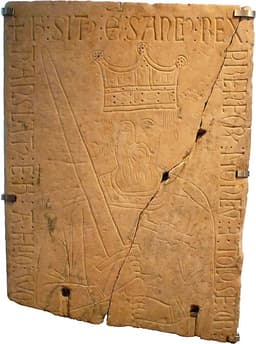
Sancho III of Navarre
Emperor · Medieval
55.1Total
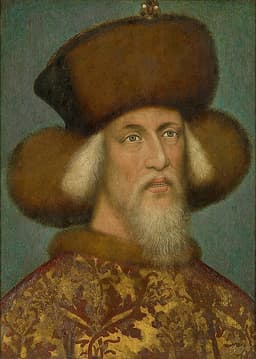
Sigismund of Luxembourg
Emperor · Medieval
60.0Total
Basic Information
Born
985
1368
Died
1035
1437
Era
Medieval
Medieval
Nationality
Navarre
Holy Roman Empire
Occupation
Emperor
Emperor
Civilization
Western
Western
Score Comparison
Military (10%)
47.5
50.0
Political (20%)
68.0
62.7
Influence (20%)
56.4
62.0
Legacy (20%)
48.3
52.0
Leadership (15%)
53.2
74.0
Strategy (15%)
60.0
60.0
TOTAL
55.1
60.0
Sancho III of Navarre — Complete Timeline
1004 AD
Inheritance of the Kingdom of PamplonaPolitical Action◆ Major
Sancho III inherited the Kingdom of Pamplona (Navarre) from his father Garc
Medieval IberiaKingdom of NavarreSuccession
Impact: regionalconstructive
1029 AD
Conquest of CastileWar◆ Major
Sancho III conquered the County of Castile after the assassination of Count Garc
Medieval IberiaConquestCastile
Impact: regional
1034 AD
Title of 'Emperor of Spain'Political Action◆ Major
Sancho III claimed the title 'Imperator totius Hispaniae' (Emperor of all Spain) after capturing Le
Medieval IberiaImperial TitleHegemony
Impact: regional
1035 AD
Division of the kingdomPolitical Action◆ Major
Upon his death, Sancho III divided his territories among his sons: Garc
Medieval IberiaSuccessionFragmentation
Impact: regionaldestructive
Sigismund of Luxembourg — Complete Timeline
1410 AD
Election as King of GermanyPolitical Action◆ Major
Sigismund, King of Hungary and son of Charles IV, was elected King of Germany by one faction of electors, while Jobst of Moravia was elected by another. This led to a double kingship until Jobst's death in 1411.
ElectionDouble Kingship
Impact: national
1414 AD
Convening of the Council of ConstancePolitical Action
Sigismund convened the Council of Constance to end the Western Schism. The council deposed all three rival popes and elected Pope Martin V, restoring unity to the Catholic Church.
CouncilEnd of Schism
Impact: globalconstructive
1415 AD
Execution of Jan HusPolitical Action
Despite granting Jan Hus a safe-conduct to the Council of Constance, Sigismund allowed Hus to be tried and burned at the stake for heresy. This act sparked the Hussite Wars in Bohemia.
ExecutionHussite Wars
Impact: regionaltragic
1433 AD
Coronation as Holy Roman EmperorPolitical Action◆ Major
Sigismund was crowned Holy Roman Emperor in Rome by Pope Eugene IV. His coronation marked the end of a long struggle for imperial recognition and solidified his authority.
CoronationImperial Authority
Impact: globalconstructive
Expert Analysis
Origins
Sancho III of Navarre, born around 990, inherited the Kingdom of Pamplona from his father García Sánchez II in 1004. His early life was shaped by the turbulent politics of Christian Iberia, where small kingdoms vied for supremacy against each other and the Caliphate of Córdoba. Sancho's mother, Jimena of Córdoba, provided connections to the Muslim south. He was raised in a court where military prowess and strategic marriage were paramount.
Sigismund of Luxembourg, born in 1368 in Nuremberg, was the son of Holy Roman Emperor Charles IV and Elizabeth of Pomerania. He was educated in the imperial court, learning diplomacy, governance, and military strategy. His family background gave him claims to Hungary, Bohemia, and the imperial throne. His early years were marked by the complex politics of the Holy Roman Empire and the ongoing Western Schism.
Rise to Power
Sancho III expanded his realm through a combination of marriage and conquest. In 1016, he married Muniadona of Castile, which later gave him a claim to the County of Castile. After the assassination of Count García Sánchez of Castile in 1029, Sancho seized control, incorporating Castile into his kingdom. In 1034, he captured León, claiming the title "Imperator totius Hispaniae" (Emperor of all Spain). His power peaked around 1035, controlling Navarre, Castile, León, and parts of Aragon.
Sigismund's rise was more gradual. He became King of Hungary in 1387 through marriage to Mary of Hungary. He faced opposition from the Hungarian nobility and was even imprisoned briefly. His election as King of Germany in 1410 was contested by Jobst of Moravia, leading to a dual election. After Jobst's death in 1411, Sigismund became undisputed King of Germany. He was crowned Holy Roman Emperor in 1433 by Pope Eugene IV, solidifying his authority.
Leadership & Governance
Sancho III ruled as a feudal monarch, relying on personal loyalty and military force. He divided his kingdom among his sons upon his death, a common practice that weakened his legacy. His governance was focused on consolidating Christian territories against Muslim powers, but he did not implement lasting administrative reforms. His claim to empire was more symbolic than practical, as the title "Emperor of Spain" was not recognized outside Iberia.
Sigismund's leadership was more institutional. He convened the Council of Constance (1414-1418) to end the Western Schism, demonstrating his diplomatic skill. The council deposed three rival popes and elected Martin V, restoring a single papacy. However, his decision to allow Jan Hus's execution despite a safe-conduct damaged his reputation. Sigismund also struggled with financial management, often relying on loans from wealthy cities. His political score of 62.7 reflects his ability to navigate complex power structures, while his military score of 50.0 indicates mixed success.
Triumph & Tragedy
Sancho III's greatest triumph was uniting most of Christian Iberia under his rule, a feat not achieved since the Visigothic era. His conquest of Castile and capture of León made him the most powerful Christian king in Spain. However, his greatest failure was the division of his kingdom after his death. By splitting his territories among his sons, he ensured that his unified realm fragmented into warring states, undermining his legacy. His influence score of 56.4 reflects his temporary unification, but his legacy score of 48.3 shows the short-lived nature of his achievement.
Sigismund's triumph was ending the Western Schism, a crisis that had divided Christendom for nearly 40 years. The Council of Constance also addressed heresy, leading to the execution of Jan Hus, which is both a triumph and tragedy. The execution sparked the Hussite Wars, devastating Bohemia and damaging Sigismund's reputation. His inability to suppress the Hussites militarily led to a compromise that left him weakened. His leadership score of 74.0 indicates strong diplomatic skills, but his military score of 50.0 reflects his failures in Bohemia.
Character & Destiny
Sancho III was ambitious and strategically minded, using marriage and conquest to expand his realm. His decision to divide his kingdom suggests a traditional mindset, valuing family inheritance over state unity. Historians note that his title "Emperor of Spain" was a claim to hegemony, but he lacked the administrative infrastructure to sustain it. His character was shaped by the feudal culture of 11th-century Iberia, where personal rule was the norm.
Sigismund was pragmatic and diplomatic, but also ruthless when necessary. His safe-conduct to Jan Hus was likely a political maneuver, but his failure to honor it revealed a willingness to sacrifice principles for political gain. He was persistent in pursuing his goals, as seen in his long struggle for imperial coronation. However, his financial mismanagement and military setbacks in Hungary and Bohemia suggest a leader better at negotiation than governance. His total score of 60.0 reflects his mixed record.
Legacy
Sancho III's legacy is primarily as the father of Ferdinand I of Castile and García Sánchez III of Navarre. His unification of Iberia was temporary, but it set the stage for later Christian expansion. His claim to empire influenced later Spanish monarchs, though his name is not widely remembered. His legacy score of 48.3 indicates limited long-term impact.
Sigismund's legacy is more substantial. The Council of Constance resolved the Western Schism and asserted conciliar authority over the papacy, influencing church governance for centuries. His role in the Hussite Wars also contributed to the development of religious dissent in Europe. However, his reputation suffered due to the Hus affair. His legacy score of 52.0 is slightly higher than Sancho's, reflecting his more enduring impact on European history.
Conclusion
Sigismund of Luxembourg had a greater impact than Sancho III of Navarre. His convening of the Council of Constance resolved a major crisis in the Catholic Church, affecting millions of Christians. Sancho's unification of Iberia was impressive but short-lived, undone by his own division of the kingdom. Sigismund's total score of 60.0 compared to Sancho's 55.1 reflects his superior political and leadership abilities. While both were medieval emperors, Sigismund's actions had consequences that lasted beyond his reign. Sancho's legacy was confined to Iberia and quickly faded, whereas Sigismund's involvement in the Conciliar movement and the Hussite Wars shaped European religious and political history.
Rankings
🥇
Sigismund of LuxembourgLeader
Mil: 50.0Pol: 62.7Inf: 62.0
60.0
🥈
Sancho III of Navarre
Mil: 47.5Pol: 68.0Inf: 56.4
55.1
+4.9 behind
How This Comparison Works
Algorithm
Each figure is scored on 6 dimensions (0—100 scale) based on structured historical data: Military (10%), Political (20%), Influence (20%), Legacy (20%), Leadership (15%), Strategy (15%). The weighted total produces the final ranking.
Data Sources
Scores are computed from structured sub-indicators in the database. Scale factors adjust for era (Ancient ×0.85, Modern ×1.0) and civilization size (Eastern ×1.05, Other ×0.80) to account for differences in population and military scale.
Maximum 3 Figures
Comparisons are limited to 2—3 figures to ensure readability and statistical meaningfulness.
Error Margins
±5 points per dimension — Sub-scores are derived from historical records with inherent uncertainty. Two figures within 5 points on a dimension should be considered roughly equivalent in that area.
Total Score Accuracy
±3 points overall — The weighted combination of 6 dimensions produces a total score with approximately ±3 points of uncertainty. Differences of less than 3 points are not statistically significant— the figures are effectively tied.
Known Limitations
- Historical records are incomplete and uneven across civilizations
- Figures from oral-tradition societies may be underrepresented
- Occupation labels can misclassify multi-role figures
- Scores measure capability and impact, not moral character
- Quantitative scoring is a comparison tool, not absolute truth
Capability Radar
Military (10%) — Battles & Warfare
Battles
45
55
Win Rate
50
45
Expansion
60
40
Political (20%) — Governance & Reform
Reform
40
60
Diplomacy
70
75
Economy
50
50
Influence (20%) — Cultural & Global Reach
Cultural
45
55
Global
35
55
Legacy (20%) — Historical Impact
Historical
50
70
Longevity
40
60
Leadership (15%) — Power & Stability
Tenure
65
70
Stability
55
35
Strategy (15%) — Tactics & Innovation
Strategy
55
50
Tactics
40
40
Reform
30
30
Similar Comparisons
Comments & Discussion
No comments yet. Be the first to share your thoughts!