Loading...
Samia Suluhu Hassan vs Sauli Niinisto
Sauli Niinisto leads by 2.7 pts · 2 figures compared
…

Samia Suluhu Hassan
Politician · Modern
54.4Total
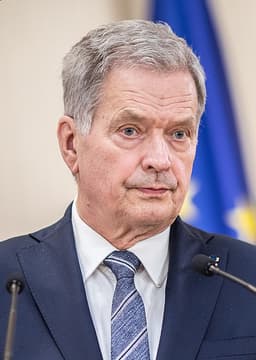
Sauli Niinisto
Politician · Modern
57.1Total
Basic Information
Born
1960
1948
Died
—
—
Era
Modern
Modern
Nationality
Tanzania
Finland
Occupation
Politician
Politician
Civilization
Other
Western
Score Comparison
Military (10%)
40.4
50.0
Political (20%)
53.8
72.0
Influence (20%)
61.0
56.4
Legacy (20%)
49.2
43.3
Leadership (15%)
72.0
80.0
Strategy (15%)
39.0
43.4
TOTAL
54.4
57.1
Samia Suluhu Hassan — Complete Timeline
2021 AD
Became First Female President of TanzaniaPolitical Action
Following John Magufuli's death, Samia Suluhu Hassan was sworn in as president, becoming Tanzania's first female head of state. She assumed office amid constitutional continuity and pledged to unite the country.
PresidencyFirst FemaleSuccession
Impact: nationalprogressive
Reversed COVID-19 Denial PolicyPolitical Action◆ Major
President Hassan reversed Magufuli's COVID-19 denial approach, forming a committee to review the pandemic response. She encouraged mask-wearing and vaccination, and Tanzania received its first COVAX vaccine shipments.
COVID-19Policy ReversalPublic Health
Impact: nationalconstructive
Reopened Opposition MediaPolitical Action◆ Major
Hassan allowed the reopening of opposition-aligned newspapers and TV stations that had been banned under Magufuli. This move signaled a shift toward greater press freedom and political openness.
Press FreedomDemocracyReform
Impact: nationalprogressive
2023 AD
Hosted Talks on Democratic Transition in NigerPolitical Action
Hassan mediated negotiations between Niger's junta and ECOWAS after the 2023 coup. She facilitated dialogue aimed at restoring civilian rule, enhancing her regional diplomatic profile.
DiplomacyNigerECOWAS
Impact: regionalconstructive
Sauli Niinisto — Complete Timeline
1996 AD
Served as Minister of FinancePolitical Action◆ Major
Niinistö served as Minister of Finance from 1996 to 2003, overseeing Finland's economic policy during the dot-com boom and the introduction of the euro. He was known for fiscal conservatism and budget surpluses.
FinanceEconomyEuro
Impact: nationalconstructive
2012 AD
Elected President of FinlandPolitical Action◆ Major
Sauli Niinist
PresidencyElectionFinland
Impact: nationalconstructive
2018 AD
Re-elected for a second termPolitical Action◆ Major
Niinistö was re-elected with 62.7% of the vote in the first round, a strong mandate. His re-election reflected public confidence in his handling of foreign policy and security issues.
Re-electionPresidencyMandate
Impact: nationalconstructive
2020 AD
Managed the COVID-19 pandemic responsePolitical Action◆ Major
Niinistö declared a state of emergency in Finland in March 2020, implementing lockdowns and travel restrictions. He coordinated with the government to manage the health crisis, though the response faced criticism for economic impacts.
COVID-19PandemicEmergency
Impact: national
2023 AD
Led Finland's accession to NATOPolitical Action
Niinistö oversaw Finland's historic decision to join NATO in response to the Russian invasion of Ukraine. The accession process was completed in April 2023, ending Finland's long-standing policy of military non-alignment.
NATOSecurityForeign Policy
Impact: globalconstructive
Expert Analysis
Origins
Samia Suluhu Hassan was born on January 27, 1960, in Zanzibar, Tanzania. She studied public administration at the Institute of Development Management in Mzumbe and later pursued a postgraduate degree in economics at the University of Manchester. Her early career included working as a civil servant and in the Zanzibar government.
Sauli Niinisto was born on August 24, 1948, in Salo, Finland. He studied law at the University of Turku, earning a master's degree. Before entering politics, he worked as a lawyer and served in various roles in local government. His early political career began in the National Coalition Party.
Rise to Power
Samia Suluhu Hassan rose through Tanzania's political ranks, starting as a Zanzibar legislator in 2000. She became Vice President in 2015 under President John Magufuli. Her rise to the presidency was unexpected; following Magufuli's sudden death in March 2021, she was sworn in as Tanzania's first female head of state, scoring 53.8 in political skill.
Sauli Niinisto rose to prominence as Finland's Minister of Finance from 1996 to 2003, overseeing the introduction of the euro. He was elected President in 2012, defeating Pekka Haavisto. His re-election in 2018 with 62.7% of the vote reflected strong public trust, contributing to his political score of 72.0.
Leadership & Governance
Samia Suluhu Hassan's leadership style is consultative and reform-oriented. She reversed Magufuli's COVID-19 denial policy, forming a committee to review the pandemic response and encouraging mask-wearing and vaccination. She also reopened opposition media outlets that had been banned, signaling a shift toward greater press freedom. Her governance approach emphasizes national unity and reconciliation, with a leadership score of 72.0.
Sauli Niinisto's leadership is characterized by steady crisis management and strategic decision-making. He declared a state of emergency in March 2020 to manage the COVID-19 pandemic, implementing lockdowns and travel restrictions. His most significant action was leading Finland's accession to NATO in response to the Russian invasion of Ukraine, completed in April 2023. He scored 80.0 in leadership.
Triumph & Tragedy
Samia Suluhu Hassan's greatest triumph is her role in restoring democratic norms in Tanzania after Magufuli's authoritarian tendencies. She reopened opposition media and facilitated talks between Niger's junta and ECOWAS after the 2023 coup. However, her legacy is still emerging; she faces challenges in tackling corruption and economic stagnation, with a strategy score of 39.0.
Sauli Niinisto's triumph is his successful navigation of Finland's NATO accession, a historic shift in foreign policy. He also managed the COVID-19 pandemic effectively. However, his tenure saw Finland's relationship with Russia deteriorate, and his economic policies during the dot-com boom were not without criticism. He scored 43.4 in strategy.
Character & Destiny
Samia Suluhu Hassan is known for her calm, diplomatic demeanor. Her character shaped her destiny as a unifier, but her soft power approach may limit her ability to push through rapid reforms. Historical assessments view her as a stabilizing force after Magufuli's rule.
Sauli Niinisto is pragmatic and cautious, traits that served Finland well during crises. His character led him to prioritize national security, culminating in NATO membership. Historians note his ability to build consensus, but also his tendency toward incrementalism.
Legacy
Samia Suluhu Hassan's legacy is still being written, but she is already recognized as a trailblazer for women in African politics. Her reversal of COVID-19 denial and media bans may set a precedent for democratic governance in Tanzania. She scored 49.2 in legacy.
Sauli Niinisto's legacy is firmly tied to Finland's NATO membership, which redefined the country's security posture for generations. He also left a mark on fiscal policy through his tenure as finance minister. His legacy score is 43.3.
Conclusion
While both leaders have made significant contributions, Sauli Niinisto had a greater impact on a global scale due to his role in Finland's NATO accession, which altered European security dynamics. Samia Suluhu Hassan's reforms are important for Tanzania but have not yet achieved the transformative effect of Niinisto's foreign policy shift. Niinisto's total score of 57.1 versus Hassan's 54.4 reflects his higher overall impact, particularly in political and leadership dimensions.
Rankings
🥇
Sauli NiinistoLeader
Mil: 50.0Pol: 72.0Inf: 56.4
57.1
🥈
Samia Suluhu Hassan
Mil: 40.4Pol: 53.8Inf: 61.0
54.4
+2.7 behind
How This Comparison Works
Algorithm
Each figure is scored on 6 dimensions (0—100 scale) based on structured historical data: Military (10%), Political (20%), Influence (20%), Legacy (20%), Leadership (15%), Strategy (15%). The weighted total produces the final ranking.
Data Sources
Scores are computed from structured sub-indicators in the database. Scale factors adjust for era (Ancient ×0.85, Modern ×1.0) and civilization size (Eastern ×1.05, Other ×0.80) to account for differences in population and military scale.
Maximum 3 Figures
Comparisons are limited to 2—3 figures to ensure readability and statistical meaningfulness.
Error Margins
±5 points per dimension — Sub-scores are derived from historical records with inherent uncertainty. Two figures within 5 points on a dimension should be considered roughly equivalent in that area.
Total Score Accuracy
±3 points overall — The weighted combination of 6 dimensions produces a total score with approximately ±3 points of uncertainty. Differences of less than 3 points are not statistically significant— the figures are effectively tied.
Known Limitations
- Historical records are incomplete and uneven across civilizations
- Figures from oral-tradition societies may be underrepresented
- Occupation labels can misclassify multi-role figures
- Scores measure capability and impact, not moral character
- Quantitative scoring is a comparison tool, not absolute truth
Capability Radar
Military (10%) — Battles & Warfare
Battles
26
29
Win Rate
26
30
Expansion
31
35
Political (20%) — Governance & Reform
Reform
55
60
Diplomacy
65
75
Economy
55
55
Influence (20%) — Cultural & Global Reach
Cultural
50
30
Global
55
50
Legacy (20%) — Historical Impact
Historical
55
40
Longevity
40
20
Leadership (15%) — Power & Stability
Tenure
60
65
Stability
60
70
Strategy (15%) — Tactics & Innovation
Strategy
31
38
Tactics
33
41
Reform
40
46
Similar Comparisons
Comments & Discussion
No comments yet. Be the first to share your thoughts!