Loading...
Saigo Takamori vs Tiburcio Carias Andino
Saigo Takamori leads by 7.6 pts · 2 figures compared
…

Saigo Takamori
General · Modern
53.4Total
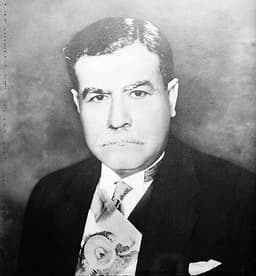
Tiburcio Carias Andino
General · Modern
45.8Total
Basic Information
Born
1828
1876
Died
1877
1969
Era
Modern
Modern
Nationality
Japan
Honduras
Occupation
General
General
Civilization
Eastern
Western
Score Comparison
Military (10%)
25.0
25.9
Political (20%)
43.7
36.5
Influence (20%)
72.0
47.9
Legacy (20%)
52.0
39.2
Leadership (15%)
50.7
80.0
Strategy (15%)
57.5
39.6
TOTAL
53.4
45.8
Saigo Takamori — Complete Timeline
1868 AD
Role in the Meiji RestorationPolitical Action◆ Major
Saigo Takamori was a key leader in the Meiji Restoration, commanding Satsuma forces in the Boshin War against the Tokugawa shogunate. He led the capture of Edo Castle and was instrumental in establishing the new imperial government. His actions helped end the shogunate and restore imperial rule.
Meiji RestorationBoshin WarImperial Rule
Impact: nationalconstructive
1873 AD
Resignation from the Meiji GovernmentPolitical Action◆ Major
Saigo Takamori resigned from his government posts over the Seikanron debate, opposing the majority's decision not to invade Korea. He returned to Kagoshima, disillusioned with the government's direction. This resignation set the stage for his later rebellion and highlighted his disagreement with modernization policies.
ResignationSeikanronMeiji Government
Impact: national
1877 AD
Satsuma RebellionWar
Saigo Takamori led a rebellion of Satsuma samurai against the Meiji government's modernizing reforms. The rebellion began with the seizure of Kagoshima and escalated into a full-scale war. Saigo's forces were defeated at the Battle of Shiroyama, and Saigo was killed. This was the last major samurai uprising.
RebellionSamuraiMeiji Restoration
Impact: nationaltragic
Battle of ShiroyamaWar◆ Major
The final battle of the Satsuma Rebellion, where government forces surrounded Saigo Takamori's outnumbered samurai on Mount Shiroyama in Kagoshima. After a fierce fight, Saigo was wounded and committed seppuku. The battle ended the rebellion and marked the end of the samurai class as a military force.
BattleSamuraiEnd of an Era
Impact: nationaltragic
Tiburcio Carias Andino — Complete Timeline
1933 AD
Assumption of presidency after coupPolitical Action
Carias Andino assumed the presidency of Honduras after a coup against the liberal government of Vicente Mej
CoupDictatorshipPower Consolidation
Impact: nationaldestructive
1936 AD
Extension of presidential term to 25 yearsPolitical Action◆ Major
Carias Andino orchestrated a constitutional amendment that extended the presidential term from 4 to 6 years and allowed his re-election, effectively granting him a 25-year rule. This move eliminated political opposition and cemented his authoritarian control.
Constitutional AmendmentAuthoritarianismRe-election
Impact: nationaldestructive
1937 AD
Suppression of the 1937 peasant uprisingWar◆ Major
Carias Andino's government violently suppressed a peasant uprising in western Honduras, killing hundreds. The rebellion was sparked by land dispossession and labor exploitation, and its brutal repression solidified Carias's reputation as a repressive dictator.
Peasant UprisingRepressionLand Conflict
Impact: nationaldestructive
Expert Analysis
Origins
Saigo Takamori was born on January 23, 1828, in Kagoshima, Satsuma domain (now Kagoshima Prefecture), into a lower-ranking samurai family. His father, Saigo Kichibei, was a minor tax official. Saigo received a traditional Confucian education and training in martial arts. He was influenced by the Mito school of thought, which emphasized imperial loyalty and xenophobia.
Tiburcio Carias Andino was born on March 15, 1876, in Tegucigalpa, Honduras, into a wealthy landowning family. His father, Manuel Carias, was a lawyer and politician. Carias studied law and graduated from the Central University of Honduras in 1898. He entered politics early, serving as a deputy and later as a senator. His background was in civilian politics, but he later allied with the military.
Rise to Power
Saigo Takamori rose to prominence during the Bakumatsu period. In 1868, he commanded Satsuma forces in the Boshin War, leading the capture of Edo Castle on April 6, 1868. He became a key figure in the Meiji Restoration, serving as a field marshal and councilor. However, his influence waned after the Seikanron debate in 1873, where he advocated for a punitive expedition against Korea. When the government rejected his proposal, he resigned his posts and returned to Kagoshima.
Tiburcio Carias Andino assumed the presidency on February 1, 1933, after a coup against liberal President Vicente Mejía Colindres. He consolidated power by suppressing opposition. In 1936, he orchestrated a constitutional amendment extending the presidential term to 6 years and allowing indefinite re-election. He effectively ruled as a dictator until 1949, winning controlled elections in 1936 and 1942.
Leadership & Governance
Saigo Takamori's leadership was rooted in samurai ideals of honor and loyalty. He opposed the Meiji government's modernization, particularly the abolition of the samurai class and the adoption of Western-style conscription. He championed the samurai's traditional privileges and resisted centralization. His governance was localized, focusing on Satsuma domain after his resignation.
Tiburcio Carias Andino ruled Honduras with an iron fist, maintaining order through repression. He suppressed dissent, censored the press, and used the military to crush uprisings. He promoted economic development through infrastructure projects, but his regime was authoritarian and corrupt. He maintained stability at the cost of political freedom.
Triumph & Tragedy
Saigo Takamori's greatest triumph was his role in the Meiji Restoration, which ended the Tokugawa shogunate and restored imperial rule. However, his tragedy was the Satsuma Rebellion (1877), where he led 40,000 samurai against the government's modern army. The rebellion was crushed at the Battle of Shiroyama on September 24, 1877, where Saigo was wounded and committed seppuku. The rebellion failed, leading to the final dissolution of the samurai class.
Tiburcio Carias Andino's triumph was his long rule, which brought political stability to Honduras after years of instability. He modernized infrastructure and maintained peace. However, his tragedy was the suppression of the 1937 peasant uprising, where hundreds were killed. His legacy is tainted by authoritarianism and human rights abuses.
Character & Destiny
Saigo Takamori was characterized by his unwavering principles and loyalty. He was known as the 'Last Samurai' for his adherence to bushido. His destiny was shaped by his opposition to change; he chose rebellion and death over compromise. Historians note his romanticized image as a tragic hero.
Tiburcio Carias Andino was pragmatic and ruthless. He was a skilled politician who maintained power through manipulation and force. His destiny was to rule as a dictator, but his long tenure also set back democratic development in Honduras. He is remembered as a strongman who prioritized stability over freedom.
Legacy
Saigo Takamori's legacy is complex. In Japan, he is honored as a symbol of samurai virtue and opposition to modernization. He scored 72.0 in Influence and 52.0 in Legacy. His rebellion accelerated the centralization of the Meiji state. Today, he is memorialized in statues and films.
Tiburcio Carias Andino's legacy is largely negative. He scored 47.9 in Influence and 39.2 in Legacy. His rule entrenched authoritarianism in Honduras. After leaving office in 1949, he remained influential, but his regime is criticized for human rights violations. He is often cited as a classic Latin American caudillo.
Conclusion
Saigo Takamori had greater impact than Tiburcio Carias Andino. Saigo's actions were pivotal in Japan's transition to modernity, even though he opposed it. His rebellion forced the Meiji government to consolidate power, shaping Japan's future. Carias's rule, while long, was a period of stagnation for Honduras. Saigo's total score of 53.4 exceeds Carias's 45.8. Saigo's influence extends beyond his era, symbolizing the clash between tradition and modernity, while Carias's legacy is mostly confined to Honduran history.
Rankings
🥇
Saigo TakamoriLeader
Mil: 25.0Pol: 43.7Inf: 72.0
53.4
🥈
Tiburcio Carias Andino
Mil: 25.9Pol: 36.5Inf: 47.9
45.8
+7.6 behind
How This Comparison Works
Algorithm
Each figure is scored on 6 dimensions (0—100 scale) based on structured historical data: Military (10%), Political (20%), Influence (20%), Legacy (20%), Leadership (15%), Strategy (15%). The weighted total produces the final ranking.
Data Sources
Scores are computed from structured sub-indicators in the database. Scale factors adjust for era (Ancient ×0.85, Modern ×1.0) and civilization size (Eastern ×1.05, Other ×0.80) to account for differences in population and military scale.
Maximum 3 Figures
Comparisons are limited to 2—3 figures to ensure readability and statistical meaningfulness.
Error Margins
±5 points per dimension — Sub-scores are derived from historical records with inherent uncertainty. Two figures within 5 points on a dimension should be considered roughly equivalent in that area.
Total Score Accuracy
±3 points overall — The weighted combination of 6 dimensions produces a total score with approximately ±3 points of uncertainty. Differences of less than 3 points are not statistically significant— the figures are effectively tied.
Known Limitations
- Historical records are incomplete and uneven across civilizations
- Figures from oral-tradition societies may be underrepresented
- Occupation labels can misclassify multi-role figures
- Scores measure capability and impact, not moral character
- Quantitative scoring is a comparison tool, not absolute truth
Capability Radar
Military (10%) — Battles & Warfare
Battles
45
10
Win Rate
40
15
Expansion
20
5
Political (20%) — Governance & Reform
Reform
40
20
Diplomacy
30
30
Economy
20
15
Influence (20%) — Cultural & Global Reach
Cultural
70
10
Global
55
5
Legacy (20%) — Historical Impact
Historical
65
20
Longevity
60
15
Leadership (15%) — Power & Stability
Tenure
35
70
Stability
15
25
Strategy (15%) — Tactics & Innovation
Strategy
55
10
Tactics
60
10
Reform
30
5
Similar Comparisons
Comments & Discussion
No comments yet. Be the first to share your thoughts!