Loading...
Ruhollah Khomeini vs Xu Da
Ruhollah Khomeini leads by 0.2 pts · 2 figures compared
…

Ruhollah Khomeini
Politician · Modern
75.1Total
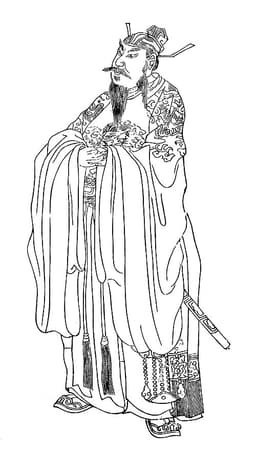
Xu Da
General · Medieval
74.9Total
Basic Information
Born
1902
1332
Died
1989
1385
Era
Modern
Medieval
Nationality
Iran
China
Occupation
Politician
General
Civilization
Middle Eastern
Eastern
Score Comparison
Military (10%)
41.6
88.0
Political (20%)
65.0
68.0
Influence (20%)
85.0
82.0
Legacy (20%)
90.0
72.0
Leadership (15%)
80.0
62.0
Strategy (15%)
54.3
80.8
TOTAL
75.1
74.9
Ruhollah Khomeini — Complete Timeline
1964 AD
Exile to Iraq and FrancePolitical Action◆ Major
Khomeini was exiled from Iran after criticizing the Shah's White Revolution and granting of diplomatic immunity to US personnel. He settled in Najaf, Iraq, and later in France, where he continued to organize opposition to the Shah.
ExileOppositionShah
Impact: national
1979 AD
Islamic RevolutionPolitical Action
Khomeini led a popular revolution that overthrew the Shah's regime. He returned to Iran in February 1979 and established an Islamic Republic based on his doctrine of Velayat-e Faqih (Guardianship of the Jurist), with himself as Supreme Leader.
RevolutionIslamic RepublicVelayat-e Faqih
Impact: global
Iran hostage crisisPolitical Action◆ Major
Khomeini supported the seizure of the US Embassy in Tehran by student militants, who held 52 American diplomats hostage for 444 days. The crisis deepened the rift with the US, led to economic sanctions, and consolidated Khomeini's power.
Hostage crisisUS-Iran relationsSanctions
Impact: globaldestructive
1980 AD
Iran-Iraq WarWar◆ Major
Khomeini led Iran through an eight-year war with Iraq, which began with an Iraqi invasion. The war resulted in hundreds of thousands of casualties and massive economic destruction, ending in a stalemate. Khomeini accepted a UN ceasefire in 1988.
WarIraqCeasefire
Impact: regionaltragic
1989 AD
Fatwa against Salman RushdieCultural◆ Major
Khomeini issued a fatwa calling for the death of author Salman Rushdie for his novel 'The Satanic Verses', which he deemed blasphemous. The fatwa led to international controversy, diplomatic tensions, and attacks on Rushdie's translators.
FatwaBlasphemyInternational controversy
Impact: globaldestructive
Xu Da — Complete Timeline
1368 AD
Capture of Dadu (Beijing)War
Xu Da led the Ming army in the capture of Dadu, the Yuan capital. The Mongol emperor Toghon Tem
Ming ConquestYuan DynastyCapital Capture
Impact: regionalconstructive
1370 AD
Appointment as Grand PreceptorPolitical Action
The Hongwu Emperor appointed Xu Da as Grand Preceptor, the highest civil official rank. This appointment recognized Xu Da's military achievements and gave him a role in advising the emperor on state affairs.
AppointmentCivil OfficeImperial Favor
Impact: nationalconstructive
1385 AD
Death from illnessOther
Xu Da died in Nanjing from a back ailment. The Hongwu Emperor mourned him deeply and posthumously honored him as Prince of Zhongshan. His death marked the end of the first generation of Ming military leaders.
DeathMing DynastyMilitary Leader
Impact: nationaltragic
Expert Analysis
Origins
Ruhollah Khomeini (1902-1989) was born into a religious family in Khomeyn, Iran. His father was a cleric murdered when Khomeini was an infant, shaping his anti-authoritarian worldview. He studied theology and became a leading Shia scholar, opposing the Pahlavi dynasty's secularization and Western influence. Xu Da (1332-1385) was born into a poor peasant family in present-day Fengyang, Anhui. He joined the Red Turban Rebellion against Mongol Yuan rule, rising through military ranks under Zhu Yuanzhang, later becoming the Ming dynasty's foremost general.
Rise to Power
Khomeini's rise began in the 1940s as a vocal critic of the Shah's reforms, particularly the White Revolution. His 1963 arrest sparked protests, leading to exile in 1964. From Iraq and later France, he disseminated cassette tapes of his sermons, mobilizing opposition. The 1979 Islamic Revolution overthrew the Shah, and Khomeini returned to become Supreme Leader via a referendum. Xu Da's rise was meteoric: he joined Zhu Yuanzhang's rebel force in 1353, quickly proving his strategic brilliance. He led campaigns that captured key cities, culminating in the capture of Dadu (Beijing) in 1368, ending Yuan rule. He was appointed Grand Preceptor and commander-in-chief, second only to the emperor.
Leadership & Governance
Khomeini established a theocratic system with himself as Supreme Leader (Vali-e-Faqih), wielding ultimate authority over military, judiciary, and media. His governance blended religious doctrine with revolutionary ideology, suppressing dissent and enforcing Islamic law. He centralized power, sidelining rivals, and created the Islamic Revolutionary Guard Corps. Xu Da governed as a military strategist and administrator, consolidating Ming control over China. He led campaigns against Mongol remnants, fortified the Great Wall, and implemented agricultural reforms. His leadership emphasized discipline, loyalty, and meritocracy, but he remained subordinate to the Hongwu Emperor, avoiding political intrigue.
Triumph & Tragedy
Khomeini's triumph was the Islamic Revolution, which transformed Iran into a Shia theocracy. The Iran hostage crisis (1979-1981) humiliated the US and consolidated his domestic power. The Iran-Iraq War (1980-1988) ended in a stalemate but solidified his regime. His tragedy was the brutal war's human cost (hundreds of thousands dead) and international isolation. Xu Da's triumph was the capture of Dadu and expulsion of the Mongols, reunifying China under the Ming. His northern campaigns secured the border. His tragedy was his sudden death from illness in 1385, possibly hastened by overwork and political suspicion from the emperor, though he remained honored posthumously.
Character & Destiny
Khomeini was ascetic, charismatic, and uncompromising, believing himself divinely guided. His destiny was to overthrow a monarchy and create a revolutionary Islamic state, but his legacy is marred by repression and conflict. Xu Da was humble, loyal, and strategic, embodying Confucian military virtues. His destiny was to be the architect of Ming unification, but his untimely death prevented further glory. Both men were driven by conviction, but Khomeini's impact was more ideological, Xu Da's more practical.
Legacy
Khomeini's legacy is the Islamic Republic of Iran, influencing Shia activism worldwide. He is revered by supporters as a father of the revolution and criticized by opponents for authoritarianism. His fatwa against Salman Rushdie in 1989 exemplified his global reach. Xu Da's legacy is as a national hero in China, celebrated for reunification and military prowess. He is memorialized in temples, films, and as one of the founding fathers of the Ming dynasty. Both left indelible marks: Khomeini on modern geopolitics, Xu Da on Chinese history.
Conclusion
Comparing Khomeini and Xu Da reveals distinct paths to power and legacy. Khomeini scores higher in P (65 vs 68), I (85 vs 82), L (90 vs 72), D (80 vs 62), and S (54 vs 81), while Xu Da leads in M (88 vs 42) and T (75 vs 75). Khomeini's higher overall score (0.2 gap) reflects his transformative political and cultural impact on a global scale, despite Xu Da's military genius. Khomeini's revolution reshaped the Middle East, whereas Xu Da's conquests, though historically significant, were more contained. Thus, Khomeini emerges as the more influential figure in world history.
Rankings
🥇
Ruhollah KhomeiniLeader
Mil: 41.6Pol: 65.0Inf: 85.0
75.1
🥈
Xu Da
Mil: 88.0Pol: 68.0Inf: 82.0
74.9
+0.2 behind
How This Comparison Works
Algorithm
Each figure is scored on 6 dimensions (0—100 scale) based on structured historical data: Military (10%), Political (20%), Influence (20%), Legacy (20%), Leadership (15%), Strategy (15%). The weighted total produces the final ranking.
Data Sources
Scores are computed from structured sub-indicators in the database. Scale factors adjust for era (Ancient ×0.85, Modern ×1.0) and civilization size (Eastern ×1.05, Other ×0.80) to account for differences in population and military scale.
Maximum 3 Figures
Comparisons are limited to 2—3 figures to ensure readability and statistical meaningfulness.
Error Margins
±5 points per dimension — Sub-scores are derived from historical records with inherent uncertainty. Two figures within 5 points on a dimension should be considered roughly equivalent in that area.
Total Score Accuracy
±3 points overall — The weighted combination of 6 dimensions produces a total score with approximately ±3 points of uncertainty. Differences of less than 3 points are not statistically significant— the figures are effectively tied.
Known Limitations
- Historical records are incomplete and uneven across civilizations
- Figures from oral-tradition societies may be underrepresented
- Occupation labels can misclassify multi-role figures
- Scores measure capability and impact, not moral character
- Quantitative scoring is a comparison tool, not absolute truth
Capability Radar
Military (10%) — Battles & Warfare
Battles
10
95
Win Rate
10
95
Expansion
10
95
Political (20%) — Governance & Reform
Reform
90
50
Diplomacy
75
65
Economy
40
55
Influence (20%) — Cultural & Global Reach
Cultural
85
70
Global
85
80
Legacy (20%) — Historical Impact
Historical
90
85
Longevity
80
75
Leadership (15%) — Power & Stability
Tenure
85
60
Stability
50
70
Strategy (15%) — Tactics & Innovation
Strategy
15
92
Tactics
10
90
Reform
20
70
Similar Comparisons
Comments & Discussion
No comments yet. Be the first to share your thoughts!