Loading...
Robert the Bruce vs Rupert of the Palatinate
Robert the Bruce leads by 15.7 pts · 2 figures compared
…
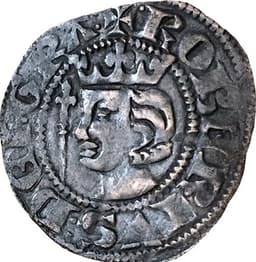
Robert the Bruce
Emperor · Medieval
55.5Total
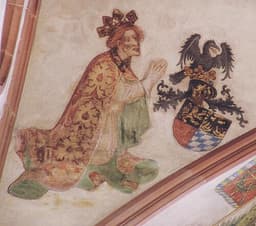
Rupert of the Palatinate
Emperor · Medieval
39.8Total
Basic Information
Born
1274
1352
Died
1329
1410
Era
Medieval
Medieval
Nationality
Scotland
Holy Roman Empire
Occupation
Emperor
Emperor
Civilization
Western
Western
Score Comparison
Military (10%)
70.0
50.0
Political (20%)
68.0
26.4
Influence (20%)
55.0
47.9
Legacy (20%)
52.0
38.3
Leadership (15%)
40.0
38.1
Strategy (15%)
55.0
35.7
TOTAL
55.5
39.8
Robert the Bruce — Complete Timeline
1306 AD
Coronation as King of ScotsPolitical Action
Robert the Bruce was crowned King of Scots at Scone Abbey by Isabella MacDuff, Countess of Buchan. The coronation occurred after Bruce murdered John Comyn, his rival, in Greyfriars Church, Dumfries, sparking a new phase of the Wars of Independence.
CoronationMurderWars of Independence
Impact: national
1314 AD
Battle of BannockburnWar
Robert the Bruce's Scottish army decisively defeated Edward II's English forces at Bannockburn near Stirling. The victory secured Scottish independence and established Bruce as the undisputed king, though the war continued for years.
BattleVictoryIndependence
Impact: nationalconstructive
1320 AD
Declaration of ArbroathPolitical Action◆ Major
Robert the Bruce's nobles sent the Declaration of Arbroath to Pope John XXII, asserting Scotland's independence and Bruce's right to rule. The document argued that Scotland was a sovereign kingdom and that the nobles would depose Bruce if he submitted to England.
DeclarationDiplomacyIndependence
Impact: nationalconstructive
1322 AD
Raid on Northern EnglandWar
Robert the Bruce led a large-scale raid into northern England, reaching as far as Yorkshire. The raid devastated English territories and forced Edward II to pay a ransom for peace, demonstrating Scottish military strength.
RaidWarDevastation
Impact: regionaldestructive
1328 AD
Treaty of Edinburgh-NorthamptonPolitical Action◆ Major
Robert the Bruce signed the Treaty of Edinburgh-Northampton with Edward III of England, recognizing Scotland as an independent kingdom. The treaty ended the First War of Scottish Independence and included the marriage of Bruce's son David to Edward III's sister Joan.
TreatyPeaceIndependence
Impact: nationalconstructive
Rupert of the Palatinate — Complete Timeline
1400 AD
Election as King of the RomansPolitical Action◆ Major
The four Rhenish electors deposed Wenceslaus IV and elected Rupert of the Palatinate as King of the Romans. Rupert's election was contested by Wenceslaus and his supporters, leading to a divided empire. Rupert was never crowned Holy Roman Emperor by the Pope.
ElectionImperial PoliticsSchism
Impact: regional
1401 AD
Italian CampaignWar◆ Major
Rupert led an expedition to Italy to secure his coronation as Holy Roman Emperor and to support Pope Boniface IX against his rivals. The campaign was a failure; Rupert's army was defeated by the forces of Gian Galeazzo Visconti of Milan near Brescia. Rupert retreated to Germany without achieving his goals.
Italian CampaignMilitary DefeatCoronation
Impact: regionaltragic
1405 AD
Conflict with the Archbishop of MainzPolitical Action
Rupert became embroiled in a conflict with Archbishop Johann II of Mainz over the election of a new bishop in the diocese of Paderborn. The dispute escalated into a military confrontation, with Rupert besieging the archbishop's castle. The conflict was eventually resolved through mediation, but it weakened Rupert's authority.
Ecclesiastical ConflictSiegeImperial Authority
destructive
Expert Analysis
Origins
Robert the Bruce was born on July 11, 1274, into a noble family with a claim to the Scottish throne. His grandfather, Robert de Brus, was a contender in the Great Cause of 1290-1292. Bruce's early life was marked by political maneuvering, as his family switched allegiances between Scotland and England. He was educated in chivalry and warfare, likely in both Scotland and England. His father, Robert de Brus, 6th Lord of Annandale, passed the claim to the throne to his son.
Rupert of the Palatinate was born on May 5, 1352, in Amberg, into the House of Wittelsbach. He was the son of Rupert II, Elector Palatine, and Beatrix of Sicily. Rupert grew up in the Palatinate, a major principality in the Holy Roman Empire. He was well-educated in governance and law, and he became Elector Palatine in 1390 upon his father's death. His early career focused on consolidating power in the Palatinate.
Rise to Power
Robert the Bruce rose to power through a dramatic act: on February 10, 1306, he murdered his rival John Comyn at Greyfriars Church in Dumfries. This act cleared his path to the throne, and he was crowned King of Scots at Scone on March 25, 1306. However, his early reign was disastrous: Edward I of England defeated him at the Battle of Methven (June 19, 1306) and the Battle of Dalrigh (August 1306). Bruce became a fugitive, but he rebuilt his support through guerrilla warfare, culminating in the Battle of Loudoun Hill (May 10, 1307) where he defeated an English force.
Rupert of the Palatinate rose to power through election. In 1400, the four Rhenish electors deposed King Wenceslaus IV for incompetence and elected Rupert as King of the Romans on August 21, 1400. His election was contested by Wenceslaus and by the rival Luxembourg faction. Rupert's support base was primarily in the Rhineland, and he lacked the resources to assert authority across the empire.
Leadership & Governance
Robert the Bruce's leadership was characterized by strategic patience and effective use of limited resources. He avoided pitched battles against larger English armies, instead using scorched-earth tactics and targeting English supply lines. His governance focused on rebuilding Scotland after the wars of independence: he restored royal authority, reorganized the administration, and secured the support of the nobility through grants of land and titles. The 1326 Parliament at Cambuskenneth confirmed the succession of his son David.
Rupert of the Palatinate's leadership was marred by financial constraints and political isolation. He attempted to assert authority through military campaigns but lacked the funds to maintain a large army. His governance was focused on the Palatinate, where he introduced administrative reforms, but he failed to gain recognition from the majority of imperial princes. His Italian expedition (1401-1402) to secure coronation as emperor was a military and financial failure.
Triumph & Tragedy
Robert the Bruce's greatest triumph was the Battle of Bannockburn (June 23-24, 1314), where he decisively defeated Edward II's army, securing Scottish independence. He also led raids into northern England, reaching Yorkshire in 1322, forcing the English to sue for peace. The Treaty of Edinburgh-Northampton (1328) formally recognized Scotland as an independent kingdom. However, his greatest failure was the murder of John Comyn, which started a civil war and led to initial defeats. He also failed to secure a lasting peace; war resumed after his death.
Rupert of the Palatinate's only significant achievement was his election as King of the Romans in 1400, but he was never crowned emperor. His Italian campaign (1401-1402) was a disaster: he was defeated by Gian Galeazzo Visconti of Milan and ran out of money, forcing him to return to Germany. His conflict with Archbishop Johann II of Mainz over the Paderborn bishopric further weakened his position. He died on May 18, 1410, with his authority limited to the Palatinate.
Character & Destiny
Robert the Bruce was pragmatic and ruthless, willing to commit murder to achieve his goals. He was also resilient, surviving as a fugitive and rebuilding his cause. His character combined military skill with political acumen, but he was often criticized for his betrayal of his earlier oath to Edward I. Historical assessments note his ability to inspire loyalty among his followers, but also his willingness to sacrifice others for his ambition.
Rupert of the Palatinate was cautious and legalistic, but lacked the charisma and resources to command widespread support. He was seen as a competent administrator but a weak king. His decision to invade Italy was overambitious given his limited funds. Contemporaries described him as honorable but ineffective.
Legacy
Robert the Bruce's legacy is profound: he secured Scottish independence, which lasted until 1707. The Declaration of Arbroath (1320) influenced later concepts of national sovereignty. His dynasty, the House of Bruce, ruled Scotland until 1371. He is remembered as a national hero, and his military tactics at Bannockburn are studied in military history. His total score is 55.5, with military at 70.0 and political at 68.0.
Rupert of the Palatinate's legacy is minimal: he is a minor figure in German history, remembered mainly for his failed Italian campaign. His election marked a brief interruption in the Luxembourg dynasty. He left no significant reforms or lasting institutions. His total score is 39.8, with military at 50.0 and political at 26.4.
Conclusion
Robert the Bruce had a greater impact on history than Rupert of the Palatinate. Bruce's military and political achievements transformed Scotland into an independent nation, with lasting influence on European geopolitics. Rupert, by contrast, failed to achieve his primary goal of imperial coronation and left no enduring legacy. The score gap of 15.7 points reflects this difference: Bruce's political score (68.0) dwarfs Rupert's (26.4), and his military success at Bannockburn cemented his place in history. While Rupert's election as king was a temporary success, his inability to consolidate power or influence events beyond the Palatinate makes him a footnote compared to Bruce's foundational role in Scottish history.
Rankings
🥇
Robert the BruceLeader
Mil: 70.0Pol: 68.0Inf: 55.0
55.5
🥈
Rupert of the Palatinate
Mil: 50.0Pol: 26.4Inf: 47.9
39.8
+15.7 behind
How This Comparison Works
Algorithm
Each figure is scored on 6 dimensions (0—100 scale) based on structured historical data: Military (10%), Political (20%), Influence (20%), Legacy (20%), Leadership (15%), Strategy (15%). The weighted total produces the final ranking.
Data Sources
Scores are computed from structured sub-indicators in the database. Scale factors adjust for era (Ancient ×0.85, Modern ×1.0) and civilization size (Eastern ×1.05, Other ×0.80) to account for differences in population and military scale.
Maximum 3 Figures
Comparisons are limited to 2—3 figures to ensure readability and statistical meaningfulness.
Error Margins
±5 points per dimension — Sub-scores are derived from historical records with inherent uncertainty. Two figures within 5 points on a dimension should be considered roughly equivalent in that area.
Total Score Accuracy
±3 points overall — The weighted combination of 6 dimensions produces a total score with approximately ±3 points of uncertainty. Differences of less than 3 points are not statistically significant— the figures are effectively tied.
Known Limitations
- Historical records are incomplete and uneven across civilizations
- Figures from oral-tradition societies may be underrepresented
- Occupation labels can misclassify multi-role figures
- Scores measure capability and impact, not moral character
- Quantitative scoring is a comparison tool, not absolute truth
Capability Radar
Military (10%) — Battles & Warfare
Battles
65
20
Win Rate
60
25
Expansion
50
10
Political (20%) — Governance & Reform
Reform
55
15
Diplomacy
65
25
Economy
50
20
Influence (20%) — Cultural & Global Reach
Cultural
60
15
Global
55
10
Legacy (20%) — Historical Impact
Historical
70
20
Longevity
65
10
Leadership (15%) — Power & Stability
Tenure
60
30
Stability
55
15
Strategy (15%) — Tactics & Innovation
Strategy
70
15
Tactics
75
20
Reform
55
10
Similar Comparisons
Comments & Discussion
No comments yet. Be the first to share your thoughts!