Loading...
This comparison has not been analyzed yet.
One-time AI generation (~1 minute). Scores and timeline are already available below.
Rana Sanga vs Sancho III of Navarre
Rana Sanga leads by 2.6 pts · 2 figures compared
…
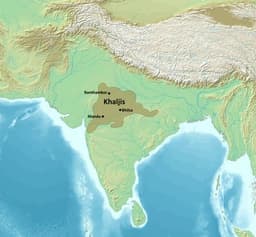
Rana Sanga
Emperor · Medieval
57.7Total
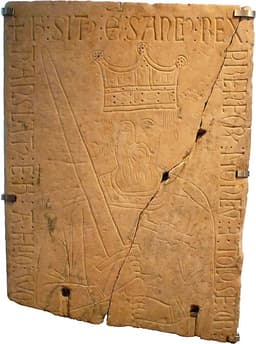
Sancho III of Navarre
Emperor · Medieval
55.1Total
Basic Information
Born
1482
985
Died
1528
1035
Era
Medieval
Medieval
Nationality
India
Navarre
Occupation
Emperor
Emperor
Civilization
Indian
Western
Score Comparison
Military (10%)
66.0
47.5
Political (20%)
53.8
68.0
Influence (20%)
59.0
56.4
Legacy (20%)
50.0
48.3
Leadership (15%)
66.0
53.2
Strategy (15%)
58.4
60.0
TOTAL
57.7
55.1
Rana Sanga — Complete Timeline
1518 AD
Battle of KhatoliWar◆ Major
Rana Sanga defeated the Lodi Sultan Ibrahim Lodi at the Battle of Khatoli. The victory expanded Mewar's territory and influence. Rana Sanga captured several Lodi officers and gained control of parts of eastern Rajasthan.
VictoryLodi SultanateTerritorial Expansion
Impact: regionalconstructive
1526 AD
Battle of DholpurWar◆ Major
Rana Sanga defeated Babur's forces at the Battle of Dholpur, capturing the fort. This victory encouraged Sanga to challenge Babur directly. It set the stage for the decisive Battle of Khanwa.
VictoryMughal ConflictPrelude to Khanwa
Impact: regionalconstructive
Formation of Rajput confederation against BaburPolitical Action◆ Major
Rana Sanga united several Rajput kingdoms, including Mewar, Marwar, and Amber, to oppose Babur's invasion of India. The confederation aimed to restore Rajput sovereignty. This alliance was the largest Rajput coalition since the medieval period.
AllianceRajput UnityAnti-Mughal
Impact: regionalconstructive
1527 AD
Battle of KhanwaWar
Rana Sanga led a confederation of Rajput clans against Babur at the Battle of Khanwa. The Rajput forces were defeated by Babur's use of artillery and tactics. This battle cemented Mughal power in North India and ended Rajput hopes of restoring their dominance.
Mughal ConquestRajput ConfederacyDefeat
Impact: globaltragic
Sancho III of Navarre — Complete Timeline
1004 AD
Inheritance of the Kingdom of PamplonaPolitical Action◆ Major
Sancho III inherited the Kingdom of Pamplona (Navarre) from his father Garc
Medieval IberiaKingdom of NavarreSuccession
Impact: regionalconstructive
1029 AD
Conquest of CastileWar◆ Major
Sancho III conquered the County of Castile after the assassination of Count Garc
Medieval IberiaConquestCastile
Impact: regional
1034 AD
Title of 'Emperor of Spain'Political Action◆ Major
Sancho III claimed the title 'Imperator totius Hispaniae' (Emperor of all Spain) after capturing Le
Medieval IberiaImperial TitleHegemony
Impact: regional
1035 AD
Division of the kingdomPolitical Action◆ Major
Upon his death, Sancho III divided his territories among his sons: Garc
Medieval IberiaSuccessionFragmentation
Impact: regionaldestructive
This comparison has not been analyzed yet.
One-time AI generation (~1 minute). Scores and timeline are already available below.
Rankings
🥇
Rana SangaLeader
Mil: 66.0Pol: 53.8Inf: 59.0
57.7
🥈
Sancho III of Navarre
Mil: 47.5Pol: 68.0Inf: 56.4
55.1
+2.6 behind
How This Comparison Works
Algorithm
Each figure is scored on 6 dimensions (0—100 scale) based on structured historical data: Military (10%), Political (20%), Influence (20%), Legacy (20%), Leadership (15%), Strategy (15%). The weighted total produces the final ranking.
Data Sources
Scores are computed from structured sub-indicators in the database. Scale factors adjust for era (Ancient ×0.85, Modern ×1.0) and civilization size (Eastern ×1.05, Other ×0.80) to account for differences in population and military scale.
Maximum 3 Figures
Comparisons are limited to 2—3 figures to ensure readability and statistical meaningfulness.
Error Margins
±5 points per dimension — Sub-scores are derived from historical records with inherent uncertainty. Two figures within 5 points on a dimension should be considered roughly equivalent in that area.
Total Score Accuracy
±3 points overall — The weighted combination of 6 dimensions produces a total score with approximately ±3 points of uncertainty. Differences of less than 3 points are not statistically significant— the figures are effectively tied.
Known Limitations
- Historical records are incomplete and uneven across civilizations
- Figures from oral-tradition societies may be underrepresented
- Occupation labels can misclassify multi-role figures
- Scores measure capability and impact, not moral character
- Quantitative scoring is a comparison tool, not absolute truth
Capability Radar
Military (10%) — Battles & Warfare
Battles
65
45
Win Rate
60
50
Expansion
68
60
Political (20%) — Governance & Reform
Reform
50
40
Diplomacy
65
70
Economy
45
50
Influence (20%) — Cultural & Global Reach
Cultural
55
45
Global
40
35
Legacy (20%) — Historical Impact
Historical
60
50
Longevity
50
40
Leadership (15%) — Power & Stability
Tenure
60
65
Stability
55
55
Strategy (15%) — Tactics & Innovation
Strategy
72
55
Tactics
70
40
Reform
55
30
Similar Comparisons
Comments & Discussion
No comments yet. Be the first to share your thoughts!