Loading...
Ramesses I vs Yashodharman
Yashodharman leads by 11.1 pts · 2 figures compared
…
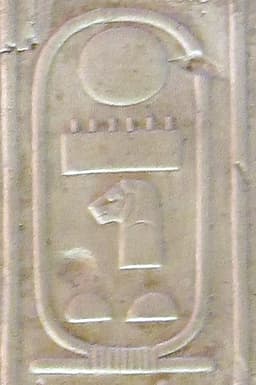
Ramesses I
Emperor · Ancient
38.3Total

Yashodharman
Emperor · Ancient
49.4Total
Basic Information
Born
-1292
-515
Died
-1290
—
Era
Ancient
Ancient
Nationality
New Kingdom Egypt
India
Occupation
Emperor
Emperor
Civilization
Middle Eastern
Indian
Score Comparison
Military (10%)
25.9
70.0
Political (20%)
29.3
36.5
Influence (20%)
50.2
48.6
Legacy (20%)
40.0
40.0
Leadership (15%)
33.6
58.8
Strategy (15%)
36.8
60.0
TOTAL
38.3
49.4
Ramesses I — Complete Timeline
1292 BC
Founding of the 19th DynastyPolitical Action
Ramesses I ascended the throne after the death of Horemheb, who had no heir. As a military officer and vizier under Horemheb, Ramesses I was chosen to succeed him, founding the 19th Dynasty. His accession marked a new era of stability and military strength after the turmoil of the late 18th Dynasty.
19th DynastySuccessionNew Kingdom
Impact: nationalconstructive
1291 BC
Construction of the Temple of Amun at KarnakCultural◆ Major
Ramesses I began construction on the great hypostyle hall at the Temple of Amun in Karnak, though he died before its completion. His contributions included the decoration of the north wall and the initiation of the massive columns. The hall was later finished by his son Seti I and grandson Ramesses II.
ArchitectureKarnakTemple
Impact: nationalconstructive
1290 BC
Brief Reign and Burial in the Valley of the KingsPolitical Action
Ramesses I ruled for less than two years, making his reign one of the shortest of the New Kingdom. He was buried in a hastily prepared tomb (KV16) in the Valley of the Kings. Despite his brief rule, he established the dynasty that would produce some of Egypt's most famous pharaohs, including Ramesses II.
BurialValley of the KingsShort Reign
Impact: national
Yashodharman — Complete Timeline
525 AD
Expanded the Aulikara KingdomWar◆ Major
Yashodharman conquered territories in central and western India, including parts of Malwa, Gujarat, and Rajasthan. His campaigns expanded the Aulikara kingdom into a major regional power, though it collapsed after his death.
ConquestTerritorial Expansion
Impact: regional
528 AD
Defeated the Huna King MihirakulaWar
Yashodharman led a coalition of Indian kings to defeat the Huna ruler Mihirakula, who had terrorized northern India. The victory ended Huna dominance in the region and is recorded in the Mandasor pillar inscription, which celebrates Yashodharman as a liberator.
BattleHuna Defeat
Impact: regional
Issued the Mandasor Pillar InscriptionCultural
Yashodharman erected a victory pillar at Mandasor (modern Madhya Pradesh) with an inscription boasting of his conquests. The inscription claims he ruled from the Brahmaputra to the Arabian Sea and the Himalayas to the Vindhyas, though this may be exaggerated.
InscriptionPropaganda
Impact: regional
Expert Analysis
Origins
**Ramesses I** was born Paramessu, a commoner from the Nile Delta, around 1300 BCE. He rose through the military ranks under Pharaoh Horemheb, serving as a general and later as vizier. His family had no royal blood, but his competence earned him the throne when Horemheb died without an heir. Ramesses I was elderly by the time he became pharaoh, likely in his 60s.
**Yashodharman** emerged from the Aulikara clan, a Rajput dynasty in central India. The exact date of his birth is unknown, but he ruled in the early 6th century CE. His kingdom was based in Malwa, with Mandasor as a key center. He inherited a realm threatened by the Huna invasions, which had destabilized northern India after the Gupta decline.
Rise to Power
Ramesses I's rise was a direct result of Horemheb's lack of an heir. As vizier, he was the administrative backbone of Egypt. Upon Horemheb's death in 1292 BCE, Ramesses I was crowned, beginning the 19th Dynasty. His legitimacy was bolstered by his role in restoring order after the Amarna period.
Yashodharman's rise is marked by his military campaign against the Huna king Mihirakula, who had terrorized India. Around 528 CE, Yashodharman led a coalition of Indian kings to defeat Mihirakula, ending Huna dominance. This victory elevated him from a regional ruler to a pan-Indian figure.
Leadership & Governance
Ramesses I's reign lasted less than two years, limiting his governance. His main act was initiating the construction of the great hypostyle hall at Karnak, a project completed by his son Seti I. He also secured the succession of his son, ensuring dynastic stability.
Yashodharman's leadership was military-focused. After defeating Mihirakula, he expanded his kingdom across central and western India, including Malwa, Gujarat, and Rajasthan. He issued the Mandasor Pillar Inscription, boasting of his conquests and claiming rule from the Himalayas to the western ocean. However, his empire dissolved after his death, as no lasting administrative structures were established.
Triumph & Tragedy
Ramesses I's triumph was founding the 19th Dynasty, which produced Ramesses II. His tragedy was his brief reign—he died before completing his Karnak hall and had to be buried in a small, hastily prepared tomb (KV16).
Yashodharman's triumph was decisively defeating Mihirakula, a feat recorded in multiple inscriptions. His tragedy is that his empire collapsed soon after his reign, leaving no enduring legacy. His score of 70.0 in military reflects his success, but his political score of 36.5 indicates weak institutional foundations.
Character & Destiny
Ramesses I was a pragmatic administrator who accepted the throne late in life. His character was shaped by loyalty to Horemheb and a desire for order. His destiny was to be a transitional figure, overshadowed by his son and grandson.
Yashodharman was a warrior-king who seized his moment. His inscription reveals pride in his conquests, but his lack of administrative focus led to ephemeral rule. His total score of 49.4 is higher than Ramesses I's 38.3, but his impact was more localized.
Legacy
Ramesses I's legacy is indirect: he started the 19th Dynasty, which produced Ramesses II, one of Egypt's greatest pharaohs. The Karnak hypostyle hall became a symbol of New Kingdom power. His tomb, though small, is part of the Valley of the Kings.
Yashodharman's legacy is limited to his victory over the Hunas, which is remembered in Indian history as a defense of dharma. The Mandasor inscription is a key source. However, he is not widely known outside specialist circles.
Conclusion
Despite his lower total score (38.3 vs. 49.4), Ramesses I had greater historical impact because he founded a dynasty that shaped Egypt for two centuries. Yashodharman's victory was significant but temporary. Ramesses I's influence score of 50.2 versus Yashodharman's 48.6 reflects this. The founder of the 19th Dynasty edges out the Huna-slayer in lasting significance.
Rankings
🥇
YashodharmanLeader
Mil: 70.0Pol: 36.5Inf: 48.6
49.4
🥈
Ramesses I
Mil: 25.9Pol: 29.3Inf: 50.2
38.3
+11.1 behind
How This Comparison Works
Algorithm
Each figure is scored on 6 dimensions (0—100 scale) based on structured historical data: Military (10%), Political (20%), Influence (20%), Legacy (20%), Leadership (15%), Strategy (15%). The weighted total produces the final ranking.
Data Sources
Scores are computed from structured sub-indicators in the database. Scale factors adjust for era (Ancient ×0.85, Modern ×1.0) and civilization size (Eastern ×1.05, Other ×0.80) to account for differences in population and military scale.
Maximum 3 Figures
Comparisons are limited to 2—3 figures to ensure readability and statistical meaningfulness.
Error Margins
±5 points per dimension — Sub-scores are derived from historical records with inherent uncertainty. Two figures within 5 points on a dimension should be considered roughly equivalent in that area.
Total Score Accuracy
±3 points overall — The weighted combination of 6 dimensions produces a total score with approximately ±3 points of uncertainty. Differences of less than 3 points are not statistically significant— the figures are effectively tied.
Known Limitations
- Historical records are incomplete and uneven across civilizations
- Figures from oral-tradition societies may be underrepresented
- Occupation labels can misclassify multi-role figures
- Scores measure capability and impact, not moral character
- Quantitative scoring is a comparison tool, not absolute truth
Capability Radar
Military (10%) — Battles & Warfare
Battles
10
60
Win Rate
10
70
Expansion
10
45
Political (20%) — Governance & Reform
Reform
10
30
Diplomacy
20
35
Economy
10
30
Influence (20%) — Cultural & Global Reach
Cultural
20
30
Global
20
20
Legacy (20%) — Historical Impact
Historical
30
40
Longevity
20
20
Leadership (15%) — Power & Stability
Tenure
10
40
Stability
20
35
Strategy (15%) — Tactics & Innovation
Strategy
10
50
Tactics
10
55
Reform
10
30
Similar Comparisons
Comments & Discussion
No comments yet. Be the first to share your thoughts!