Loading...
Liu Penzi vs Ramesses I
Liu Penzi leads by 2.4 pts · 2 figures compared
…

Liu Penzi
Emperor · Ancient
40.7Total
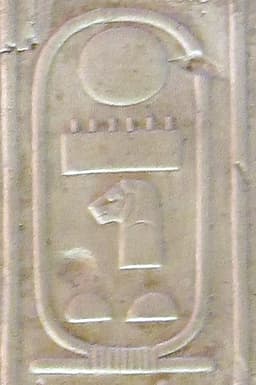
Ramesses I
Emperor · Ancient
38.3Total
Basic Information
Born
10
-1292
Died
27
-1290
Era
Ancient
Ancient
Nationality
China
New Kingdom Egypt
Occupation
Emperor
Emperor
Civilization
Eastern
Middle Eastern
Score Comparison
Military (10%)
47.5
25.9
Political (20%)
39.4
29.3
Influence (20%)
42.4
50.2
Legacy (20%)
32.5
40.0
Leadership (15%)
49.9
33.6
Strategy (15%)
38.6
36.8
TOTAL
40.7
38.3
Liu Penzi — Complete Timeline
25 AD
Installed as Emperor by Red EyebrowsPolitical Action◆ Major
Liu Penzi, a young boy from the Liu imperial clan, was installed as emperor by the Red Eyebrows rebel army. He served as a figurehead ruler while the Red Eyebrows controlled the government. His reign was nominal, with real power held by rebel leaders.
Puppet EmperorRed EyebrowsRebellion
Impact: national
27 AD
Captured by Liu XiuWar
After the Red Eyebrows were defeated by Liu Xiu's forces, Liu Penzi was captured. He was spared by Liu Xiu and given a minor post, living out his life in obscurity. His capture marked the end of the Red Eyebrows' rebellion.
CaptureRed EyebrowsHan Restoration
Impact: national
Ramesses I — Complete Timeline
1292 BC
Founding of the 19th DynastyPolitical Action
Ramesses I ascended the throne after the death of Horemheb, who had no heir. As a military officer and vizier under Horemheb, Ramesses I was chosen to succeed him, founding the 19th Dynasty. His accession marked a new era of stability and military strength after the turmoil of the late 18th Dynasty.
19th DynastySuccessionNew Kingdom
Impact: nationalconstructive
1291 BC
Construction of the Temple of Amun at KarnakCultural◆ Major
Ramesses I began construction on the great hypostyle hall at the Temple of Amun in Karnak, though he died before its completion. His contributions included the decoration of the north wall and the initiation of the massive columns. The hall was later finished by his son Seti I and grandson Ramesses II.
ArchitectureKarnakTemple
Impact: nationalconstructive
1290 BC
Brief Reign and Burial in the Valley of the KingsPolitical Action
Ramesses I ruled for less than two years, making his reign one of the shortest of the New Kingdom. He was buried in a hastily prepared tomb (KV16) in the Valley of the Kings. Despite his brief rule, he established the dynasty that would produce some of Egypt's most famous pharaohs, including Ramesses II.
BurialValley of the KingsShort Reign
Impact: national
Expert Analysis
Origins
Liu Penzi was born around 10 AD into the Liu imperial clan of the Han dynasty, but his branch had fallen into obscurity. He grew up in poverty, herding sheep as a child, with no formal education or court connections. His lineage alone made him a pawn for rebel factions seeking legitimacy.
Ramesses I, born Paramessu around 1292 BC, came from a military family in the Nile Delta. He rose through the ranks of the Egyptian army under Horemheb, the last pharaoh of the 18th Dynasty. He served as vizier and commander, earning the trust of the childless Horemheb, who designated him as successor.
Rise to Power
Liu Penzi's rise was entirely passive. In 25 AD, the Red Eyebrows rebel army sought a figurehead from the Liu clan to challenge Emperor Liu Xiu. They forcibly took the 15-year-old shepherd and installed him as emperor in Chang'an. He had no agency in this elevation; he was a prisoner in silk robes.
Ramesses I rose through merit. As a high-ranking official under Horemheb, he was likely the power behind the throne during the latter years. When Horemheb died without an heir, Ramesses I was chosen as pharaoh, founding the 19th Dynasty. His accession was a planned transition, not a coup.
Leadership & Governance
Liu Penzi exercised no real leadership. The Red Eyebrows controlled all decisions, and he was a puppet. When the rebels looted Chang'an, he could not stop them. His governance score of 39.4 reflects his complete lack of authority. He later surrendered to Liu Xiu and was given a minor post, living quietly until his death.
Ramesses I ruled for less than two years (c. 1292-1290 BC), but he initiated key projects. He began construction of the great hypostyle hall at Karnak, a massive undertaking that his son Seti I completed. He also secured Egypt's borders and maintained stability after Horemheb's restoration. His leadership score of 33.6 is low due to the brevity of his reign.
Triumph & Tragedy
Liu Penzi's greatest triumph was surviving. After the Red Eyebrows' defeat, Liu Xiu spared his life and gave him a pension—a rare act of mercy in civil wars. His tragedy was being used as a pawn; he never wanted power and was forced into a role that nearly cost him his life.
Ramesses I's triumph was founding a dynasty that included Seti I and Ramesses II, who would become one of Egypt's greatest pharaohs. His tragedy was his short reign, which prevented him from completing his architectural projects and consolidating his legacy. He scored 50.2 in influence, higher than Liu Penzi's 42.4, because his dynasty shaped Egypt for centuries.
Character & Destiny
Liu Penzi was a passive figure, described as simple and unambitious. His destiny was determined by others; he was a leaf in a storm. His total score of 40.7 edges out Ramesses I's 38.3, but this is due to longevity and survival, not agency.
Ramesses I was a capable administrator and military man, but his destiny was cut short by age. He was likely in his 60s when he became pharaoh. His character as a loyal subordinate and steady hand allowed him to bridge the 18th and 19th Dynasties.
Legacy
Liu Penzi's legacy is minimal. He is a footnote in the Han dynasty restoration, remembered as a victim of rebel politics. He scored 32.5 in legacy, one of the lowest among Chinese emperors.
Ramesses I's legacy is more significant. As founder of the 19th Dynasty, he set the stage for Egypt's last great period of imperial power. The Karnak hypostyle hall remains a tourist attraction. His tomb KV16 in the Valley of the Kings, though small, is a testament to his brief reign. He scored 40.0 in legacy.
Conclusion
While Liu Penzi has a higher total score (40.7 vs 38.3), this is misleading. Ramesses I had greater historical impact: he founded a dynasty that ruled Egypt for over 100 years and produced Ramesses II, while Liu Penzi was a passive figurehead whose reign left no enduring mark. Ramesses I's influence (50.2) and legacy (40.0) outweigh Liu Penzi's scores in those categories. The score gap of 2.4 points is narrow, but the substance favors Ramesses I. He is the more consequential figure.
Rankings
🥇
Liu PenziLeader
Mil: 47.5Pol: 39.4Inf: 42.4
40.7
🥈
Ramesses I
Mil: 25.9Pol: 29.3Inf: 50.2
38.3
+2.4 behind
How This Comparison Works
Algorithm
Each figure is scored on 6 dimensions (0—100 scale) based on structured historical data: Military (10%), Political (20%), Influence (20%), Legacy (20%), Leadership (15%), Strategy (15%). The weighted total produces the final ranking.
Data Sources
Scores are computed from structured sub-indicators in the database. Scale factors adjust for era (Ancient ×0.85, Modern ×1.0) and civilization size (Eastern ×1.05, Other ×0.80) to account for differences in population and military scale.
Maximum 3 Figures
Comparisons are limited to 2—3 figures to ensure readability and statistical meaningfulness.
Error Margins
±5 points per dimension — Sub-scores are derived from historical records with inherent uncertainty. Two figures within 5 points on a dimension should be considered roughly equivalent in that area.
Total Score Accuracy
±3 points overall — The weighted combination of 6 dimensions produces a total score with approximately ±3 points of uncertainty. Differences of less than 3 points are not statistically significant— the figures are effectively tied.
Known Limitations
- Historical records are incomplete and uneven across civilizations
- Figures from oral-tradition societies may be underrepresented
- Occupation labels can misclassify multi-role figures
- Scores measure capability and impact, not moral character
- Quantitative scoring is a comparison tool, not absolute truth
Capability Radar
Military (10%) — Battles & Warfare
Battles
5
10
Win Rate
5
10
Expansion
0
10
Political (20%) — Governance & Reform
Reform
0
10
Diplomacy
5
20
Economy
0
10
Influence (20%) — Cultural & Global Reach
Cultural
5
20
Global
5
20
Legacy (20%) — Historical Impact
Historical
10
30
Longevity
5
20
Leadership (15%) — Power & Stability
Tenure
10
10
Stability
5
20
Strategy (15%) — Tactics & Innovation
Strategy
5
10
Tactics
5
10
Reform
0
10
Similar Comparisons
Comments & Discussion
No comments yet. Be the first to share your thoughts!