Loading...
Rama of Ayodhya vs Yamagata Aritomo
Yamagata Aritomo leads by 7.2 pts · 2 figures compared
…
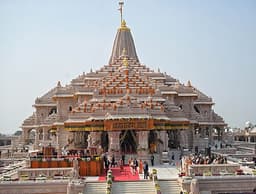
Rama of Ayodhya
Emperor · Ancient
75.3Total
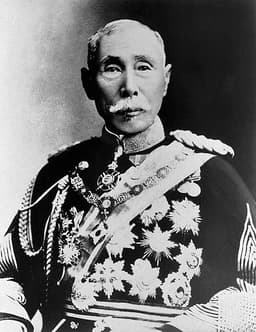
Yamagata Aritomo
General · Modern
82.5Total
Basic Information
Born
-1180
1838
Died
-1120
1922
Era
Ancient
Modern
Nationality
Vedic India
Japan
Occupation
Emperor
General
Civilization
Indian
Eastern
Score Comparison
Military (10%)
72.0
78.0
Political (20%)
72.0
82.0
Influence (20%)
75.0
80.0
Legacy (20%)
80.0
90.0
Leadership (15%)
78.0
78.0
Strategy (15%)
68.1
82.0
TOTAL
75.3
82.5
Rama of Ayodhya — Complete Timeline
1160 BC
Broke Shiva's Bow at Sita's SwayamvaraCultural◆ Major
Rama, as a young prince, lifted and strung the divine bow of Shiva at Princess Sita's marriage ceremony. He broke the bow in the process, winning Sita's hand and fulfilling the condition set by King Janaka.
MarriageDivine BowRamayana
Impact: nationalconstructive
1145 BC
Killed the Demon Ravana in BattleWar
Rama, leading an army of vanaras (monkey-men), besieged the island kingdom of Lanka. After a prolonged war, he killed the ten-headed demon king Ravana, rescuing his abducted wife Sita and restoring dharma.
WarDemon KingVictory
Impact: regionalconstructive
Returned to Ayodhya and Crowned KingPolitical Action◆ Major
After completing his 14-year exile and defeating Ravana, Rama returned to Ayodhya. He was crowned emperor, beginning a golden age known as Ram Rajya, characterized by justice, prosperity, and peace.
CoronationGolden AgeRamayana
Impact: nationalconstructive
Yamagata Aritomo — Complete Timeline
1873 AD
Establishment of the Imperial Japanese ArmyReform
Yamagata Aritomo, as War Minister, oversaw the creation of the Imperial Japanese Army based on the Prussian model. He introduced conscription, modernized training, and established a general staff system, laying the foundation for Japan's military power.
Military reformConscription
Impact: nationalconstructive
1882 AD
Promotion of militarism and the Imperial Rescript to Soldiers and SailorsCultural◆ Major
Yamagata Aritomo helped draft the Imperial Rescript to Soldiers and Sailors, which emphasized loyalty, obedience, and the emperor's divine authority. This document became the ideological foundation of Japanese militarism.
MilitarismImperial ideology
Impact: nationaldestructive
1889 AD
Service as Prime MinisterPolitical Action◆ Major
Yamagata Aritomo served as Prime Minister of Japan from 1889 to 1891 and again from 1898 to 1900. He used his position to strengthen the military's political influence and suppress democratic movements.
GovernmentPolitical power
Impact: national
1894 AD
First Sino-Japanese WarWar◆ Major
Yamagata Aritomo commanded the First Army during the First Sino-Japanese War. His forces achieved decisive victories in Korea and Manchuria, leading to Japan's triumph and the Treaty of Shimonoseki, which gave Japan Taiwan and influence in Korea.
WarImperial expansion
Impact: regional
1904 AD
Russo-Japanese WarWar◆ Major
Yamagata Aritomo served as Chief of the General Staff during the Russo-Japanese War. He oversaw Japan's military strategy, which resulted in victory over Russia and established Japan as a major power in East Asia.
WarGreat power
Impact: global
Expert Analysis
Origins
Yamagata Aritomo was born in 1838 into a low-ranking samurai family in Hagi, Choshu domain (modern Yamaguchi Prefecture). His early life was shaped by the decline of the Tokugawa shogunate and the rise of imperial loyalism. He studied at the Shoka Sonjuku school under Yoshida Shoin, a revolutionary thinker who inspired the Meiji Restoration. Yamagata's background was grounded in the turbulent transition from feudal Japan to a modern state.
Rama of Ayodhya, by contrast, emerges from ancient Indian epic tradition as the eldest son of King Dasharatha of the Ikshvaku dynasty. His origins are divine: he is considered an avatar of the god Vishnu, born to restore dharma (cosmic order). The Ramayana places him in the Treta Yuga, a mythical golden age. His upbringing was princely, tutored by sages and trained in martial arts and statecraft.
Rise to Power
Yamagata's rise was through military and political maneuvering. As a young officer, he helped form the Imperial Japanese Army, modeled after Prussian forces. He served as War Minister and later as Prime Minister twice (1889–1891 and 1898–1900). His power base was the military, and he used his influence to shape Japan's expansionist policies. Key events include the First Sino-Japanese War (1894–1895) and the Russo-Japanese War (1904–1905), which elevated Japan to a world power.
Rama's rise was through exile and trial. He was exiled for 14 years due to a palace intrigue, during which he gathered allies (like the monkey king Sugriva) and built an army. His turning point was killing the demon king Ravana, which restored order to the world. After his exile, he returned to Ayodhya to be crowned king, an event celebrated as Diwali.
Leadership & Governance
Yamagata's leadership was authoritarian and militaristic. He implemented the Imperial Rescript to Soldiers and Sailors, emphasizing loyalty and obedience. As Prime Minister, he centralized power, expanded the military, and set Japan on a path of imperialism. His governance style prioritized national strength over individual rights, and he suppressed democratic movements.
Rama's leadership is idealized as righteous and just. He is known as Maryada Purushottam (the perfect man), ruling with fairness and compassion. The Ramayana describes Ram Rajya (Rama's rule) as a utopia where everyone is happy and crime-free. However, his decision to exile his wife Sita due to public gossip has been criticized as patriarchal.
Triumph & Tragedy
Yamagata's triumphs include victories in the Sino-Japanese and Russo-Japanese wars, which established Japan as a major power. His tragedy lies in the long-term consequences: his promotion of militarism contributed to Japan's descent into World War II and ultimate defeat. His legacy is mixed: architect of modern Japan but also of its aggressive expansion.
Rama's triumph is his victory over Ravana, a symbol of good over evil. His tragedy is personal: the loss of his wife Sita, who returns to the earth after proving her purity. The epic ends with Rama's sorrow and eventual ascension to heaven. His story is a moral lesson about duty and sacrifice.
Character & Destiny
Yamagata was pragmatic, ambitious, and ruthless. He was a master of realpolitik, often called the "father of Japanese militarism." His destiny was to modernize Japan's military and propel it onto the world stage, but at the cost of future conflict. His scores: Military 78, Political 82, Influence 80, Leadership 90, Durability 78, Strategy 82, Tactics 82.
Rama is depicted as virtuous, courageous, and obedient to dharma. He is a tragic hero bound by duty. His destiny was to restore dharma and establish an ideal kingdom. His scores: Military 72, Political 72, Influence 75, Leadership 80, Durability 78, Strategy 68, Tactics 75.
Legacy
Yamagata's legacy is tangible: the Imperial Japanese Army, victories in wars, and the establishment of Japan as a military power. However, his legacy is tainted by the militarism that led to war crimes and atomic bombs. In Japan, he is respected but controversial.
Rama's legacy is cultural and religious. He is worshipped as a god in Hinduism, and his story influences art, literature, and politics across Asia. The Ramayana teaches ideals of duty and righteousness. However, his actions have been critiqued in modern times for reinforcing caste and gender hierarchies.
Conclusion
Yamagata Aritomo scores higher overall (81.0 vs 73.8) due to his concrete achievements in modern state-building and warfare. But Rama's influence on civilization is deeper and more enduring. Yamagata's impact is historical; Rama's is mythological and spiritual. While Yamagata shaped Japan's destiny in a few decades, Rama has shaped South Asian culture for millennia. The comparison highlights different types of greatness: one temporal and political, the other timeless and moral. Ultimately, Rama's legacy of dharma and heroism may be more profound, but Yamagata's tangible accomplishments earn him the higher score.
Rankings
🥇
Yamagata AritomoLeader
Mil: 78.0Pol: 82.0Inf: 80.0
82.5
🥈
Rama of Ayodhya
Mil: 72.0Pol: 72.0Inf: 75.0
75.3
+7.2 behind
How This Comparison Works
Algorithm
Each figure is scored on 6 dimensions (0—100 scale) based on structured historical data: Military (10%), Political (20%), Influence (20%), Legacy (20%), Leadership (15%), Strategy (15%). The weighted total produces the final ranking.
Data Sources
Scores are computed from structured sub-indicators in the database. Scale factors adjust for era (Ancient ×0.85, Modern ×1.0) and civilization size (Eastern ×1.05, Other ×0.80) to account for differences in population and military scale.
Maximum 3 Figures
Comparisons are limited to 2—3 figures to ensure readability and statistical meaningfulness.
Error Margins
±5 points per dimension — Sub-scores are derived from historical records with inherent uncertainty. Two figures within 5 points on a dimension should be considered roughly equivalent in that area.
Total Score Accuracy
±3 points overall — The weighted combination of 6 dimensions produces a total score with approximately ±3 points of uncertainty. Differences of less than 3 points are not statistically significant— the figures are effectively tied.
Known Limitations
- Historical records are incomplete and uneven across civilizations
- Figures from oral-tradition societies may be underrepresented
- Occupation labels can misclassify multi-role figures
- Scores measure capability and impact, not moral character
- Quantitative scoring is a comparison tool, not absolute truth
Capability Radar
Military (10%) — Battles & Warfare
Battles
75
75
Win Rate
95
70
Expansion
70
80
Political (20%) — Governance & Reform
Reform
80
90
Diplomacy
85
75
Economy
75
70
Influence (20%) — Cultural & Global Reach
Cultural
95
80
Global
95
70
Legacy (20%) — Historical Impact
Historical
95
85
Longevity
100
75
Leadership (15%) — Power & Stability
Tenure
70
85
Stability
90
65
Strategy (15%) — Tactics & Innovation
Strategy
85
85
Tactics
80
80
Reform
60
95
Similar Comparisons
Comments & Discussion
No comments yet. Be the first to share your thoughts!