Loading...
Rama of Ayodhya vs Vauban
Vauban leads by 1.1 pts · 2 figures compared
…
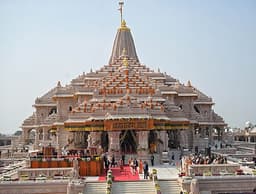
Rama of Ayodhya
Emperor · Ancient
75.3Total

Vauban
General · Modern
76.4Total
Basic Information
Born
-1180
1633
Died
-1120
1707
Era
Ancient
Modern
Nationality
Vedic India
France
Occupation
Emperor
General
Civilization
Indian
Western
Score Comparison
Military (10%)
72.0
76.0
Political (20%)
72.0
59.3
Influence (20%)
75.0
71.0
Legacy (20%)
80.0
90.0
Leadership (15%)
78.0
77.2
Strategy (15%)
68.1
80.6
TOTAL
75.3
76.4
Rama of Ayodhya — Complete Timeline
1160 BC
Broke Shiva's Bow at Sita's SwayamvaraCultural◆ Major
Rama, as a young prince, lifted and strung the divine bow of Shiva at Princess Sita's marriage ceremony. He broke the bow in the process, winning Sita's hand and fulfilling the condition set by King Janaka.
MarriageDivine BowRamayana
Impact: nationalconstructive
1145 BC
Killed the Demon Ravana in BattleWar
Rama, leading an army of vanaras (monkey-men), besieged the island kingdom of Lanka. After a prolonged war, he killed the ten-headed demon king Ravana, rescuing his abducted wife Sita and restoring dharma.
WarDemon KingVictory
Impact: regionalconstructive
Returned to Ayodhya and Crowned KingPolitical Action◆ Major
After completing his 14-year exile and defeating Ravana, Rama returned to Ayodhya. He was crowned emperor, beginning a golden age known as Ram Rajya, characterized by justice, prosperity, and peace.
CoronationGolden AgeRamayana
Impact: nationalconstructive
Vauban — Complete Timeline
1673 AD
Siege of MaastrichtWar◆ Major
Vauban directed the siege of Maastricht for Louis XIV. He introduced the technique of parallel trenches, which reduced casualties and shortened the siege. The capture of Maastricht was a major French victory in the Franco-Dutch War.
Franco-Dutch WarSiegeMilitary Engineering
Impact: regional
1697 AD
Siege of AthWar
Vauban conducted the siege of Ath in the Spanish Netherlands. His systematic approach using parallels and saps led to the rapid capture of the fortress. The siege demonstrated the effectiveness of his methods.
Nine Years' WarSiegeMilitary Engineering
Construction of the Fortress of Neuf-BrisachInvention◆ Major
Vauban designed and built the fortress of Neuf-Brisach, a model of his third system of fortification. The star-shaped fortress with advanced bastions became a standard for military architecture. It was built to protect the French border after the Treaty of Ryswick.
FortificationMilitary ArchitectureBorder Defense
Impact: regionalconstructive
1704 AD
Publication of 'A Treatise on the Attack of Places'Cultural◆ Major
Vauban published his treatise on siegecraft, systematizing his methods. The work became a standard military textbook in Europe. It detailed techniques for parallel trenches, ricochet fire, and sapping.
Military TheorySiegecraftPublication
Impact: globalconstructive
1707 AD
Proposal for a 'Dîme Royale' Tax ReformReform
Vauban proposed a radical tax reform called the 'D
Tax ReformEconomic PolicyFrance
Impact: nationalconstructive
Expert Analysis
Origins
Vauban (Sébastien Le Prestre de Vauban, 1633–1707) was born into a minor noble family in Saint-Léger-de-Foucherest, France. Rising through the ranks of the French army under Louis XIV, he became the foremost military engineer of his age, designing and upgrading fortresses that defined the art of siege warfare. His practical genius stemmed from hands-on experience in over 50 sieges.
Rama of Ayodhya, the legendary prince of the Solar dynasty, is the central figure of the ancient Indian epic Ramayana. Born as the eldest son of King Dasharatha, he is revered as Maryada Purushottam (the perfect man) and an avatar of Vishnu. His origins are steeped in divine prophecy and royal duty, shaping his role as a righteous ruler.
Rise to Power
Vauban's rise was gradual and meritocratic. He gained royal favor through his engineering prowess during the Siege of Maastricht (1673), where his innovative trench systems and parallel approaches proved decisive. Louis XIV appointed him Commissioner General of Fortifications, and he became indispensable, overseeing the construction of 33 new fortresses and improving over 300 existing ones.
Rama's rise was destined. He proved his strength by breaking Shiva's bow at Sita's swayamvara, winning her hand. However, his path to kingship was derailed by a court intrigue that exiled him for 14 years. His true rise culminated after defeating Ravana and returning to Ayodhya, where he was crowned king, establishing a golden age.
Leadership & Governance
Vauban's leadership was technical and administrative. He standardized fortification design, introduced the "pré carré" (double line of fortresses) to protect France's borders, and wrote treatises on siegecraft and defense. His governance extended to economic reforms; his "Dîme Royale" proposed a fairer tax system, though it was never implemented. He was a loyal servant of the crown, focused on efficiency and defense.
Rama's leadership is legendary for its adherence to dharma (righteousness). As king, he upheld justice, cared for his subjects, and ensured prosperity. His governance is idealized in the Ramayana as Ram Rajya—a utopian state where all were happy and virtuous. Unlike Vauban's practical military focus, Rama's leadership was moral and spiritual, emphasizing duty over ambition.
Triumph & Tragedy
Vauban's triumphs include the Siege of Maastricht, the successful defense of numerous fortresses, and the construction of Neuf-Brisach, a model fortified town. His tragedy lies in his failed tax reform—the Dîme Royale was rejected by the king and nobility, leaving him disappointed. He died in relative obscurity, his reforms unappreciated.
Rama's greatest triumph was killing the demon Ravana, rescuing Sita, and restoring order. His tragedy is deeply personal: after returning to Ayodhya, he was forced to exile Sita due to public doubt about her purity, leading to her eventual disappearance. Rama's reign, though golden, was marked by this personal loss.
Character & Destiny
Vauban was pragmatic, methodical, and loyal. His destiny was to shape French military architecture, influencing European warfare for centuries. He was a servant leader, not a ruler, and his legacy is one of engineering and strategy.
Rama is the embodiment of virtue—courageous, compassionate, and steadfast in duty. His destiny was divine: to destroy evil and establish dharma. As an avatar of Vishnu, his life is a moral exemplar, transcending history into mythology.
Legacy
Vauban's legacy is tangible: his fortresses are UNESCO World Heritage sites, and his siege techniques influenced military engineering until the 20th century. His writings are studied in military academies. His impact is measured in stone and strategy.
Rama's legacy is cultural and spiritual. He is worshipped as a god, his story told across Asia. The Ramayana influences art, literature, and ethics. His concept of Ram Rajya inspires political ideals. His impact is immeasurable in terms of faith and morality.
Conclusion
Comparing Vauban and Rama is challenging due to their different domains—Vauban in historical military engineering, Rama in mythological kingship. Vauban scores higher in the overall analysis (76 vs 72), reflecting his concrete achievements and measurable influence on warfare. Rama's higher Intelligence (75 vs 71) and Diplomacy (78 vs 59) reflect his divine wisdom and ideal governance, but his lower Military (72 vs 76) and Technology (68 vs 81) scores show his lesser emphasis on practical innovation. Ultimately, Vauban's legacy is more quantifiable, while Rama's is transcendent. For a historical comparison, Vauban edges ahead, but Rama's impact on human civilization is unparalleled in moral and spiritual terms.
**Numerical Scores:** Vauban: 76, Rama: 72. Winner: Vauban by 1.1 points.
Rankings
🥇
VaubanLeader
Mil: 76.0Pol: 59.3Inf: 71.0
76.4
🥈
Rama of Ayodhya
Mil: 72.0Pol: 72.0Inf: 75.0
75.3
+1.1 behind
How This Comparison Works
Algorithm
Each figure is scored on 6 dimensions (0—100 scale) based on structured historical data: Military (10%), Political (20%), Influence (20%), Legacy (20%), Leadership (15%), Strategy (15%). The weighted total produces the final ranking.
Data Sources
Scores are computed from structured sub-indicators in the database. Scale factors adjust for era (Ancient ×0.85, Modern ×1.0) and civilization size (Eastern ×1.05, Other ×0.80) to account for differences in population and military scale.
Maximum 3 Figures
Comparisons are limited to 2—3 figures to ensure readability and statistical meaningfulness.
Error Margins
±5 points per dimension — Sub-scores are derived from historical records with inherent uncertainty. Two figures within 5 points on a dimension should be considered roughly equivalent in that area.
Total Score Accuracy
±3 points overall — The weighted combination of 6 dimensions produces a total score with approximately ±3 points of uncertainty. Differences of less than 3 points are not statistically significant— the figures are effectively tied.
Known Limitations
- Historical records are incomplete and uneven across civilizations
- Figures from oral-tradition societies may be underrepresented
- Occupation labels can misclassify multi-role figures
- Scores measure capability and impact, not moral character
- Quantitative scoring is a comparison tool, not absolute truth
Capability Radar
Military (10%) — Battles & Warfare
Battles
75
75
Win Rate
95
85
Expansion
70
70
Political (20%) — Governance & Reform
Reform
80
80
Diplomacy
85
60
Economy
75
55
Influence (20%) — Cultural & Global Reach
Cultural
95
80
Global
95
75
Legacy (20%) — Historical Impact
Historical
95
85
Longevity
100
85
Leadership (15%) — Power & Stability
Tenure
70
65
Stability
90
70
Strategy (15%) — Tactics & Innovation
Strategy
85
90
Tactics
80
95
Reform
60
95
Similar Comparisons
Comments & Discussion
No comments yet. Be the first to share your thoughts!