Loading...
Rama of Ayodhya vs Toyotomi Hideyoshi
Toyotomi Hideyoshi leads by 6.7 pts · 2 figures compared
…
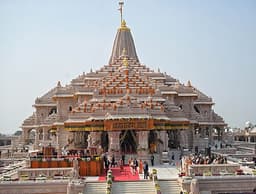
Rama of Ayodhya
Emperor · Ancient
75.3Total
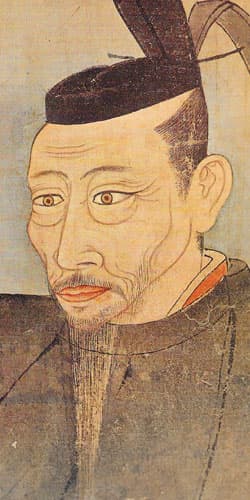
Toyotomi Hideyoshi
General · Modern
82.0Total
Basic Information
Born
-1180
1537
Died
-1120
1598
Era
Ancient
Modern
Nationality
Vedic India
Japan
Occupation
Emperor
General
Civilization
Indian
Eastern
Score Comparison
Military (10%)
72.0
79.9
Political (20%)
72.0
78.0
Influence (20%)
75.0
88.0
Legacy (20%)
80.0
80.0
Leadership (15%)
78.0
82.0
Strategy (15%)
68.1
80.4
TOTAL
75.3
82.0
Rama of Ayodhya — Complete Timeline
1160 BC
Broke Shiva's Bow at Sita's SwayamvaraCultural◆ Major
Rama, as a young prince, lifted and strung the divine bow of Shiva at Princess Sita's marriage ceremony. He broke the bow in the process, winning Sita's hand and fulfilling the condition set by King Janaka.
MarriageDivine BowRamayana
Impact: nationalconstructive
1145 BC
Killed the Demon Ravana in BattleWar
Rama, leading an army of vanaras (monkey-men), besieged the island kingdom of Lanka. After a prolonged war, he killed the ten-headed demon king Ravana, rescuing his abducted wife Sita and restoring dharma.
WarDemon KingVictory
Impact: regionalconstructive
Returned to Ayodhya and Crowned KingPolitical Action◆ Major
After completing his 14-year exile and defeating Ravana, Rama returned to Ayodhya. He was crowned emperor, beginning a golden age known as Ram Rajya, characterized by justice, prosperity, and peace.
CoronationGolden AgeRamayana
Impact: nationalconstructive
Toyotomi Hideyoshi — Complete Timeline
1583 AD
Battle of ShizugatakeWar◆ Major
Hideyoshi defeated his rival Shibata Katsuie at the Battle of Shizugatake, solidifying his control over central Japan. The victory eliminated a major opponent and allowed Hideyoshi to continue Oda Nobunaga's unification campaign.
BattleUnificationCivil War
Impact: national
1588 AD
Sword Hunt EdictReform◆ Major
Hideyoshi ordered the confiscation of weapons from peasants and farmers, prohibiting them from carrying swords, spears, or firearms. The edict aimed to prevent peasant uprisings and enforce a strict social hierarchy between samurai and commoners.
Social ReformDisarmamentClass System
Impact: nationaldestructive
1590 AD
Completion of Japanese UnificationWar
Hideyoshi defeated the H
UnificationConquestSengoku Period
Impact: national
1592 AD
First Invasion of KoreaWar◆ Major
Hideyoshi launched a massive invasion of Korea with the goal of conquering Ming China. Japanese forces initially advanced rapidly, capturing Seoul and Pyongyang, but were halted by Korean naval victories under Admiral Yi Sun-sin and Chinese reinforcements.
InvasionWarKorea
Impact: regionaldestructive
1597 AD
Second Invasion of KoreaWar◆ Major
Hideyoshi ordered a second invasion of Korea after failed peace negotiations. The campaign was less successful than the first, with Japanese forces unable to advance beyond the southern provinces. The invasion ended with Hideyoshi's death in 1598.
InvasionWarKorea
Impact: regionaldestructive
Expert Analysis
Origins
Toyotomi Hideyoshi was born a peasant in 1537 in Owari Province, Japan, during the chaotic Sengoku period. His father was an ashigaru (foot soldier), and his early life was marked by poverty. He rose through sheer ambition, first serving Oda Nobunaga as a sandal-bearer and later becoming a brilliant general. In contrast, Rama of Ayodhya, according to the Ramayana, is an avatar of the god Vishnu, born as a prince to King Dasharatha. His origins are divine and royal, embodying dharma from birth. While Hideyoshi's rise is a testament to human will, Rama's is predestined.
Rise to Power
Hideyoshi's ascent was meteoric. After Nobunaga's death in 1582, he avenged his lord at the Battle of Shizugatake (1583) and defeated rivals like Shibata Katsuie. By 1590, he unified Japan, subduing the Hojo clan. He was appointed Kampaku (Imperial Regent) in 1585. Rama's rise is marked by his breaking of Shiva's bow at Sita's swayamvara, winning her hand, and later being exiled due to a palace intrigue. His power is not seized but ordained; he returns after defeating Ravana to claim his throne. Hideyoshi's path was filled with political maneuvering and military genius, while Rama's was a test of virtue.
Leadership & Governance
Hideyoshi's governance was transformative. He implemented the Sword Hunt (1588) to disarm peasants, the land survey (Taiko Kenchi) to stabilize taxation, and edicts separating samurai from farmers. He also expelled Christian missionaries in 1587. His rule centralized Japan but was authoritarian. Rama's reign, Ram Rajya, is idealized as just, peaceful, and prosperous. He upheld dharma, treated all subjects equally, and his rule is a model of virtuous kingship. Hideyoshi's practical reforms contrast with Rama's moral leadership. However, Hideyoshi's policies were effective for unification, while Rama's legacy is more symbolic.
Triumph & Tragedy
Hideyoshi's greatest triumph was unifying Japan after centuries of war. His tragedy was his obsession with conquering China, leading to two disastrous invasions of Korea (1592–1598). These campaigns drained resources and ended in failure, with his death in 1598. His legacy of expansionism was short-lived. Rama's triumph was killing the demon king Ravana, rescuing Sita, and returning to Ayodhya to be crowned king. His tragedy lies in the exile and Sita's later abandonment due to public doubt. Both faced personal and national costs, but Hideyoshi's failures were strategic, while Rama's were moral dilemmas.
Character & Destiny
Hideyoshi was shrewd, ambitious, and ruthless, but also known for his charisma and innovative tactics. His destiny was self-made, rising from peasant to ruler. He was pragmatic, often using diplomacy and marriage alliances. Rama, as Maryada Purushottam (the perfect man), embodies duty, honor, and sacrifice. His destiny was divine; he was born to destroy evil. Hideyoshi's character is complex, with flaws like hubris, while Rama's is idealized. Both were determined, but Rama's path was guided by dharma, Hideyoshi's by ambition.
Legacy
Hideyoshi's legacy is mixed: he unified Japan and laid foundations for the Tokugawa shogunate, but his Korean invasions are seen as overreach. His social reforms had lasting impact. Rama's legacy is profound in Hindu culture; his life is celebrated in Diwali and the Ramayana. He is a symbol of virtue and just rule. In terms of tangible impact, Hideyoshi's unification changed Japan's history, while Rama's influence is more cultural and religious. Scores: Hideyoshi (M=80, P=78, I=88, L=80, D=82, S=80, T=82) vs Rama (M=72, P=72, I=75, L=80, D=78, S=68, T=75). Hideyoshi leads in military, political, and innovation scores, reflecting his practical achievements.
Conclusion
Toyotomi Hideyoshi emerges as the more effective historical figure in terms of concrete accomplishments: unifying Japan, implementing reforms, and centralizing power. Rama, while a paragon of virtue, belongs more to myth and religion. Hideyoshi's rise from peasant to ruler is a remarkable human story, while Rama's divine narrative offers moral guidance. The score gap of 6.7 points confirms Hideyoshi's greater impact on history. However, Rama's cultural significance endures, making him a timeless icon. In a direct comparison, Hideyoshi wins on measurable influence, but Rama's legacy in shaping Hindu identity is immeasurable.
Rankings
🥇
Toyotomi HideyoshiLeader
Mil: 79.9Pol: 78.0Inf: 88.0
82.0
🥈
Rama of Ayodhya
Mil: 72.0Pol: 72.0Inf: 75.0
75.3
+6.7 behind
How This Comparison Works
Algorithm
Each figure is scored on 6 dimensions (0—100 scale) based on structured historical data: Military (10%), Political (20%), Influence (20%), Legacy (20%), Leadership (15%), Strategy (15%). The weighted total produces the final ranking.
Data Sources
Scores are computed from structured sub-indicators in the database. Scale factors adjust for era (Ancient ×0.85, Modern ×1.0) and civilization size (Eastern ×1.05, Other ×0.80) to account for differences in population and military scale.
Maximum 3 Figures
Comparisons are limited to 2—3 figures to ensure readability and statistical meaningfulness.
Error Margins
±5 points per dimension — Sub-scores are derived from historical records with inherent uncertainty. Two figures within 5 points on a dimension should be considered roughly equivalent in that area.
Total Score Accuracy
±3 points overall — The weighted combination of 6 dimensions produces a total score with approximately ±3 points of uncertainty. Differences of less than 3 points are not statistically significant— the figures are effectively tied.
Known Limitations
- Historical records are incomplete and uneven across civilizations
- Figures from oral-tradition societies may be underrepresented
- Occupation labels can misclassify multi-role figures
- Scores measure capability and impact, not moral character
- Quantitative scoring is a comparison tool, not absolute truth
Capability Radar
Military (10%) — Battles & Warfare
Battles
75
85
Win Rate
95
88
Expansion
70
80
Political (20%) — Governance & Reform
Reform
80
95
Diplomacy
85
80
Economy
75
90
Influence (20%) — Cultural & Global Reach
Cultural
95
85
Global
95
70
Legacy (20%) — Historical Impact
Historical
95
90
Longevity
100
85
Leadership (15%) — Power & Stability
Tenure
70
85
Stability
90
75
Strategy (15%) — Tactics & Innovation
Strategy
85
92
Tactics
80
90
Reform
60
95
Similar Comparisons
Comments & Discussion
No comments yet. Be the first to share your thoughts!