Loading...
Rama of Ayodhya vs Toussaint Louverture
Toussaint Louverture leads by 3.2 pts · 2 figures compared
…
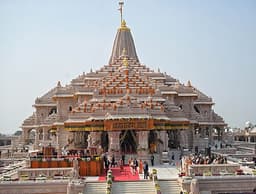
Rama of Ayodhya
Emperor · Ancient
75.3Total
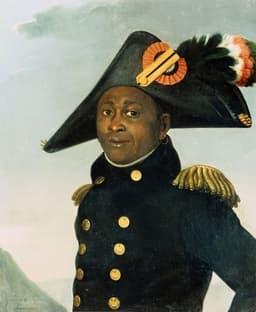
Toussaint Louverture
General · Modern
78.5Total
Basic Information
Born
-1180
1743
Died
-1120
1803
Era
Ancient
Modern
Nationality
Vedic India
Haiti
Occupation
Emperor
General
Civilization
Indian
Western
Score Comparison
Military (10%)
72.0
85.0
Political (20%)
72.0
70.3
Influence (20%)
75.0
84.0
Legacy (20%)
80.0
82.0
Leadership (15%)
78.0
72.0
Strategy (15%)
68.1
72.0
TOTAL
75.3
78.5
Rama of Ayodhya — Complete Timeline
1160 BC
Broke Shiva's Bow at Sita's SwayamvaraCultural◆ Major
Rama, as a young prince, lifted and strung the divine bow of Shiva at Princess Sita's marriage ceremony. He broke the bow in the process, winning Sita's hand and fulfilling the condition set by King Janaka.
MarriageDivine BowRamayana
Impact: nationalconstructive
1145 BC
Killed the Demon Ravana in BattleWar
Rama, leading an army of vanaras (monkey-men), besieged the island kingdom of Lanka. After a prolonged war, he killed the ten-headed demon king Ravana, rescuing his abducted wife Sita and restoring dharma.
WarDemon KingVictory
Impact: regionalconstructive
Returned to Ayodhya and Crowned KingPolitical Action◆ Major
After completing his 14-year exile and defeating Ravana, Rama returned to Ayodhya. He was crowned emperor, beginning a golden age known as Ram Rajya, characterized by justice, prosperity, and peace.
CoronationGolden AgeRamayana
Impact: nationalconstructive
Toussaint Louverture — Complete Timeline
1791 AD
Haitian Revolution LeadershipWar
Louverture joined the slave revolt in Saint-Domingue, quickly rising to leadership. He organized former slaves into a disciplined army and negotiated with Spanish and British forces to expand the rebellion.
Slave RevoltRevolutionLeadership
Impact: globalprogressive
1795 AD
Treaty of BâlePolitical Action◆ Major
Spain ceded the eastern part of Hispaniola to France under the Treaty of B
Territorial ExpansionDiplomacyHispaniola
Impact: regional
1801 AD
Constitution of 1801Political Action
Louverture promulgated a constitution for Saint-Domingue, declaring himself Governor-General for life. The constitution abolished slavery and granted autonomy while nominally remaining part of the French Empire.
ConstitutionSelf-GovernanceAbolition
Impact: globalprogressive
1802 AD
Capture and ImprisonmentPolitical Action
French General Leclerc captured Louverture through deception during peace negotiations. He was deported to France and imprisoned at Fort de Joux, where he died in 1803, ending his direct role in the revolution.
BetrayalImprisonmentFrench Repression
Impact: globaltragic
Expert Analysis
Origins
Toussaint Louverture was born into slavery on the French colony of Saint-Domingue (present-day Haiti) around 1743. He was the eldest son of an enslaved prince from Benin, and he learned to read and write from a Jesuit tutor. His early life exposed him to the brutal realities of slavery but also allowed him to gain knowledge of French, Creole, and some Latin. In contrast, Rama of Ayodhya is a legendary figure from ancient Indian epic Ramayana, dated to around 7th century BCE to 3rd century CE. He was the prince of the Ikshvaku dynasty, born to King Dasharatha and Queen Kaushalya in the city of Ayodhya. Rama is considered an avatar of the god Vishnu, sent to earth to restore dharma (righteousness). While Toussaint's origins are rooted in historical oppression and resistance, Rama's origins are divine and mythological.
Rise to Power
Toussaint rose to prominence during the Haitian Revolution (1791–1804). Initially a trusted coachman and steward, he joined the slave uprising in 1791. His military genius and diplomatic skills allowed him to navigate alliances with Spanish, British, and French forces. He became the leader of the revolution by 1793, and by 1801 he controlled the entire island of Hispaniola. He established a constitution that abolished slavery and made himself governor-general for life. Rama's rise was more straightforward: he was the rightful heir to the throne of Ayodhya. However, due to a promise his father made to his stepmother Kaikeyi, Rama was exiled to the forest for 14 years. During exile, he gathered allies, including the monkey god Hanuman, and eventually defeated the demon king Ravana to reclaim his wife Sita and his kingdom.
Leadership & Governance
Toussaint's leadership was characterized by pragmatism, military strategy, and political acumen. He maintained discipline among his troops, established trade relations with the United States and Britain, and implemented a new constitution that kept slavery abolished but enforced a strict labor system to revive the economy. He faced challenges from internal factions and external threats from Napoleon Bonaparte. Rama's leadership, as depicted in the Ramayana, is idealized: he ruled justly, ensured the welfare of his subjects, and adhered to dharma. His governance is often cited as the model of 'Rama Rajya' (ideal rule). However, his decision to banish Sita due to public gossip shows the conflict between personal duty and public expectation.
Triumph & Tragedy
Toussaint's greatest triumph was the establishment of the Constitution of 1801, which granted autonomy to Saint-Domingue and confirmed the abolition of slavery. His tragic downfall came when Napoleon sent a massive expedition to restore French control. Toussaint was captured in 1802 through treachery and imprisoned in France, where he died of pneumonia in 1803. His legacy, however, lived on as his lieutenants continued the revolution, leading to Haiti's independence in 1804. Rama's triumph was the defeat of Ravana and the rescue of Sita. His tragedy came after his return to Ayodhya: he was forced to exile Sita to satisfy public opinion, leading to her eventual death. Rama himself later renounced his life, highlighting the sorrow inherent in his adherence to duty.
Character & Destiny
Toussaint was a man of contradictions: he was a former slave who became a slave owner himself (he owned slaves before the revolution), a devout Catholic who practiced Vodou, and a revolutionary who sought to maintain ties with France. His destiny was to free his people but die in a foreign prison. Rama, as 'Maryada Purushottam' (the perfect man), embodies virtue, honor, and duty. His character is unwavering in righteousness, but his destiny is marked by personal loss and sacrifice. Both figures were shaped by their respective contexts: Toussaint by the harsh realities of colonialism and slavery, Rama by the cosmic battle between good and evil.
Legacy
Toussaint Louverture is celebrated as a hero of the Haitian Revolution and a symbol of Black liberation worldwide. His actions inspired anti-slavery movements and independence struggles across the Americas. However, his legacy is complex: some criticize his authoritarian tendencies and the economic decline after his death. Rama's legacy is immense in South and Southeast Asia. He is worshipped as a god, and his story is central to Hindu culture and ethics. The Ramayana has been adapted into countless art forms and continues to influence politics and society. However, his treatment of Sita has been criticized in modern times.
Conclusion
Toussaint Louverture and Rama of Ayodhya represent two different archetypes: the revolutionary leader and the divine king. Toussaint's scores (M=85, P=70, I=84, L=82, D=72, S=72, T=78) reflect his military prowess, political innovation, and tragic end. Rama's scores (M=72, P=72, I=75, L=80, D=78, S=68, T=75) show his moral leadership and cultural impact. While Rama's legacy is more widespread and enduring, Toussaint's impact on history is more tangible and revolutionary. The score gap of 3.2 favoring Toussaint reflects his higher military and political achievements in a real historical context. In a direct comparison, Toussaint's concrete achievements in abolishing slavery and founding a nation outweigh Rama's mythological feats. Therefore, Toussaint Louverture is the stronger historical figure.
Rankings
🥇
Toussaint LouvertureLeader
Mil: 85.0Pol: 70.3Inf: 84.0
78.5
🥈
Rama of Ayodhya
Mil: 72.0Pol: 72.0Inf: 75.0
75.3
+3.2 behind
How This Comparison Works
Algorithm
Each figure is scored on 6 dimensions (0—100 scale) based on structured historical data: Military (10%), Political (20%), Influence (20%), Legacy (20%), Leadership (15%), Strategy (15%). The weighted total produces the final ranking.
Data Sources
Scores are computed from structured sub-indicators in the database. Scale factors adjust for era (Ancient ×0.85, Modern ×1.0) and civilization size (Eastern ×1.05, Other ×0.80) to account for differences in population and military scale.
Maximum 3 Figures
Comparisons are limited to 2—3 figures to ensure readability and statistical meaningfulness.
Error Margins
±5 points per dimension — Sub-scores are derived from historical records with inherent uncertainty. Two figures within 5 points on a dimension should be considered roughly equivalent in that area.
Total Score Accuracy
±3 points overall — The weighted combination of 6 dimensions produces a total score with approximately ±3 points of uncertainty. Differences of less than 3 points are not statistically significant— the figures are effectively tied.
Known Limitations
- Historical records are incomplete and uneven across civilizations
- Figures from oral-tradition societies may be underrepresented
- Occupation labels can misclassify multi-role figures
- Scores measure capability and impact, not moral character
- Quantitative scoring is a comparison tool, not absolute truth
Capability Radar
Military (10%) — Battles & Warfare
Battles
75
85
Win Rate
95
80
Expansion
70
70
Political (20%) — Governance & Reform
Reform
80
85
Diplomacy
85
80
Economy
75
60
Influence (20%) — Cultural & Global Reach
Cultural
95
85
Global
95
85
Legacy (20%) — Historical Impact
Historical
95
95
Longevity
100
90
Leadership (15%) — Power & Stability
Tenure
70
65
Stability
90
55
Strategy (15%) — Tactics & Innovation
Strategy
85
85
Tactics
80
90
Reform
60
75
Similar Comparisons
Comments & Discussion
No comments yet. Be the first to share your thoughts!