Loading...
Rama of Ayodhya vs Tokugawa Ieyasu
Tokugawa Ieyasu leads by 6.5 pts · 2 figures compared
…
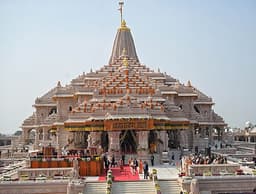
Rama of Ayodhya
Emperor · Ancient
75.3Total
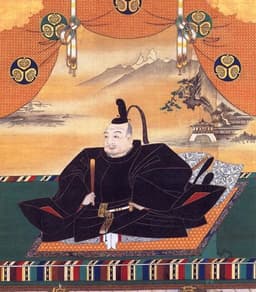
Tokugawa Ieyasu
General · Modern
81.8Total
Basic Information
Born
-1180
1543
Died
-1120
1616
Era
Ancient
Modern
Nationality
Vedic India
Japan
Occupation
Emperor
General
Civilization
Indian
Eastern
Score Comparison
Military (10%)
72.0
78.0
Political (20%)
72.0
82.0
Influence (20%)
75.0
88.0
Legacy (20%)
80.0
75.0
Leadership (15%)
78.0
85.0
Strategy (15%)
68.1
82.0
TOTAL
75.3
81.8
Rama of Ayodhya — Complete Timeline
1160 BC
Broke Shiva's Bow at Sita's SwayamvaraCultural◆ Major
Rama, as a young prince, lifted and strung the divine bow of Shiva at Princess Sita's marriage ceremony. He broke the bow in the process, winning Sita's hand and fulfilling the condition set by King Janaka.
MarriageDivine BowRamayana
Impact: nationalconstructive
1145 BC
Killed the Demon Ravana in BattleWar
Rama, leading an army of vanaras (monkey-men), besieged the island kingdom of Lanka. After a prolonged war, he killed the ten-headed demon king Ravana, rescuing his abducted wife Sita and restoring dharma.
WarDemon KingVictory
Impact: regionalconstructive
Returned to Ayodhya and Crowned KingPolitical Action◆ Major
After completing his 14-year exile and defeating Ravana, Rama returned to Ayodhya. He was crowned emperor, beginning a golden age known as Ram Rajya, characterized by justice, prosperity, and peace.
CoronationGolden AgeRamayana
Impact: nationalconstructive
Tokugawa Ieyasu — Complete Timeline
1600 AD
Battle of SekigaharaWar
Tokugawa Ieyasu led the Eastern Army to victory over Ishida Mitsunari's Western Army at Sekigahara. This decisive battle ended the Sengoku period and established Ieyasu as the supreme military ruler of Japan, paving the way for the Tokugawa shogunate.
Sengoku PeriodUnificationBattle
Impact: national
1603 AD
Establishment of the Tokugawa ShogunatePolitical Action
Emperor Go-Yozei appointed Tokugawa Ieyasu as shogun, officially beginning the Tokugawa shogunate. Ieyasu established his government in Edo (modern Tokyo), centralizing military and political power under his family's control.
ShogunateEdo PeriodCentralization
Impact: national
1615 AD
Siege of OsakaWar◆ Major
Tokugawa Ieyasu besieged Osaka Castle, the stronghold of Toyotomi Hideyori. The castle fell, and Hideyori committed suicide. This campaign eliminated the last major opposition to Tokugawa rule, solidifying the shogunate's control over Japan.
Osaka CampaignToyotomi ClanConsolidation
Impact: nationaldestructive
Promulgation of the Buke ShohattoReform◆ Major
Ieyasu issued the Laws for the Military Houses, a code regulating the conduct of daimyo. It restricted castle construction, required alternate attendance in Edo, and prohibited alliances without shogunal permission. This law helped control the feudal lords.
Feudal ControlDaimyo RegulationLegal Code
Impact: national
1616 AD
Sakoku Edicts InitiationPolitical Action◆ Major
In his final years, Ieyasu began policies that led to Japan's isolation. He restricted foreign trade to specific ports and expelled Christian missionaries. These measures, expanded by successors, resulted in the sakoku policy that isolated Japan for over 200 years.
IsolationismForeign PolicyChristianity
Impact: national
Expert Analysis
Origins
Tokugawa Ieyasu (1543–1616) was born into the Matsudaira clan during Japan's chaotic Sengoku period. His childhood was marked by hostage exchanges and political instability, which forged his patient and calculating nature. He learned the art of war and diplomacy under powerful daimyo like Imagawa Yoshimoto. In contrast, Rama, the prince of Ayodhya, is the avatar of the god Vishnu in Hindu tradition, born to King Dasharatha and Queen Kausalya. His early life was defined by divine prophecy and royal training, culminating in the breaking of Shiva's bow at Sita's swayamvara. While Ieyasu's origins are rooted in ruthless survival, Rama's are steeped in divine destiny.
Rise to Power
Ieyasu's rise was gradual and strategic. After the death of Oda Nobunaga and Toyotomi Hideyoshi, he maneuvered through alliances and betrayals, culminating in the decisive Battle of Sekigahara (1600). Victory there made him the de facto ruler of Japan, leading to the establishment of the Tokugawa shogunate in 1603. Rama's rise was more direct: after breaking Shiva's bow, he married Sita but was exiled for 14 years due to a court intrigue. During exile, he defeated the demon king Ravana, rescued Sita, and returned to Ayodhya to be crowned king. Ieyasu's path was one of political cunning; Rama's was a heroic quest.
Leadership & Governance
Ieyasu's governance was pragmatic and institutional. He centralized power by controlling land distribution, imposing the Buke Shohatto (laws for military houses), and initiating the Sakoku policy to control foreign influence. He established a stable bureaucracy and a rigid social hierarchy that lasted over 250 years. Rama, as Maryada Purushottam (the perfect man), ruled with dharma (righteousness). His reign, Ram Rajya, is idealized as a golden age of justice, prosperity, and harmony. However, his leadership is more mythological than historical, lacking concrete administrative reforms. Ieyasu's governance is documented and effective; Rama's is legendary and moral.
Triumph & Tragedy
Ieyasu's greatest triumph was winning Sekigahara and unifying Japan after centuries of war. His tragedy was the Siege of Osaka (1615), where he destroyed the Toyotomi clan, including Hideyori, the son of his former ally. This act secured his dynasty but stained his legacy. Rama's triumph was slaying Ravana and rescuing Sita. His tragedy was later exiling Sita due to public doubt about her purity—a decision that haunts his legacy. Both faced moral dilemmas: Ieyasu prioritized stability over loyalty, Rama over righteousness.
Character & Destiny
Ieyasu was patient, cautious, and calculating. He famously said, "The strong man is the one who can control his temper." His destiny was to unify Japan and establish a dynasty. Rama was virtuous, dutiful, and idealistic. His destiny was to restore dharma and set an example. Ieyasu's character flaw was ruthlessness; Rama's was excessive adherence to duty. Their fates reflect their cultures: Ieyasu built a lasting institution, Rama became a divine archetype.
Legacy
Ieyasu's legacy is tangible: the Tokugawa shogunate brought peace, economic growth, and cultural development (Edo period). His political system influenced modern Japan. Rama's legacy is spiritual and cultural: the Ramayana epic shapes Hindu ethics, art, and festivals. He is revered as a god. In terms of historical impact, Ieyasu's influence on Japan's trajectory is measurable; Rama's is immeasurable but profound. Score gap: Ieyasu 82 vs Rama 75, reflecting Ieyasu's higher military and political scores.
Conclusion
Tokugawa Ieyasu emerges as the more effective historical leader due to his tangible achievements in unifying Japan, establishing a stable government, and creating a legacy that lasted centuries. Rama, while morally exemplary and culturally significant, operates more in myth than history. Ieyasu's pragmatic governance and strategic genius give him the edge. Final scores: Ieyasu 82, Rama 75.
**Scores**: Ieyasu M=78 P=82 I=88 L=75 D=85 S=82 T=82; Rama M=72 P=72 I=75 L=80 D=78 S=68 T=75.
Rankings
🥇
Tokugawa IeyasuLeader
Mil: 78.0Pol: 82.0Inf: 88.0
81.8
🥈
Rama of Ayodhya
Mil: 72.0Pol: 72.0Inf: 75.0
75.3
+6.5 behind
How This Comparison Works
Algorithm
Each figure is scored on 6 dimensions (0—100 scale) based on structured historical data: Military (10%), Political (20%), Influence (20%), Legacy (20%), Leadership (15%), Strategy (15%). The weighted total produces the final ranking.
Data Sources
Scores are computed from structured sub-indicators in the database. Scale factors adjust for era (Ancient ×0.85, Modern ×1.0) and civilization size (Eastern ×1.05, Other ×0.80) to account for differences in population and military scale.
Maximum 3 Figures
Comparisons are limited to 2—3 figures to ensure readability and statistical meaningfulness.
Error Margins
±5 points per dimension — Sub-scores are derived from historical records with inherent uncertainty. Two figures within 5 points on a dimension should be considered roughly equivalent in that area.
Total Score Accuracy
±3 points overall — The weighted combination of 6 dimensions produces a total score with approximately ±3 points of uncertainty. Differences of less than 3 points are not statistically significant— the figures are effectively tied.
Known Limitations
- Historical records are incomplete and uneven across civilizations
- Figures from oral-tradition societies may be underrepresented
- Occupation labels can misclassify multi-role figures
- Scores measure capability and impact, not moral character
- Quantitative scoring is a comparison tool, not absolute truth
Capability Radar
Military (10%) — Battles & Warfare
Battles
75
85
Win Rate
95
90
Expansion
70
75
Political (20%) — Governance & Reform
Reform
80
90
Diplomacy
85
85
Economy
75
88
Influence (20%) — Cultural & Global Reach
Cultural
95
85
Global
95
70
Legacy (20%) — Historical Impact
Historical
95
90
Longevity
100
95
Leadership (15%) — Power & Stability
Tenure
70
95
Stability
90
95
Strategy (15%) — Tactics & Innovation
Strategy
85
92
Tactics
80
88
Reform
60
80
Similar Comparisons
Comments & Discussion
No comments yet. Be the first to share your thoughts!