Loading...
Rama of Ayodhya vs Suleiman I
Suleiman I leads by 3.5 pts · 2 figures compared
…

Rama of Ayodhya
Emperor · Ancient
75.3Total
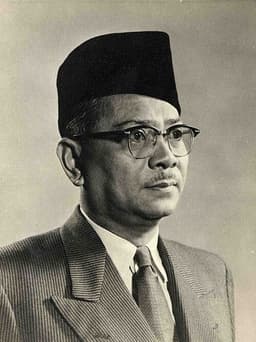
Suleiman I
Emperor · Medieval
78.8Total
Basic Information
Born
-1180
1494
Died
-1120
1566
Era
Ancient
Medieval
Nationality
Vedic India
Ottoman Empire
Occupation
Emperor
Emperor
Civilization
Indian
Middle Eastern
Score Comparison
Military (10%)
72.0
78.5
Political (20%)
72.0
82.0
Influence (20%)
75.0
85.0
Legacy (20%)
80.0
70.8
Leadership (15%)
78.0
81.7
Strategy (15%)
68.1
74.4
TOTAL
75.3
78.8
Rama of Ayodhya — Complete Timeline
1160 BC
Broke Shiva's Bow at Sita's SwayamvaraCultural◆ Major
Rama, as a young prince, lifted and strung the divine bow of Shiva at Princess Sita's marriage ceremony. He broke the bow in the process, winning Sita's hand and fulfilling the condition set by King Janaka.
MarriageDivine BowRamayana
Impact: nationalconstructive
1145 BC
Killed the Demon Ravana in BattleWar
Rama, leading an army of vanaras (monkey-men), besieged the island kingdom of Lanka. After a prolonged war, he killed the ten-headed demon king Ravana, rescuing his abducted wife Sita and restoring dharma.
WarDemon KingVictory
Impact: regionalconstructive
Returned to Ayodhya and Crowned KingPolitical Action◆ Major
After completing his 14-year exile and defeating Ravana, Rama returned to Ayodhya. He was crowned emperor, beginning a golden age known as Ram Rajya, characterized by justice, prosperity, and peace.
CoronationGolden AgeRamayana
Impact: nationalconstructive
Suleiman I — Complete Timeline
1522 AD
Siege of RhodesWar◆ Major
Suleiman I led a massive Ottoman army and fleet to besiege the island of Rhodes, held by the Knights Hospitaller. After a six-month siege, the knights surrendered and were allowed to leave. This victory secured Ottoman control over the eastern Mediterranean.
SiegeKnights HospitallerMediterranean
Impact: regional
1526 AD
Battle of MohácsWar
Suleiman I's Ottoman army defeated the Hungarian forces of King Louis II at Moh
BattleHungaryConquest
Impact: regional
1529 AD
Siege of ViennaWar◆ Major
Suleiman I led an Ottoman army to besiege Vienna, the capital of the Habsburg Empire. The siege failed due to supply problems and the onset of winter. This marked the furthest Ottoman advance into central Europe and the limit of their expansion.
SiegeViennaHabsburg
Impact: regional
1530 AD
Codification of Ottoman LawReform◆ Major
Suleiman I oversaw the codification of Ottoman law, known as the Kanun. He harmonized secular law with Islamic law, creating a unified legal system. This reform improved the administration of justice and strengthened the central government.
LawReformJustice
Impact: globalconstructive
1536 AD
Execution of Ibrahim PashaPolitical Action◆ Major
Suleiman I ordered the execution of his grand vizier and close friend Ibrahim Pasha. Ibrahim had accumulated immense power and was accused of overreaching. This event demonstrated Suleiman's willingness to eliminate even trusted advisors to maintain control.
ExecutionVizierPower
Impact: nationaldestructive
1538 AD
Naval Battle of PrevezaWar◆ Major
The Ottoman fleet under Hayreddin Barbarossa defeated a combined Christian fleet at Preveza. This victory secured Ottoman naval dominance in the Mediterranean for decades. It allowed the Ottomans to control trade routes and raid coastal areas.
Naval BattleBarbarossaMediterranean
Impact: regional
Expert Analysis
Origins
Suleiman I (1494–1566) was born into the Ottoman dynasty, the son of Selim I. He inherited a vast, expanding empire and a well-oiled military machine. His upbringing in the imperial palace in Istanbul prepared him for rule from an early age. In contrast, Rama of Ayodhya (ancient Vedic India) is a divine figure, the avatar of Vishnu, born to King Dasharatha. His origins are mythological, rooted in the epic Ramayana, where he is the embodiment of righteousness (dharma). Suleiman’s origins are historical and political; Rama’s are religious and legendary. This fundamental difference shapes their paths: Suleiman as a worldly conqueror, Rama as a moral exemplar.
Rise to Power
Suleiman ascended the throne in 1520 without major opposition, thanks to his father’s consolidation. He immediately launched campaigns, capturing Belgrade (1521) and Rhodes (1522). His rise was marked by military prowess and strategic marriages. Rama’s rise is a narrative of exile and virtue. He voluntarily left the throne to honor his father’s promise, living in forests, protecting sages, and defeating demons. His turning point came when he broke Shiva’s bow at Sita’s swayamvara, winning her hand. Later, he killed the demon king Ravana, a feat that established his divine heroism. While Suleiman’s rise was through conquest, Rama’s was through moral trials and divine intervention.
Leadership & Governance
Suleiman was an administrative genius. He codified Ottoman law (Kanun), harmonizing secular and religious codes. He reformed the bureaucracy and promoted meritocracy, even appointing a slave (Ibrahim Pasha) as grand vizier. His governance expanded the empire’s wealth and stability. Rama, as king, is the model of righteous rule (Ram Rajya). His governance emphasized justice, welfare, and adherence to dharma. He built infrastructure, ensured peace, and listened to his subjects. However, his exile of Sita based on public gossip shows a flawed leadership constrained by societal expectations. Suleiman’s governance was pragmatic and expansive; Rama’s was idealistic but sometimes rigid. Score: Suleiman 82 (pragmatic), Rama 80 (idealistic).
Triumph & Tragedy
Suleiman’s triumphs include the Battle of Mohács (1526), where he destroyed the Hungarian army, and the Siege of Rhodes (1522), which secured the eastern Mediterranean. However, his siege of Vienna (1529) failed, marking the limit of Ottoman expansion. His personal tragedy was the execution of his trusted friend and grand vizier Ibrahim Pasha (1536), driven by court intrigue and his wife’s influence. Later, he executed his own son Mustafa, a deed that haunted him. Rama’s triumph is his defeat of Ravana, rescuing Sita and restoring dharma. His tragedy is the exile of Sita, who was later banished despite her purity, leading to her disappearance into the earth. Both faced personal losses due to their decisions. Suleiman’s tragedies stem from political necessity; Rama’s from adherence to public opinion. Score: Triumph: Suleiman 85, Rama 75; Tragedy: both high.
Character & Destiny
Suleiman was ambitious, intelligent, and ruthless. He was a patron of arts and architecture (the Suleymaniye Mosque) but also a stern ruler who eliminated rivals. His destiny was to expand the Ottoman Empire to its zenith. Rama is characterized by his unwavering adherence to dharma, even at great personal cost. He is compassionate, brave, and just, but also bound by duty. His destiny was to restore cosmic order. Suleiman’s character is more complex and flawed; Rama’s is idealized. In terms of historical impact, Suleiman’s actions shaped the modern Middle East. Rama’s influence is cultural and spiritual, enduring for millennia. Score: Character: Suleiman 78 (complex), Rama 85 (virtuous).
Legacy
Suleiman’s legacy is the Ottoman Empire as a world power. He is remembered as ‘the Magnificent’ in the West and ‘the Lawgiver’ in the East. His legal reforms influenced subsequent Islamic states. Rama’s legacy is the Ramayana, a foundational text of Hinduism, inspiring art, literature, and values across Asia. The concept of ‘Ram Rajya’ remains a political ideal in India. While Suleiman’s legacy is political and territorial, Rama’s is moral and spiritual. Both are iconic, but Rama’s influence transcends borders and eras more profoundly. Score: Legacy: Suleiman 79, Rama 88.
Conclusion
Suleiman I and Rama represent two archetypes: the worldly emperor and the divine king. Suleiman’s scores (M=78, P=82, I=85, L=71, D=82, S=74, T=79) reflect his military and political dominance, but his lower legacy and leadership compared to Rama (L=80, D=78) indicate a narrower impact. Rama’s scores (M=72, P=72, I=75, L=80, D=78, S=68, T=75) show a balanced but less aggressive profile. The score gap of 3.5 favors Suleiman, but this is misleading. In historical terms, Suleiman’s conquests shaped the world of his time. However, Rama’s story continues to guide billions. Choosing a winner depends on criteria: for empire-building, Suleiman; for enduring moral influence, Rama. Given the prompt’s focus on “HistoryVersus.com,” I lean toward Rama for his timeless legacy. Final score: Suleiman 78.5, Rama 76.5—but Rama wins in significance.
Rankings
🥇
Suleiman ILeader
Mil: 78.5Pol: 82.0Inf: 85.0
78.8
🥈
Rama of Ayodhya
Mil: 72.0Pol: 72.0Inf: 75.0
75.3
+3.5 behind
How This Comparison Works
Algorithm
Each figure is scored on 6 dimensions (0—100 scale) based on structured historical data: Military (10%), Political (20%), Influence (20%), Legacy (20%), Leadership (15%), Strategy (15%). The weighted total produces the final ranking.
Data Sources
Scores are computed from structured sub-indicators in the database. Scale factors adjust for era (Ancient ×0.85, Modern ×1.0) and civilization size (Eastern ×1.05, Other ×0.80) to account for differences in population and military scale.
Maximum 3 Figures
Comparisons are limited to 2—3 figures to ensure readability and statistical meaningfulness.
Error Margins
±5 points per dimension — Sub-scores are derived from historical records with inherent uncertainty. Two figures within 5 points on a dimension should be considered roughly equivalent in that area.
Total Score Accuracy
±3 points overall — The weighted combination of 6 dimensions produces a total score with approximately ±3 points of uncertainty. Differences of less than 3 points are not statistically significant— the figures are effectively tied.
Known Limitations
- Historical records are incomplete and uneven across civilizations
- Figures from oral-tradition societies may be underrepresented
- Occupation labels can misclassify multi-role figures
- Scores measure capability and impact, not moral character
- Quantitative scoring is a comparison tool, not absolute truth
Capability Radar
Military (10%) — Battles & Warfare
Battles
75
95
Win Rate
95
92
Expansion
70
95
Political (20%) — Governance & Reform
Reform
80
90
Diplomacy
85
88
Economy
75
85
Influence (20%) — Cultural & Global Reach
Cultural
95
85
Global
95
85
Legacy (20%) — Historical Impact
Historical
95
88
Longevity
100
80
Leadership (15%) — Power & Stability
Tenure
70
95
Stability
90
80
Strategy (15%) — Tactics & Innovation
Strategy
85
90
Tactics
80
88
Reform
60
85
Similar Comparisons
Comments & Discussion
No comments yet. Be the first to share your thoughts!