Loading...
This comparison has not been analyzed yet.
One-time AI generation (~1 minute). Scores and timeline are already available below.
Radomir Putnik vs Tiburcio Carias Andino
Radomir Putnik leads by 15.5 pts · 2 figures compared
…

Radomir Putnik
General · Modern
61.3Total
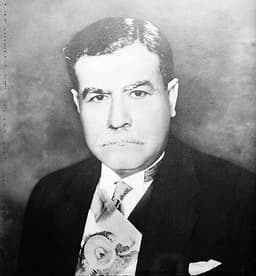
Tiburcio Carias Andino
General · Modern
45.8Total
Basic Information
Born
1847
1876
Died
1917
1969
Era
Modern
Modern
Nationality
Serbia
Honduras
Occupation
General
General
Civilization
Western
Western
Score Comparison
Military (10%)
61.7
25.9
Political (20%)
68.0
36.5
Influence (20%)
60.0
47.9
Legacy (20%)
50.0
39.2
Leadership (15%)
72.0
80.0
Strategy (15%)
66.3
39.6
TOTAL
61.3
45.8
Radomir Putnik — Complete Timeline
1912 AD
Command during the Balkan WarsWar◆ Major
Putnik led the Serbian Army to victories against the Ottoman Empire in the First Balkan War and against Bulgaria in the Second Balkan War. These wars doubled Serbia's territory and established it as a regional power.
Balkan WarsTerritorial ExpansionVictory
Impact: regionalconstructive
Appointment as Chief of General StaffPolitical Action◆ Major
Putnik was appointed Chief of the General Staff of the Serbian Army. He was responsible for planning and executing military operations during the Balkan Wars and World War I.
Military CommandBalkan Wars
Impact: nationalconstructive
1914 AD
Command during the Serbian Campaign of World War IWar◆ Major
Putnik commanded the Serbian Army during the initial Austro-Hungarian invasions. Despite being ill, he directed the successful defense of Serbia, including the victories at Cer and Kolubara.
World War IDefenseVictory
Impact: regionalconstructive
1915 AD
Retreat through AlbaniaWar
Putnik led the Serbian Army and government in a winter retreat across the Albanian mountains after a combined German, Austro-Hungarian, and Bulgarian offensive. The retreat saved the army but resulted in heavy casualties from cold, disease, and enemy attacks.
World War IRetreatSurvival
Impact: regionaltragic
Tiburcio Carias Andino — Complete Timeline
1933 AD
Assumption of presidency after coupPolitical Action
Carias Andino assumed the presidency of Honduras after a coup against the liberal government of Vicente Mej
CoupDictatorshipPower Consolidation
Impact: nationaldestructive
1936 AD
Extension of presidential term to 25 yearsPolitical Action◆ Major
Carias Andino orchestrated a constitutional amendment that extended the presidential term from 4 to 6 years and allowed his re-election, effectively granting him a 25-year rule. This move eliminated political opposition and cemented his authoritarian control.
Constitutional AmendmentAuthoritarianismRe-election
Impact: nationaldestructive
1937 AD
Suppression of the 1937 peasant uprisingWar◆ Major
Carias Andino's government violently suppressed a peasant uprising in western Honduras, killing hundreds. The rebellion was sparked by land dispossession and labor exploitation, and its brutal repression solidified Carias's reputation as a repressive dictator.
Peasant UprisingRepressionLand Conflict
Impact: nationaldestructive
This comparison has not been analyzed yet.
One-time AI generation (~1 minute). Scores and timeline are already available below.
Rankings
🥇
Radomir PutnikLeader
Mil: 61.7Pol: 68.0Inf: 60.0
61.3
🥈
Tiburcio Carias Andino
Mil: 25.9Pol: 36.5Inf: 47.9
45.8
+15.5 behind
How This Comparison Works
Algorithm
Each figure is scored on 6 dimensions (0—100 scale) based on structured historical data: Military (10%), Political (20%), Influence (20%), Legacy (20%), Leadership (15%), Strategy (15%). The weighted total produces the final ranking.
Data Sources
Scores are computed from structured sub-indicators in the database. Scale factors adjust for era (Ancient ×0.85, Modern ×1.0) and civilization size (Eastern ×1.05, Other ×0.80) to account for differences in population and military scale.
Maximum 3 Figures
Comparisons are limited to 2—3 figures to ensure readability and statistical meaningfulness.
Error Margins
±5 points per dimension — Sub-scores are derived from historical records with inherent uncertainty. Two figures within 5 points on a dimension should be considered roughly equivalent in that area.
Total Score Accuracy
±3 points overall — The weighted combination of 6 dimensions produces a total score with approximately ±3 points of uncertainty. Differences of less than 3 points are not statistically significant— the figures are effectively tied.
Known Limitations
- Historical records are incomplete and uneven across civilizations
- Figures from oral-tradition societies may be underrepresented
- Occupation labels can misclassify multi-role figures
- Scores measure capability and impact, not moral character
- Quantitative scoring is a comparison tool, not absolute truth
Capability Radar
Military (10%) — Battles & Warfare
Battles
75
10
Win Rate
70
15
Expansion
50
5
Political (20%) — Governance & Reform
Reform
40
20
Diplomacy
50
30
Economy
30
15
Influence (20%) — Cultural & Global Reach
Cultural
40
10
Global
50
5
Legacy (20%) — Historical Impact
Historical
55
20
Longevity
45
15
Leadership (15%) — Power & Stability
Tenure
55
70
Stability
45
25
Strategy (15%) — Tactics & Innovation
Strategy
78
10
Tactics
72
10
Reform
65
5
Similar Comparisons
Comments & Discussion
No comments yet. Be the first to share your thoughts!