Loading...
This comparison has not been analyzed yet.
One-time AI generation (~1 minute). Scores and timeline are already available below.
Quli Qutb Shah vs Umed Singh of Kota
Quli Qutb Shah leads by 2.7 pts · 2 figures compared
…
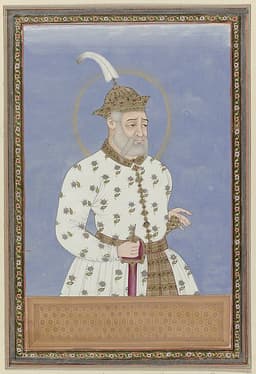
Quli Qutb Shah
Emperor · Modern
49.0Total

Umed Singh of Kota
Emperor · Modern
46.3Total
Basic Information
Born
1518
1725
Died
1543
1771
Era
Modern
Modern
Nationality
India
India
Occupation
Emperor
Emperor
Civilization
Indian
Indian
Score Comparison
Military (10%)
25.0
30.0
Political (20%)
46.6
40.8
Influence (20%)
53.3
48.6
Legacy (20%)
45.8
39.2
Leadership (15%)
65.0
74.0
Strategy (15%)
50.0
41.7
TOTAL
49.0
46.3
Quli Qutb Shah — Complete Timeline
1518 AD
Foundation of the Qutb Shahi dynastyPolitical Action
Quli Qutb Shah declared independence from the Bahmani Sultanate and established the Qutb Shahi dynasty with its capital at Golconda. This marked the beginning of a new sultanate in the Deccan.
FoundingIndependence
Impact: regionalconstructive
1520 AD
Construction of the Golconda FortCultural◆ Major
Quli Qutb Shah expanded and fortified the Golconda Fort, transforming it into a major military stronghold. The fort's design included advanced water management systems and massive gates.
ArchitectureFortification
Impact: regionalconstructive
1525 AD
War against the Vijayanagara EmpireWar◆ Major
Quli Qutb Shah fought a war against the Vijayanagara Empire, capturing the fort of Kondapalli. The victory expanded Qutb Shahi territory and established Golconda as a regional power.
WarVijayanagaraTerritorial Expansion
Impact: regional
1530 AD
Promotion of trade in diamondsPolitical Action
Quli Qutb Shah encouraged diamond mining in the Golconda region, which became a major source of wealth for the sultanate. The Golconda diamonds were traded across Asia and Europe.
TradeDiamondsEconomy
Impact: regionalconstructive
Umed Singh of Kota — Complete Timeline
1750 AD
Expansion of Kota territory through military campaignsWar◆ Major
Umed Singh led military campaigns to expand Kota's territory, annexing neighboring areas including parts of Bundi and Jhalawar. These conquests increased the state's revenue and strategic influence in the Hadoti region of Rajasthan.
Territorial ExpansionMilitary CampaignRajasthan
Impact: regional
1760 AD
Construction of the Kota City PalaceCultural◆ Major
Umed Singh commissioned the construction of the Kota City Palace, a large complex on the banks of the Chambal River. The palace featured elaborate murals, gardens, and courtyards, becoming the administrative and ceremonial center of Kota state.
ArchitectureRoyal ResidencePatronage
Impact: regionalconstructive
1765 AD
Alliance with the Maratha EmpirePolitical Action◆ Major
Umed Singh formed a strategic alliance with the Maratha Empire, agreeing to pay tribute in exchange for protection against rival Rajput states. This alliance secured Kota's autonomy but also made it a tributary of the Marathas, reducing its independence.
DiplomacyMaratha EmpireTribute
Impact: regional
This comparison has not been analyzed yet.
One-time AI generation (~1 minute). Scores and timeline are already available below.
Rankings
🥇
Quli Qutb ShahLeader
Mil: 25.0Pol: 46.6Inf: 53.3
49.0
🥈
Umed Singh of Kota
Mil: 30.0Pol: 40.8Inf: 48.6
46.3
+2.7 behind
How This Comparison Works
Algorithm
Each figure is scored on 6 dimensions (0—100 scale) based on structured historical data: Military (10%), Political (20%), Influence (20%), Legacy (20%), Leadership (15%), Strategy (15%). The weighted total produces the final ranking.
Data Sources
Scores are computed from structured sub-indicators in the database. Scale factors adjust for era (Ancient ×0.85, Modern ×1.0) and civilization size (Eastern ×1.05, Other ×0.80) to account for differences in population and military scale.
Maximum 3 Figures
Comparisons are limited to 2—3 figures to ensure readability and statistical meaningfulness.
Error Margins
±5 points per dimension — Sub-scores are derived from historical records with inherent uncertainty. Two figures within 5 points on a dimension should be considered roughly equivalent in that area.
Total Score Accuracy
±3 points overall — The weighted combination of 6 dimensions produces a total score with approximately ±3 points of uncertainty. Differences of less than 3 points are not statistically significant— the figures are effectively tied.
Known Limitations
- Historical records are incomplete and uneven across civilizations
- Figures from oral-tradition societies may be underrepresented
- Occupation labels can misclassify multi-role figures
- Scores measure capability and impact, not moral character
- Quantitative scoring is a comparison tool, not absolute truth
Capability Radar
Military (10%) — Battles & Warfare
Battles
35
35
Win Rate
40
40
Expansion
40
40
Political (20%) — Governance & Reform
Reform
40
30
Diplomacy
35
35
Economy
40
30
Influence (20%) — Cultural & Global Reach
Cultural
30
20
Global
20
10
Legacy (20%) — Historical Impact
Historical
35
25
Longevity
40
20
Leadership (15%) — Power & Stability
Tenure
45
45
Stability
35
40
Strategy (15%) — Tactics & Innovation
Strategy
30
35
Tactics
30
30
Reform
25
25
Similar Comparisons
Comments & Discussion
No comments yet. Be the first to share your thoughts!