Loading...
This comparison has not been analyzed yet.
One-time AI generation (~1 minute). Scores and timeline are already available below.
Carol I of Romania vs Quli Qutb Shah
Carol I of Romania leads by 8.3 pts · 2 figures compared
…

Carol I of Romania
Emperor · Modern
57.3Total
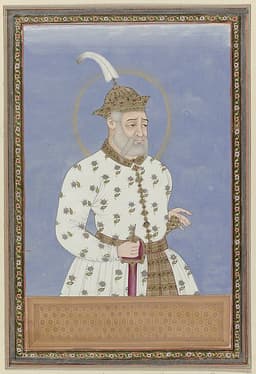
Quli Qutb Shah
Emperor · Modern
49.0Total
Basic Information
Born
1839
1518
Died
1914
1543
Era
Modern
Modern
Nationality
Romania
India
Occupation
Emperor
Emperor
Civilization
Western
Indian
Score Comparison
Military (10%)
25.0
25.0
Political (20%)
70.3
46.6
Influence (20%)
56.4
53.3
Legacy (20%)
50.0
45.8
Leadership (15%)
78.0
65.0
Strategy (15%)
60.0
50.0
TOTAL
57.3
49.0
Carol I of Romania — Complete Timeline
1866 AD
Elected Prince of RomaniaPolitical Action
Carol of Hohenzollern-Sigmaringen was elected Prince of Romania on April 20, 1866, following the abdication of Alexandru Ioan Cuza. He arrived in Romania in May and was sworn in, beginning the Hohenzollern dynasty's rule over the country.
AccessionHohenzollern DynastyRomanian Monarchy
Impact: national
1869 AD
Oversaw the Construction of the Romanian Railway SystemReform◆ Major
Carol I initiated the construction of Romania's first major railway line, connecting Bucharest to Giurgiu. This project expanded into a national network, modernizing transportation and facilitating economic development.
InfrastructureRailwaysModernization
Impact: nationalconstructive
1877 AD
Led Romania in the Russo-Turkish War of 1877-1878War◆ Major
Carol I led Romanian forces alongside the Russian army against the Ottoman Empire in the Russo-Turkish War. The Romanian army played a key role in the Siege of Plevna, and the war resulted in Romania's full independence from Ottoman suzerainty.
Russo-Turkish WarIndependenceSiege of Plevna
Impact: regional
1878 AD
Signed the Treaty of Berlin (1878)Political Action◆ Major
Carol I's diplomats secured international recognition of Romania's independence at the Congress of Berlin. The treaty also forced Romania to cede southern Bessarabia to Russia in exchange for the Dobruja region, a controversial territorial swap.
Treaty of BerlinIndependenceTerritorial Change
Impact: regional
1881 AD
Proclaimed King of RomaniaPolitical Action
On March 26, 1881, Romania was proclaimed a kingdom, and Carol I was crowned as its first king. This elevated Romania's international status and solidified its independence from the Ottoman Empire, which had been recognized in 1878.
CoronationKingdomIndependence
Impact: nationalconstructive
Quli Qutb Shah — Complete Timeline
1518 AD
Foundation of the Qutb Shahi dynastyPolitical Action
Quli Qutb Shah declared independence from the Bahmani Sultanate and established the Qutb Shahi dynasty with its capital at Golconda. This marked the beginning of a new sultanate in the Deccan.
FoundingIndependence
Impact: regionalconstructive
1520 AD
Construction of the Golconda FortCultural◆ Major
Quli Qutb Shah expanded and fortified the Golconda Fort, transforming it into a major military stronghold. The fort's design included advanced water management systems and massive gates.
ArchitectureFortification
Impact: regionalconstructive
1525 AD
War against the Vijayanagara EmpireWar◆ Major
Quli Qutb Shah fought a war against the Vijayanagara Empire, capturing the fort of Kondapalli. The victory expanded Qutb Shahi territory and established Golconda as a regional power.
WarVijayanagaraTerritorial Expansion
Impact: regional
1530 AD
Promotion of trade in diamondsPolitical Action
Quli Qutb Shah encouraged diamond mining in the Golconda region, which became a major source of wealth for the sultanate. The Golconda diamonds were traded across Asia and Europe.
TradeDiamondsEconomy
Impact: regionalconstructive
This comparison has not been analyzed yet.
One-time AI generation (~1 minute). Scores and timeline are already available below.
Rankings
🥇
Carol I of RomaniaLeader
Mil: 25.0Pol: 70.3Inf: 56.4
57.3
🥈
Quli Qutb Shah
Mil: 25.0Pol: 46.6Inf: 53.3
49.0
+8.3 behind
How This Comparison Works
Algorithm
Each figure is scored on 6 dimensions (0—100 scale) based on structured historical data: Military (10%), Political (20%), Influence (20%), Legacy (20%), Leadership (15%), Strategy (15%). The weighted total produces the final ranking.
Data Sources
Scores are computed from structured sub-indicators in the database. Scale factors adjust for era (Ancient ×0.85, Modern ×1.0) and civilization size (Eastern ×1.05, Other ×0.80) to account for differences in population and military scale.
Maximum 3 Figures
Comparisons are limited to 2—3 figures to ensure readability and statistical meaningfulness.
Error Margins
±5 points per dimension — Sub-scores are derived from historical records with inherent uncertainty. Two figures within 5 points on a dimension should be considered roughly equivalent in that area.
Total Score Accuracy
±3 points overall — The weighted combination of 6 dimensions produces a total score with approximately ±3 points of uncertainty. Differences of less than 3 points are not statistically significant— the figures are effectively tied.
Known Limitations
- Historical records are incomplete and uneven across civilizations
- Figures from oral-tradition societies may be underrepresented
- Occupation labels can misclassify multi-role figures
- Scores measure capability and impact, not moral character
- Quantitative scoring is a comparison tool, not absolute truth
Capability Radar
Military (10%) — Battles & Warfare
Battles
30
35
Win Rate
40
40
Expansion
45
40
Political (20%) — Governance & Reform
Reform
75
40
Diplomacy
80
35
Economy
70
40
Influence (20%) — Cultural & Global Reach
Cultural
40
30
Global
40
20
Legacy (20%) — Historical Impact
Historical
55
35
Longevity
50
40
Leadership (15%) — Power & Stability
Tenure
85
45
Stability
75
35
Strategy (15%) — Tactics & Innovation
Strategy
40
30
Tactics
35
30
Reform
65
25
Similar Comparisons
Comments & Discussion
No comments yet. Be the first to share your thoughts!