Loading...
Qoshila vs Stephen the Great
Stephen the Great leads by 6.9 pts · 2 figures compared
…
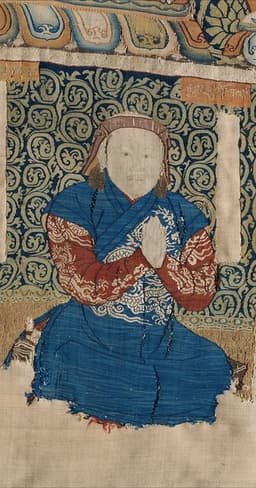
Qoshila
Emperor · Medieval
54.7Total
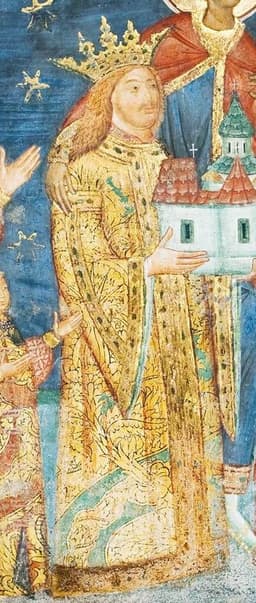
Stephen the Great
Emperor · Medieval
61.6Total
Basic Information
Born
1300
1433
Died
1329
1504
Era
Medieval
Medieval
Nationality
China
Moldavia
Occupation
Emperor
Emperor
Civilization
Eastern
Western
Score Comparison
Military (10%)
54.6
67.3
Political (20%)
68.0
59.3
Influence (20%)
60.0
55.0
Legacy (20%)
42.5
55.0
Leadership (15%)
45.0
78.0
Strategy (15%)
67.1
68.1
TOTAL
54.7
61.6
Qoshila — Complete Timeline
1329 AD
Accession as Yuan EmperorPolitical Action◆ Major
Qoshila was proclaimed Yuan emperor in 1329 after a power struggle following the death of Yes
Yuan DynastySuccessionShort Reign
Impact: nationaltragic
Death under Suspicious CircumstancesPolitical Action◆ Major
Qoshila died suddenly after a banquet with his brother Tugh Tem
Yuan DynastyAssassinationPower Struggle
Impact: nationaltragic
Stephen the Great — Complete Timeline
1470 AD
Construction of Fortresses and ChurchesCultural◆ Major
Stephen the Great commissioned the construction of numerous fortresses, including those at Suceava, Neam
ArchitectureFortificationsOrthodox Church
Impact: nationalconstructive
1475 AD
Battle of VasluiWar
Stephen the Great led a Moldavian army of about 40,000 men against an Ottoman force of up to 120,000 under Had
BattleOttoman EmpireMoldavia
Impact: regional
1476 AD
Battle of Valea AlbăWar◆ Major
Stephen the Great suffered a major defeat at Valea Alb
BattleMehmed IIDefeat
Impact: regionaltragic
1489 AD
Treaty with the Ottoman EmpirePolitical Action◆ Major
Stephen the Great signed a treaty with Sultan Bayezid II, agreeing to pay an annual tribute to the Ottoman Empire in exchange for peace. The treaty recognized Moldavia's autonomy and ended decades of warfare, though it placed Moldavia in a vassal relationship with the Ottomans.
TreatyVassalageBayezid II
Impact: regional
Expert Analysis
Origins
Qoshila, born in 1300, was a son of Külüg Khan (Emperor Wuzong) of the Yuan dynasty. His early life was marked by the complex power struggles within the Mongol imperial family. He spent much of his youth in the steppes, away from the capital Dadu, gaining support among Mongol nobles. His background was steeped in the traditions of the Mongol Empire, but he lacked administrative experience.
Stephen the Great, born in 1433, was a son of Bogdan II of Moldavia. His early life was shaped by the constant threats from the Kingdom of Poland, the Kingdom of Hungary, and the Ottoman Empire. After his father was assassinated in 1451, Stephen fled to the court of his cousin Vlad III Țepeș in Wallachia. This exile provided him with military and political training. He returned to Moldavia in 1457 and seized the throne with the help of Vlad.
Rise to Power
Qoshila's rise was swift and contested. After the death of Yesün Temür in 1328, a civil war erupted. Qoshila was proclaimed emperor at Karakorum in February 1329, backed by the Chagatai Khanate. His brother Tugh Temür, who had already taken the throne in Dadu, initially recognized Qoshila but soon moved against him. Qoshila's reign lasted only six months, ending with his sudden death after a banquet with Tugh Temür in August 1329. The circumstances suggest poisoning.
Stephen the Great's rise was more gradual and strategic. In 1457, he led a rebellion with Wallachian support and defeated his uncle Petru Aron to claim the throne. He consolidated power by executing boyars who opposed him. His early reign focused on securing Moldavia's independence by balancing relations between Poland and Hungary. In 1465, he captured the fortress of Chilia from Wallachia, a key strategic point.
Leadership & Governance
Qoshila's leadership score of 45.0 reflects his short tenure. He attempted to assert authority by appointing loyalists to key positions, but his reliance on the Chagatai Khanate alienated Chinese officials. His governance was marked by indecision; he failed to secure a stable base in Dadu. Politically, he scored 68.0, indicating some skill in forming alliances, but his inability to consolidate power led to his downfall.
Stephen the Great, with a leadership score of 78.0, was a decisive and effective ruler. He centralized authority by limiting the power of the boyars and creating a professional army of free peasants. He built a network of fortresses (e.g., Suceava, Neamț, Hotin) that withstood Ottoman sieges. His political score of 59.3 reflects his pragmatic diplomacy: he paid tribute to the Ottomans after 1489 to avoid destruction, while maintaining ties with Poland and Hungary.
Triumph & Tragedy
Qoshila's triumph was his brief accession to the throne, a testament to his political maneuvering. However, his tragic death, likely at his brother's hands, ended any potential legacy. His failure to secure his position resulted in a legacy score of 42.5, the lowest among the comparison.
Stephen the Great's greatest triumph was the Battle of Vaslui in 1475, where his 40,000-strong army defeated an Ottoman force of 120,000, earning him praise across Europe. His tragedy was the subsequent defeat at Valea Albă in 1476, where Sultan Mehmed II's army overwhelmed his forces. He rebuilt his army and continued resistance. His military score of 67.3 reflects these mixed outcomes. His construction of churches and fortresses left a lasting cultural imprint.
Character & Destiny
Qoshila was ambitious but perhaps too trusting. His decision to attend the banquet with Tugh Temür, despite warnings, suggests a lack of caution. His destiny was shaped by the ruthless politics of the Mongol court.
Stephen the Great was a pragmatic and resilient leader. He was known for his piety and justice, but also for his ruthlessness toward opponents. His character—disciplined, strategic, and patient—allowed him to survive 47 years on the throne. He accepted tribute to the Ottomans when necessary, prioritizing the survival of Moldavia over pride.
Legacy
Qoshila's legacy is minimal. He is a footnote in Yuan history, remembered only for his brief reign and mysterious death. His influence score of 60.0 is inflated by his imperial title, but his actual impact on China was negligible.
Stephen the Great's legacy is profound. He is revered as a national hero in Romania and Moldova. The Romanian Orthodox Church canonized him in 1992, recognizing his defense of Christianity. His fortresses and churches are UNESCO World Heritage sites. His political and military strategies influenced subsequent Moldavian rulers. His total score of 61.6 reflects his enduring impact.
Conclusion
Stephen the Great had a significantly greater impact than Qoshila. With a total score of 61.6 versus Qoshila's 54.7, the 6.9-point gap is clear. Stephen reigned for 47 years, defended his country, and left a lasting cultural and religious legacy. Qoshila's reign lasted only six months and produced no enduring achievements. While Qoshila's political score of 68.0 is higher than Stephen's 59.3, Stephen's leadership (78.0 vs 45.0) and legacy (55.0 vs 42.5) demonstrate his superior effectiveness. In the contest of medieval rulers, Stephen the Great stands as a figure of lasting significance.
Rankings
🥇
Stephen the GreatLeader
Mil: 67.3Pol: 59.3Inf: 55.0
61.6
🥈
Qoshila
Mil: 54.6Pol: 68.0Inf: 60.0
54.7
+6.9 behind
How This Comparison Works
Algorithm
Each figure is scored on 6 dimensions (0—100 scale) based on structured historical data: Military (10%), Political (20%), Influence (20%), Legacy (20%), Leadership (15%), Strategy (15%). The weighted total produces the final ranking.
Data Sources
Scores are computed from structured sub-indicators in the database. Scale factors adjust for era (Ancient ×0.85, Modern ×1.0) and civilization size (Eastern ×1.05, Other ×0.80) to account for differences in population and military scale.
Maximum 3 Figures
Comparisons are limited to 2—3 figures to ensure readability and statistical meaningfulness.
Error Margins
±5 points per dimension — Sub-scores are derived from historical records with inherent uncertainty. Two figures within 5 points on a dimension should be considered roughly equivalent in that area.
Total Score Accuracy
±3 points overall — The weighted combination of 6 dimensions produces a total score with approximately ±3 points of uncertainty. Differences of less than 3 points are not statistically significant— the figures are effectively tied.
Known Limitations
- Historical records are incomplete and uneven across civilizations
- Figures from oral-tradition societies may be underrepresented
- Occupation labels can misclassify multi-role figures
- Scores measure capability and impact, not moral character
- Quantitative scoring is a comparison tool, not absolute truth
Capability Radar
Military (10%) — Battles & Warfare
Battles
43
72
Win Rate
51
78
Expansion
52
65
Political (20%) — Governance & Reform
Reform
0
75
Diplomacy
0
80
Economy
0
70
Influence (20%) — Cultural & Global Reach
Cultural
0
65
Global
0
55
Legacy (20%) — Historical Impact
Historical
5
70
Longevity
0
60
Leadership (15%) — Power & Stability
Tenure
5
85
Stability
0
75
Strategy (15%) — Tactics & Innovation
Strategy
55
80
Tactics
58
75
Reform
62
70
Similar Comparisons
Comments & Discussion
No comments yet. Be the first to share your thoughts!