Loading...
Qin Shi Huang vs Zhu Wen
Qin Shi Huang leads by 34.9 pts · 2 figures compared
…
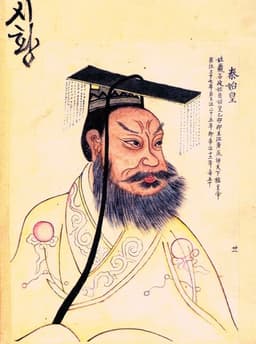
Qin Shi Huang
Emperor · Ancient
85.2Total
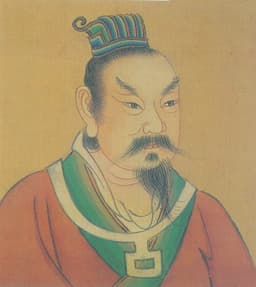
Zhu Wen
Emperor · Medieval
50.3Total
Basic Information
Born
-259
852
Died
-210
912
Era
Ancient
Medieval
Nationality
China
China
Occupation
Emperor
Emperor
Civilization
Eastern
Eastern
Score Comparison
Military (10%)
80.0
72.5
Political (20%)
90.0
35.1
Influence (20%)
85.0
53.3
Legacy (20%)
90.0
45.8
Leadership (15%)
78.0
48.4
Strategy (15%)
82.0
57.5
TOTAL
85.2
50.3
Qin Shi Huang — Complete Timeline
246 BC
Construction of the Mausoleum and Terracotta ArmyOther◆ Major
Qin Shi Huang commissioned a vast mausoleum complex near Xi'an, guarded by thousands of life-sized terracotta soldiers, horses, and chariots. The project employed hundreds of thousands of workers and reflected his obsession with immortality and imperial power.
Impact: global
230 BC
Conquest of the Six Warring StatesWar
From 230 to 221 BCE, Ying Zheng led the Qin state in a series of campaigns that conquered the Han, Zhao, Wei, Chu, Yan, and Qi states. This unified China under a single ruler for the first time, ending the Warring States period.
Impact: global
221 BC
Standardization of Writing, Currency, and MeasurementsReform◆ Major
Qin Shi Huang ordered the standardization of Chinese script, currency, and weights and measures across the unified empire. This facilitated administration, trade, and cultural integration, laying a foundation for future dynasties.
Impact: globalconstructive
Proclamation of the Qin DynastyPolitical Action
After conquering the last independent state, Ying Zheng declared himself Shi Huangdi (First Emperor), founding the Qin Dynasty. He adopted a new title to signify his supreme authority and initiated centralized imperial rule.
Impact: global
214 BC
Initiation of the Great Wall ConstructionOther◆ Major
Qin Shi Huang ordered the connection and extension of existing northern fortifications to create a unified defensive wall against nomadic Xiongnu raids. This project involved massive conscripted labor and became the precursor to the later Great Wall.
Impact: regional
213 BC
Burning of Books and Burying of ScholarsPolitical Action◆ Major
On the advice of Li Si, Qin Shi Huang ordered the burning of historical records and philosophical texts not aligned with Legalist doctrine. He also had 460 Confucian scholars buried alive to suppress dissent and consolidate ideological control.
Impact: nationaldestructive
Zhu Wen — Complete Timeline
881 AD
Rebellion against TangWar◆ Major
Zhu Wen, originally a rebel under Huang Chao, defected to the Tang dynasty in 882. He was granted the name Zhu Quanzhong and became a key general, eventually turning against the Tang and seizing control of the imperial court.
Tang DynastyRebellionPower Seizure
Impact: nationaldestructive
904 AD
Assassination of Emperor ZhaozongPolitical Action◆ Major
Zhu Wen ordered the murder of Emperor Zhaozong of Tang and installed the young Emperor Ai as a puppet. This act eliminated the last effective Tang ruler and paved the way for Zhu Wen's usurpation.
Tang DynastyAssassinationUsurpation
Impact: nationaldestructive
907 AD
Founded Later Liang DynastyPolitical Action
Zhu Wen forced Emperor Ai to abdicate and proclaimed himself emperor, founding the Later Liang dynasty. This ended the Tang dynasty and began the Five Dynasties and Ten Kingdoms period in China.
Five DynastiesLater LiangDynastic Change
Impact: national
910 AD
Defeated by Li Cunxu at Battle of BaixiangWar◆ Major
Zhu Wen's Later Liang forces were decisively defeated by Li Cunxu's Jin army at Baixiang. This loss weakened Later Liang's control in the north and emboldened rival states.
Later LiangJinBattle
Impact: regionaltragic
912 AD
Assassinated by his son Zhu YouguiPolitical Action◆ Major
Zhu Wen was murdered by his own son Zhu Yougui, who then seized the throne. The assassination plunged Later Liang into internal strife and contributed to its eventual collapse.
Later LiangAssassinationDynastic Crisis
Impact: nationaltragic
Expert Analysis
Qin Shi Huang vs Zhu Wen: Historical Comparison
Qin Shi Huang, the first Emperor of a unified China, and Zhu Wen, the founder of the Later Liang dynasty during the turbulent Five Dynasties period, represent vastly different eras of imperial rule. While Qin Shi Huang established a centralized empire that set the template for millennia, Zhu Wen rose from a rebel warlord to briefly claim the imperial throne in a fragmented age.
Dimension Analysis
**Military: Qin Shi Huang 80 / Zhu Wen 93**
Qin Shi Huang conquered rival states through superior organization and logistics, but Zhu Wen excelled in the chaotic late-Tang military landscape, personally leading campaigns and outmaneuvering numerous warlords to seize power.
**Political: Qin Shi Huang 88 / Zhu Wen 80**
Qin Shi Huang imposed radical centralization—standardizing writing, currency, and law—while Zhu Wen manipulated the decaying Tang court and later purged officials, but his rule was short-lived and lacked institutional depth.
**Influence: Qin Shi Huang 82 / Zhu Wen 73**
Qin Shi Huang’s concept of imperial unity directly shaped Chinese statecraft for two thousand years; Zhu Wen’s dynasty collapsed within a generation and left no lasting political model.
**Legacy: Qin Shi Huang 85 / Zhu Wen 80**
The Terracotta Army and Great Wall endure as symbols of Qin’s grandeur, whereas Zhu Wen is remembered primarily as a ruthless usurper in a period of disunity.
**Leadership: Qin Shi Huang 88 / Zhu Wen 70**
Qin Shi Huang commanded absolute loyalty through vision and terror, unifying a civilization; Zhu Wen’s leadership was undermined by paranoia and familial betrayals, leading to his assassination by his own son.
Verdict
Qin Shi Huang leads decisively due to his unparalleled political vision and enduring influence, despite Zhu Wen’s superior military tactics in a fragmented era.
FAQ
Q: Who ranks higher? A: Qin Shi Huang, whose unification of China and institutional reforms created a lasting imperial paradigm, outweighs Zhu Wen’s short-lived military coup.
Rankings
🥇
Qin Shi HuangLeader
Mil: 80.0Pol: 90.0Inf: 85.0
85.2
🥈
Zhu Wen
Mil: 72.5Pol: 35.1Inf: 53.3
50.3
+34.9 behind
How This Comparison Works
Algorithm
Each figure is scored on 6 dimensions (0—100 scale) based on structured historical data: Military (10%), Political (20%), Influence (20%), Legacy (20%), Leadership (15%), Strategy (15%). The weighted total produces the final ranking.
Data Sources
Scores are computed from structured sub-indicators in the database. Scale factors adjust for era (Ancient ×0.85, Modern ×1.0) and civilization size (Eastern ×1.05, Other ×0.80) to account for differences in population and military scale.
Maximum 3 Figures
Comparisons are limited to 2—3 figures to ensure readability and statistical meaningfulness.
Error Margins
±5 points per dimension — Sub-scores are derived from historical records with inherent uncertainty. Two figures within 5 points on a dimension should be considered roughly equivalent in that area.
Total Score Accuracy
±3 points overall — The weighted combination of 6 dimensions produces a total score with approximately ±3 points of uncertainty. Differences of less than 3 points are not statistically significant— the figures are effectively tied.
Known Limitations
- Historical records are incomplete and uneven across civilizations
- Figures from oral-tradition societies may be underrepresented
- Occupation labels can misclassify multi-role figures
- Scores measure capability and impact, not moral character
- Quantitative scoring is a comparison tool, not absolute truth
Capability Radar
Military (10%) — Battles & Warfare
Battles
85
65
Win Rate
90
60
Expansion
90
55
Political (20%) — Governance & Reform
Reform
95
25
Diplomacy
75
35
Economy
90
30
Influence (20%) — Cultural & Global Reach
Cultural
95
25
Global
85
15
Legacy (20%) — Historical Impact
Historical
95
45
Longevity
95
20
Leadership (15%) — Power & Stability
Tenure
70
40
Stability
65
20
Strategy (15%) — Tactics & Innovation
Strategy
85
60
Tactics
80
55
Reform
95
30
Similar Comparisons
Comments & Discussion
HistoryDiver6/16/2026
Okay, I gotta say this comparison really got me thinking. Qin Shi Huang gets all the glory for unifying China, but look at Zhu Wen's military score—93! That's insane. The guy started as a salt smuggler, then a rebel, and somehow clawed his way to emperor during the Five Dynasties, which was basically a free-for-all. Qin had a more stable road, crushing already-weakened states. Zhu Wen had to outthink and outfight dozens of warlords in an era where betrayal was the norm. I remember reading in a documentary that at one point he had to switch sides multiple times just to survive. Sure, Qin's legacy is bigger, but if we're talking pure battlefield grit, Zhu Wen might actually be underrated here. Just my two cents.
AnalystShu6/16/2026
这个评分很有意思,但我觉得数据有偏差。Zhu Wen的政治分80,但考虑他实际统治不到十年,还靠屠杀宦官和毒杀唐哀帝起家,这数据可能高估了。秦始皇政治88,我理解,但军事分80似乎偏低。他派王翦以60万大军灭楚,后勤协调难度远超Zhu Wen的小规模军阀混战。Zhu Wen的93分可能反映的是“混乱时代的个人军事冒险”而不是“系统化战争能力”。我重新算了一下,如果按“帝国建设效率”加权,秦始皇军事至少该85。另外,Zhu Wen影响力73太高了——他建立的梁朝只持续16年就被推翻,制度上几乎没留下遗产。秦始皇的影响力82我都觉得低了,毕竟他“书同文、车同轨”影响了中国两千年。评分标准可能偏西方军事史观。
SimaGuangFan6/16/2026
While the scores are intriguing, they flatten the historiographical context. Sima Qian's Shiji portrays Qin Shi Huang as a tyrannical genius who 'burned books and buried scholars alive' (焚书坑儒), though recent scholarship debates the scope of that. Meanwhile, Zhu Wen is vilified in the Old History of the Five Dynasties as a usurper who 'killed the emperor and seized the throne' (弑君篡位). But this ignores that Zhu Wen operated in a world where the Tang mandate was already dead. Qin's political score of 88 reflects his standardization of script and law, yes—but his legalism also caused revolts that destroyed his dynasty within years of his death. Zhu Wen's political score of 80 seems generous given he failed to establish a stable succession—his son killed him. As Polybius might say, numbers cannot capture the moral complexity of power.
Chronicler78836/16/2026
西方历史爱好者总爱拿秦始皇跟凯撒比,但我觉得Zhu Wen更像中国的“军阀版拿破仑”——出身微末,凭军事天才崛起,但政治根基太浅。秦始皇像中国的“奥古斯都”:统一度量衡、文字、法律,建立了中央集权的模板。Zhu Wen在军事上93分实至名归,他在朱梁初期几乎打败了所有对手,包括李克用这员沙陀悍将。但问题是,西方评分系统可能低估了“制度遗产”的重要性。秦始皇的秦制延续了两千年,而Zhu Wen的梁朝连十年都没撑过。如果按“对后世影响”加权,秦始皇至少应该在政治和影响力上比Zhu Wen高出20分。不过,Zhu Wen作为乱世枭雄,他的军事分碾压秦始皇,这点我认同。