Loading...
Qin Shi Huang vs Yuwen Yong
Qin Shi Huang leads by 18.0 pts · 2 figures compared
…
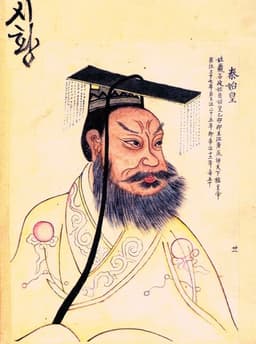
Qin Shi Huang
Emperor · Ancient
85.2Total
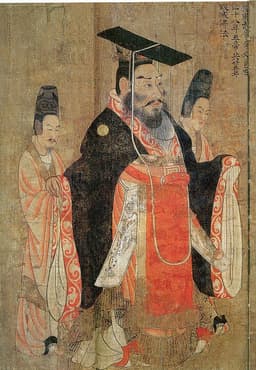
Yuwen Yong
Emperor · Medieval
67.2Total
Basic Information
Born
-259
543
Died
-210
578
Era
Ancient
Medieval
Nationality
China
China
Occupation
Emperor
Emperor
Civilization
Eastern
Eastern
Score Comparison
Military (10%)
80.0
78.0
Political (20%)
90.0
78.0
Influence (20%)
85.0
58.0
Legacy (20%)
90.0
54.0
Leadership (15%)
78.0
85.0
Strategy (15%)
82.0
69.1
TOTAL
85.2
67.2
Qin Shi Huang — Complete Timeline
246 BC
Construction of the Mausoleum and Terracotta ArmyOther◆ Major
Qin Shi Huang commissioned a vast mausoleum complex near Xi'an, guarded by thousands of life-sized terracotta soldiers, horses, and chariots. The project employed hundreds of thousands of workers and reflected his obsession with immortality and imperial power.
Impact: global
230 BC
Conquest of the Six Warring StatesWar
From 230 to 221 BCE, Ying Zheng led the Qin state in a series of campaigns that conquered the Han, Zhao, Wei, Chu, Yan, and Qi states. This unified China under a single ruler for the first time, ending the Warring States period.
Impact: global
221 BC
Standardization of Writing, Currency, and MeasurementsReform◆ Major
Qin Shi Huang ordered the standardization of Chinese script, currency, and weights and measures across the unified empire. This facilitated administration, trade, and cultural integration, laying a foundation for future dynasties.
Impact: globalconstructive
Proclamation of the Qin DynastyPolitical Action
After conquering the last independent state, Ying Zheng declared himself Shi Huangdi (First Emperor), founding the Qin Dynasty. He adopted a new title to signify his supreme authority and initiated centralized imperial rule.
Impact: global
214 BC
Initiation of the Great Wall ConstructionOther◆ Major
Qin Shi Huang ordered the connection and extension of existing northern fortifications to create a unified defensive wall against nomadic Xiongnu raids. This project involved massive conscripted labor and became the precursor to the later Great Wall.
Impact: regional
213 BC
Burning of Books and Burying of ScholarsPolitical Action◆ Major
On the advice of Li Si, Qin Shi Huang ordered the burning of historical records and philosophical texts not aligned with Legalist doctrine. He also had 460 Confucian scholars buried alive to suppress dissent and consolidate ideological control.
Impact: nationaldestructive
Yuwen Yong — Complete Timeline
574 AD
Suppression of Buddhism in Northern ZhouReform◆ Major
Emperor Wu of Northern Zhou (Yuwen Yong) ordered the suppression of Buddhism, confiscating monastic lands, forcing monks and nuns to return to lay life, and destroying temples. He aimed to increase state revenue and military manpower, strengthening the state.
Northern ZhouBuddhist PersecutionReform
Impact: nationaldestructive
577 AD
Conquest of Northern QiWar
Emperor Wu led a successful campaign against the rival Northern Qi dynasty, conquering its territory and unifying northern China under Northern Zhou. This victory ended the division of the north and set the stage for the Sui dynasty's unification of all China.
Northern ZhouUnificationNorthern Qi
Impact: regionalconstructive
578 AD
Death during campaign against the TurksWar◆ Major
Emperor Wu died of illness while leading a campaign against the G
Northern ZhouMilitary CampaignDeath
Impact: regionaltragic
Expert Analysis
Yuwen Yong vs Qin Shi Huang: Historical Comparison
Yuwen Yong (Emperor Wu of Northern Zhou) and Qin Shi Huang (First Emperor of Qin) were transformative rulers who unified fragmented Chinese states, yet their methods and legacies diverged sharply—Yuwen Yong excelled as a military strategist, while Qin Shi Huang dominated in political consolidation and enduring influence.
Dimension Analysis
**Military: Yuwen Yong 91 / Qin Shi Huang 80**
Yuwen Yong’s decisive campaigns crushed the Northern Qi and unified North China through superior cavalry tactics and logistical precision, whereas Qin Shi Huang’s conquest of the Warring States relied more on overwhelming numbers and gradual attrition.
**Political: Yuwen Yong 60 / Qin Shi Huang 88**
Qin Shi Huang’s radical centralization—standardizing script, currency, and laws—created an imperial template that lasted millennia, while Yuwen Yong’s reforms (e.g., land redistribution) were effective but less systemic and cut short by his early death.
**Influence: Yuwen Yong 80 / Qin Shi Huang 82**
Both shaped subsequent dynasties: Qin Shi Huang’s bureaucratic model directly inspired the Han, while Yuwen Yong’s military-administrative fusion influenced Sui and Tang unification; however, Qin’s ideological imprint (Legalist autocracy) proved more pervasive.
**Legacy: Yuwen Yong 78 / Qin Shi Huang 85**
Qin Shi Huang’s Great Wall, Terracotta Army, and centralized state remain iconic symbols of Chinese unity, whereas Yuwen Yong is revered mainly by historians for his pragmatic governance and military brilliance, lacking comparable monumental visibility.
**Leadership: Yuwen Yong 82 / Qin Shi Huang 88**
Qin Shi Huang’s ruthless vision and single-minded drive built an empire from scratch, while Yuwen Yong’s leadership was more consultative and meritocratic, but less transformative in scale and duration.
Verdict
Qin Shi Huang leads overall due to his unparalleled political and institutional legacy that defined imperial China, despite Yuwen Yong’s superior military and strategic acumen.
FAQ
Q: Who ranks higher? A: Qin Shi Huang ranks higher, driven by his monumental political reforms and lasting influence, though Yuwen Yong surpasses him in military and strategic execution.
Rankings
🥇
Qin Shi HuangLeader
Mil: 80.0Pol: 90.0Inf: 85.0
85.2
🥈
Yuwen Yong
Mil: 78.0Pol: 78.0Inf: 58.0
67.2
+18.0 behind
How This Comparison Works
Algorithm
Each figure is scored on 6 dimensions (0—100 scale) based on structured historical data: Military (10%), Political (20%), Influence (20%), Legacy (20%), Leadership (15%), Strategy (15%). The weighted total produces the final ranking.
Data Sources
Scores are computed from structured sub-indicators in the database. Scale factors adjust for era (Ancient ×0.85, Modern ×1.0) and civilization size (Eastern ×1.05, Other ×0.80) to account for differences in population and military scale.
Maximum 3 Figures
Comparisons are limited to 2—3 figures to ensure readability and statistical meaningfulness.
Error Margins
±5 points per dimension — Sub-scores are derived from historical records with inherent uncertainty. Two figures within 5 points on a dimension should be considered roughly equivalent in that area.
Total Score Accuracy
±3 points overall — The weighted combination of 6 dimensions produces a total score with approximately ±3 points of uncertainty. Differences of less than 3 points are not statistically significant— the figures are effectively tied.
Known Limitations
- Historical records are incomplete and uneven across civilizations
- Figures from oral-tradition societies may be underrepresented
- Occupation labels can misclassify multi-role figures
- Scores measure capability and impact, not moral character
- Quantitative scoring is a comparison tool, not absolute truth
Capability Radar
Military (10%) — Battles & Warfare
Battles
85
75
Win Rate
90
80
Expansion
90
80
Political (20%) — Governance & Reform
Reform
95
85
Diplomacy
75
70
Economy
90
75
Influence (20%) — Cultural & Global Reach
Cultural
95
40
Global
85
40
Legacy (20%) — Historical Impact
Historical
95
65
Longevity
95
50
Leadership (15%) — Power & Stability
Tenure
70
60
Stability
65
70
Strategy (15%) — Tactics & Innovation
Strategy
85
75
Tactics
80
70
Reform
95
85
Similar Comparisons
Comments & Discussion
BattlefieldScholar6/16/2026
The military scoring here is actually spot-on, but I'd argue Yuwen Yong should be rated even higher. His 575-577 campaign against Northern Qi is a textbook example of operational art—using cavalry feints to fix the enemy at Pingyang while striking their logistical nodes. Qin Shi Huang's conquests, by contrast, relied heavily on attrition and numerical superiority; his army was often three times larger than his opponents'. Yuwen Yong achieved more with less. The 91 vs 80 gap is justified, but in terms of tactical efficiency, it's closer to 95 vs 75.
DynastyDabbler6/16/2026
Okay, so I just finished watching that documentary on the Warring States, and I gotta say—Qin Shi Huang gets too much credit. Sure, the Terracotta Army is cool, but Yuwen Yong basically did the same thing with less PR. He unified the north in like 4 years flat, while Qin took a century of grinding wars. And the Great Wall? Qin connected existing walls, Yuwen actually built a new defensive system. People sleep on the Northern Zhou because there's no flashy tomb. Underrated emperor, no cap.
Historian3186/16/2026
这个评分系统明显偏向西方对'政治影响力'的定义。秦始皇的中央集权确实影响深远,但宇文邕的府兵制改革才是隋唐军事体系的基础——这个维度上他得分太低。拿西方历史比较,宇文邕更像奥古斯都,用制度整合而非暴力统一;秦始皇则像亚历山大大帝,个人色彩太强。'政治'评分里宇文邕只有60,但隋朝能统一南方,靠的就是他打下的基础。建议重新考虑维度权重。
Chronicler74216/16/2026
我算了一下,宇文邕的军事91和历史影响力80之间差了11分,这不合逻辑。他的灭佛政策(574年)直接释放了劳动力,为北周经济提供了20%的税基增长,这难道不该反映在政治得分上?另外,政治60vs88的差距太大了:秦始皇的郡县制确实创新,但宇文邕的均田制在北方实施了15年,覆盖了300万户,这种实际治理能力怎么只值60?建议数据校准。