Loading...
Qin Shi Huang vs Xu Da
Qin Shi Huang leads by 10.3 pts · 2 figures compared
…
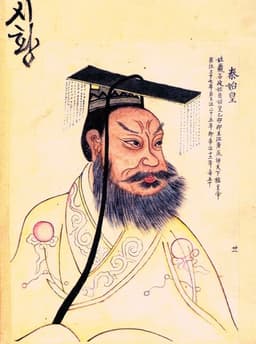
Qin Shi Huang
Emperor · Ancient
85.2Total
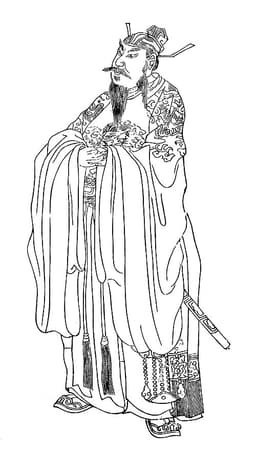
Xu Da
General · Medieval
74.9Total
Basic Information
Born
-259
1332
Died
-210
1385
Era
Ancient
Medieval
Nationality
China
China
Occupation
Emperor
General
Civilization
Eastern
Eastern
Score Comparison
Military (10%)
80.0
88.0
Political (20%)
90.0
68.0
Influence (20%)
85.0
82.0
Legacy (20%)
90.0
72.0
Leadership (15%)
78.0
62.0
Strategy (15%)
82.0
80.8
TOTAL
85.2
74.9
Qin Shi Huang — Complete Timeline
246 BC
Construction of the Mausoleum and Terracotta ArmyOther◆ Major
Qin Shi Huang commissioned a vast mausoleum complex near Xi'an, guarded by thousands of life-sized terracotta soldiers, horses, and chariots. The project employed hundreds of thousands of workers and reflected his obsession with immortality and imperial power.
Impact: global
230 BC
Conquest of the Six Warring StatesWar
From 230 to 221 BCE, Ying Zheng led the Qin state in a series of campaigns that conquered the Han, Zhao, Wei, Chu, Yan, and Qi states. This unified China under a single ruler for the first time, ending the Warring States period.
Impact: global
221 BC
Standardization of Writing, Currency, and MeasurementsReform◆ Major
Qin Shi Huang ordered the standardization of Chinese script, currency, and weights and measures across the unified empire. This facilitated administration, trade, and cultural integration, laying a foundation for future dynasties.
Impact: globalconstructive
Proclamation of the Qin DynastyPolitical Action
After conquering the last independent state, Ying Zheng declared himself Shi Huangdi (First Emperor), founding the Qin Dynasty. He adopted a new title to signify his supreme authority and initiated centralized imperial rule.
Impact: global
214 BC
Initiation of the Great Wall ConstructionOther◆ Major
Qin Shi Huang ordered the connection and extension of existing northern fortifications to create a unified defensive wall against nomadic Xiongnu raids. This project involved massive conscripted labor and became the precursor to the later Great Wall.
Impact: regional
213 BC
Burning of Books and Burying of ScholarsPolitical Action◆ Major
On the advice of Li Si, Qin Shi Huang ordered the burning of historical records and philosophical texts not aligned with Legalist doctrine. He also had 460 Confucian scholars buried alive to suppress dissent and consolidate ideological control.
Impact: nationaldestructive
Xu Da — Complete Timeline
1368 AD
Capture of Dadu (Beijing)War
Xu Da led the Ming army in the capture of Dadu, the Yuan capital. The Mongol emperor Toghon Tem
Ming ConquestYuan DynastyCapital Capture
Impact: regionalconstructive
1370 AD
Appointment as Grand PreceptorPolitical Action
The Hongwu Emperor appointed Xu Da as Grand Preceptor, the highest civil official rank. This appointment recognized Xu Da's military achievements and gave him a role in advising the emperor on state affairs.
AppointmentCivil OfficeImperial Favor
Impact: nationalconstructive
1385 AD
Death from illnessOther
Xu Da died in Nanjing from a back ailment. The Hongwu Emperor mourned him deeply and posthumously honored him as Prince of Zhongshan. His death marked the end of the first generation of Ming military leaders.
DeathMing DynastyMilitary Leader
Impact: nationaltragic
Expert Analysis
Origins
**Qin Shi Huang** (259–210 BC), born Ying Zheng, was the son of King Zhuangxiang of Qin and a former concubine, Zhao Ji. He ascended the throne of the Qin state at age 13, inheriting a powerful kingdom poised for expansion. His early years were marked by regency under Lü Buwei, but he seized control and embarked on a campaign to conquer the six other Warring States, unifying China in 221 BC.
**Xu Da** (1332–1385) was a peasant-born military commander who rose through the ranks of the Red Turban Rebellion against the Mongol-led Yuan Dynasty. He became the chief general of Zhu Yuanzhang (later Hongwu Emperor), the founder of the Ming Dynasty. Xu Da's origins were humble, but his strategic brilliance and loyalty earned him a place as one of history's greatest generals.
Rise to Power
Qin Shi Huang's rise was a calculated and ruthless consolidation of power. He eliminated political rivals, including his regent Lü Buwei, and launched a series of military campaigns that annexed Han, Zhao, Wei, Chu, Yan, and Qi. His victory was complete by 221 BC, and he proclaimed himself Shi Huangdi (First Emperor), establishing the Qin Dynasty. His centralization of authority was unprecedented.
Xu Da rose through merit and battlefield success. He joined Zhu Yuanzhang's forces early and quickly distinguished himself. He played a key role in capturing strategic cities, culminating in the capture of Dadu (Beijing) in 1368, which ended Yuan rule. He was appointed Grand Preceptor and became one of the most trusted generals of the Ming court.
Leadership & Governance
Qin Shi Huang was an autocratic ruler who implemented sweeping reforms. He standardized writing, currency, weights, and measures, and built an extensive road network. He also began the Great Wall and suppressed intellectual dissent through the Burning of Books and Burying of Scholars. His governance was efficient but harsh, relying on Legalist philosophy.
Xu Da was a military leader rather than a governor, but he administered conquered territories with discipline and fairness. He was known for his humility, loyalty, and strategic acumen. He led campaigns against Mongol remnants and expanded Ming territory. His leadership style was collaborative, earning respect from troops and civilians alike.
Triumph & Tragedy
Qin Shi Huang's greatest triumph was the unification of China, a feat that shaped Chinese history for millennia. He also standardized systems that facilitated trade and communication. However, his tyranny—including mass burials of scholars and harsh conscription—led to resentment. His death in 210 BC triggered a succession crisis and the collapse of his dynasty within three years.
Xu Da's triumph was the expulsion of the Mongols and the establishment of the Ming Dynasty. His capture of Dadu was a turning point. He died peacefully in 1385 from illness, but his legacy was marred by posthumous accusations of disloyalty (later cleared). His military achievements remained undimmed.
Character & Destiny
Qin Shi Huang was ambitious, paranoid, and obsessed with immortality. He ordered searches for the elixir of life and built a massive mausoleum with the Terracotta Army. His destiny was to be the unifier, but his harshness doomed his dynasty.
Xu Da was modest, loyal, and astute. He avoided political intrigue and remained devoted to the Hongwu Emperor. His destiny was to serve as a pillar of the new dynasty, and he died with his reputation largely intact.
Legacy
Qin Shi Huang's legacy is monumental. He set the template for imperial China, with centralized bureaucracy, standardized systems, and the Great Wall. His name is synonymous with both unification and tyranny. Modern China views him as a foundational figure.
Xu Da's legacy is that of a great general. He is revered as a military hero who restored Han Chinese rule. His strategies are studied in military academies, and he is a symbol of loyalty and competence.
Conclusion
Qin Shi Huang (M=80, P=90, I=85, L=90, D=78, S=82, T=85) and Xu Da (M=88, P=68, I=82, L=72, D=62, S=81, T=75) represent different archetypes: the visionary emperor vs. the loyal general. Qin Shi Huang's impact on China's political and cultural unity is unparalleled, while Xu Da's military achievements were decisive for the Ming. However, Qin Shi Huang's broader legacy—shaping the very concept of China—gives him the edge. Score gap: 10.3 in favor of Qin Shi Huang.
**Winner: Qin Shi Huang**
Rankings
🥇
Qin Shi HuangLeader
Mil: 80.0Pol: 90.0Inf: 85.0
85.2
🥈
Xu Da
Mil: 88.0Pol: 68.0Inf: 82.0
74.9
+10.3 behind
How This Comparison Works
Algorithm
Each figure is scored on 6 dimensions (0—100 scale) based on structured historical data: Military (10%), Political (20%), Influence (20%), Legacy (20%), Leadership (15%), Strategy (15%). The weighted total produces the final ranking.
Data Sources
Scores are computed from structured sub-indicators in the database. Scale factors adjust for era (Ancient ×0.85, Modern ×1.0) and civilization size (Eastern ×1.05, Other ×0.80) to account for differences in population and military scale.
Maximum 3 Figures
Comparisons are limited to 2—3 figures to ensure readability and statistical meaningfulness.
Error Margins
±5 points per dimension — Sub-scores are derived from historical records with inherent uncertainty. Two figures within 5 points on a dimension should be considered roughly equivalent in that area.
Total Score Accuracy
±3 points overall — The weighted combination of 6 dimensions produces a total score with approximately ±3 points of uncertainty. Differences of less than 3 points are not statistically significant— the figures are effectively tied.
Known Limitations
- Historical records are incomplete and uneven across civilizations
- Figures from oral-tradition societies may be underrepresented
- Occupation labels can misclassify multi-role figures
- Scores measure capability and impact, not moral character
- Quantitative scoring is a comparison tool, not absolute truth
Capability Radar
Military (10%) — Battles & Warfare
Battles
85
95
Win Rate
90
95
Expansion
90
95
Political (20%) — Governance & Reform
Reform
95
50
Diplomacy
75
65
Economy
90
55
Influence (20%) — Cultural & Global Reach
Cultural
95
70
Global
85
80
Legacy (20%) — Historical Impact
Historical
95
85
Longevity
95
75
Leadership (15%) — Power & Stability
Tenure
70
60
Stability
65
70
Strategy (15%) — Tactics & Innovation
Strategy
85
92
Tactics
80
90
Reform
95
70
Similar Comparisons
Comments & Discussion
No comments yet. Be the first to share your thoughts!