Loading...
Qin Shi Huang vs Wedem Arad
Qin Shi Huang leads by 36.7 pts · 2 figures compared
…
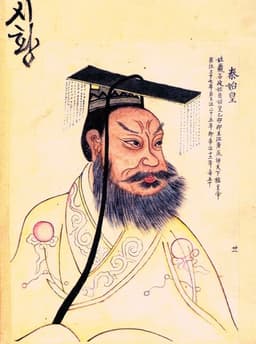
Qin Shi Huang
Emperor · Ancient
85.2Total
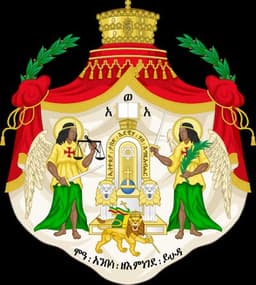
Wedem Arad
Emperor · Medieval
48.5Total
Basic Information
Born
-259
1270
Died
-210
1314
Era
Ancient
Medieval
Nationality
China
Ethiopia
Occupation
Emperor
Emperor
Civilization
Eastern
Other
Score Comparison
Military (10%)
80.0
50.0
Political (20%)
90.0
35.1
Influence (20%)
85.0
58.0
Legacy (20%)
90.0
45.8
Leadership (15%)
78.0
55.3
Strategy (15%)
82.0
39.6
TOTAL
85.2
48.5
Qin Shi Huang — Complete Timeline
246 BC
Construction of the Mausoleum and Terracotta ArmyOther◆ Major
Qin Shi Huang commissioned a vast mausoleum complex near Xi'an, guarded by thousands of life-sized terracotta soldiers, horses, and chariots. The project employed hundreds of thousands of workers and reflected his obsession with immortality and imperial power.
Impact: global
230 BC
Conquest of the Six Warring StatesWar
From 230 to 221 BCE, Ying Zheng led the Qin state in a series of campaigns that conquered the Han, Zhao, Wei, Chu, Yan, and Qi states. This unified China under a single ruler for the first time, ending the Warring States period.
Impact: global
221 BC
Standardization of Writing, Currency, and MeasurementsReform◆ Major
Qin Shi Huang ordered the standardization of Chinese script, currency, and weights and measures across the unified empire. This facilitated administration, trade, and cultural integration, laying a foundation for future dynasties.
Impact: globalconstructive
Proclamation of the Qin DynastyPolitical Action
After conquering the last independent state, Ying Zheng declared himself Shi Huangdi (First Emperor), founding the Qin Dynasty. He adopted a new title to signify his supreme authority and initiated centralized imperial rule.
Impact: global
214 BC
Initiation of the Great Wall ConstructionOther◆ Major
Qin Shi Huang ordered the connection and extension of existing northern fortifications to create a unified defensive wall against nomadic Xiongnu raids. This project involved massive conscripted labor and became the precursor to the later Great Wall.
Impact: regional
213 BC
Burning of Books and Burying of ScholarsPolitical Action◆ Major
On the advice of Li Si, Qin Shi Huang ordered the burning of historical records and philosophical texts not aligned with Legalist doctrine. He also had 460 Confucian scholars buried alive to suppress dissent and consolidate ideological control.
Impact: nationaldestructive
Wedem Arad — Complete Timeline
1306 AD
First Contact with EuropePolitical Action◆ Major
Wedem Arad sent an embassy to Europe, likely to the court of Pope Clement V in Avignon. This was the first recorded diplomatic contact between Ethiopia and a European power since antiquity, establishing a precedent for future Ethiopian-European relations.
Impact: regional
Expert Analysis
qin-shi-huang-vs-wedem-arad
The Unifier and the Emissary
One emperor commanded the largest army the world had ever seen, forging a single realm from centuries of war. Another sent a small embassy across uncharted seas, hoping to find a distant ally. One built a wall that would stretch across a continent; the other opened a door that would remain barely ajar for centuries. Qin Shi Huang and Wedem Arad both sat upon ancient thrones, yet their names evoke vastly different echoes in history. What drove one to conquer and standardize an entire civilization, while the other reached out to a world he barely knew?
Origins
Qin Shi Huang was born in 259 BC into a world of chaos. The Warring States period had torn China apart for over two centuries, a brutal age where seven kingdoms fought for survival and supremacy. Ying Zheng’s father was king of Qin, a western state hardened by constant warfare and steeped in Legalist philosophy—a doctrine that valued order and obedience above all. The boy grew up in a court rife with intrigue; his mother’s lover even plotted his assassination. By age thirteen, he was king, surrounded by advisors who taught him that power was the only law.
Wedem Arad, born around 1270, inherited a very different world. The Solomonic dynasty had just restored itself to Ethiopia’s throne, claiming descent from the biblical King Solomon and the Queen of Sheba. His kingdom was Christian, mountainous, and isolated—surrounded by Muslim sultanates and pagan peoples. Unlike the warring states of China, Ethiopia faced no existential threat from within, but rather a slow, grinding pressure from without. Wedem Arad’s challenge was not conquest but survival, not unification but recognition.
Rise to Power
Ying Zheng’s path was forged by the sword. In 230 BC, he launched the first of a series of campaigns that would annihilate his rivals one by one. The Han fell first, then the Zhao, then the Wei. Each victory was a masterpiece of strategy and ruthlessness—he bribed ministers, spread disinformation, and deployed generals who knew no mercy. By 221 BC, the last independent state, Qi, surrendered without a fight. Ying Zheng, now thirty-eight, declared himself *Shi Huangdi*—the First Emperor—and founded the Qin Dynasty. His rise was total, violent, and absolute.
Wedem Arad’s rise was quieter. He inherited a throne that had been stabilized by his father, Yekuno Amlak, who had overthrown the Zagwe dynasty. There are no records of grand battles or sweeping reforms. Instead, his key act was diplomatic. In 1306, he sent an embassy to Europe, likely to the court of Pope Clement V in Avignon. This was the first recorded contact between Ethiopia and Christian Europe—a tentative handshake across a vast and dangerous world. Wedem Arad’s rise was not marked by conquest but by a single, fragile message in a bottle.
Leadership & Governance
Qin Shi Huang ruled as a living god. He standardized writing, currency, and measurements across his empire, transforming a patchwork of warring states into a single administrative machine. He ordered the construction of roads and canals, built a national highway system, and began linking northern fortifications into what would become the Great Wall. But his governance had a dark side. In 213 BC, on the advice of his chancellor Li Si, he ordered the burning of all books not related to medicine, agriculture, or divination. Scholars who resisted were buried alive. His rule was efficient, but it was a cold, mechanical efficiency—the state was everything, the individual nothing.
Wedem Arad governed a kingdom that was already unified by faith. The Ethiopian Orthodox Church was the backbone of his rule, and his authority rested on religious legitimacy as much as military power. He had no need to standardize writing or currency—his people already shared a language and a faith. Instead, his governance was about preservation: keeping the kingdom intact against external threats and internal dissent. His great act was not to build but to reach out, to seek allies in a world that barely knew Ethiopia existed.
Triumph & Tragedy
Qin Shi Huang’s greatest triumph was the unification itself—a feat that would define China for two millennia. His greatest tragedy was the fragility of his creation. He died in 210 BC, and within three years, his dynasty collapsed in rebellion. His mausoleum, guarded by the legendary Terracotta Army of thousands of life-sized soldiers, stands as a monument to his ambition and his fear of death. He sought immortality through alchemy and elixirs, but he died of mercury poisoning, likely from the very potions meant to save him.
Wedem Arad’s triumph was the embassy of 1306. It proved that Ethiopia could reach across the Islamic world and make contact with Christian Europe. But his tragedy was that little came of it. The pope sent no crusaders, no trade missions, no lasting alliance. Ethiopia remained isolated for another two centuries until the Portuguese finally arrived. Wedem Arad’s door had been opened, but no one walked through.
Character & Destiny
Qin Shi Huang was paranoid, brilliant, and ruthless. He trusted no one, not even his own family. He believed that history began with him—he ordered the destruction of all records of the past, so that his reign would be the only memory. His personality shaped a destiny of total control, but also of total collapse. He built an empire on fear, and fear cannot outlast the one who inspires it.
Wedem Arad was patient, diplomatic, and perhaps lonely. He looked outward when his predecessors had looked inward. His personality shaped a destiny of quiet endurance, not explosive change. He did not conquer, but he connected. His legacy is not a wall but a letter, not an army but an ambassador.
Legacy
Qin Shi Huang’s legacy is written in stone—literally. The Great Wall, the standardized script, the very concept of a unified China all trace back to him. He is remembered as both a tyrant and a founder, a man who burned books but built a nation. His Terracotta Army still guards his tomb, a silent testament to his power and his paranoia.
Wedem Arad’s legacy is more subtle. He is remembered in Ethiopian history as the emperor who first reached out to Europe. His embassy was a seed that took centuries to grow, but it established a tradition of Ethiopian diplomacy that would later bear fruit. In a world where isolation was the norm, he chose to send a message.
Conclusion
One emperor built walls, the other built bridges. Qin Shi Huang’s China became the center of its own world, while Wedem Arad’s Ethiopia remained on the edge of everyone else’s. Their differences were not accidents of personality but products of geography, history, and necessity. China needed a unifier; Ethiopia needed a friend. Both men answered the call of their times, and both left marks that outlasted their dynasties. In the end, history remembers not just the builders of empires, but also the senders of messages.
Rankings
🥇
Qin Shi HuangLeader
Mil: 80.0Pol: 90.0Inf: 85.0
85.2
🥈
Wedem Arad
Mil: 50.0Pol: 35.1Inf: 58.0
48.5
+36.7 behind
How This Comparison Works
Algorithm
Each figure is scored on 6 dimensions (0—100 scale) based on structured historical data: Military (10%), Political (20%), Influence (20%), Legacy (20%), Leadership (15%), Strategy (15%). The weighted total produces the final ranking.
Data Sources
Scores are computed from structured sub-indicators in the database. Scale factors adjust for era (Ancient ×0.85, Modern ×1.0) and civilization size (Eastern ×1.05, Other ×0.80) to account for differences in population and military scale.
Maximum 3 Figures
Comparisons are limited to 2—3 figures to ensure readability and statistical meaningfulness.
Error Margins
±5 points per dimension — Sub-scores are derived from historical records with inherent uncertainty. Two figures within 5 points on a dimension should be considered roughly equivalent in that area.
Total Score Accuracy
±3 points overall — The weighted combination of 6 dimensions produces a total score with approximately ±3 points of uncertainty. Differences of less than 3 points are not statistically significant— the figures are effectively tied.
Known Limitations
- Historical records are incomplete and uneven across civilizations
- Figures from oral-tradition societies may be underrepresented
- Occupation labels can misclassify multi-role figures
- Scores measure capability and impact, not moral character
- Quantitative scoring is a comparison tool, not absolute truth
Capability Radar
Military (10%) — Battles & Warfare
Battles
85
15
Win Rate
90
20
Expansion
90
10
Political (20%) — Governance & Reform
Reform
95
20
Diplomacy
75
55
Economy
90
15
Influence (20%) — Cultural & Global Reach
Cultural
95
20
Global
85
40
Legacy (20%) — Historical Impact
Historical
95
35
Longevity
95
30
Leadership (15%) — Power & Stability
Tenure
70
40
Stability
65
30
Strategy (15%) — Tactics & Innovation
Strategy
85
10
Tactics
80
10
Reform
95
5
Similar Comparisons
Comments & Discussion
QIN-TO-THE-BONE6/17/2026
Qin Shi Huang wins this matchup purely on scale. Wedem Arad's embassy to Europe was bold but ultimately a footnote; Qin standardized writing, currency, and axle widths across millions of people. One built a bureaucratic machine that defined China for millennia; the other sent a few guys who mostly got ignored. Size matters in history.
COMPASSION-LESS-CODER6/17/2026
As a data skeptic, I find this comparison absurd. We have thousands of contemporary records and artifacts from Qin's era—bamboo slips, standardized weights, even the Terracotta Army. For Wedem Arad? A handful of mentions in European chronicles and some dubious Ethiopian traditions. We're comparing a well-documented empire to a historical whisper. Numbers don't lie.
沙漠之星6/17/2026
作为古典学学者,我看秦始皇是彻底的实用主义者,而威德姆·阿拉德则是浪漫的梦想家。一个用秦小篆统一文字,另一个想跟忽必烈结盟对抗穆斯林。结果呢?秦朝哪怕短命,却留下了长城和郡县制;埃塞俄比亚的远征连个贸易协议都没捞到。历史奖励务实者,不是做梦人。
长城不哭6/17/2026
我站秦始皇,原因很简单:地缘政治。秦国地处西陲,靠严酷法制崛起;而埃塞俄比亚深陷穆斯林包围,遣使去欧洲不过是求救信号。一个是从内向外统一,一个是从外向内求援。结果?大秦帝国两千年后还是中国的根;而威德姆的欧洲盟友连个十字军都没来。活得硬气靠实力,不是靠求助。
三中全会6/17/2026
别把匈奴和萨拉森人混为一谈。秦始皇面对的是分散的游牧部落,用修墙这种笨办法蛮干;威德姆·阿拉德面对的是组织化的穆斯林苏丹国,却只派了个外交使团。两个都不算高招。但至少大秦的法家还留了套官僚体系——埃塞俄比亚呢?一座拉利贝拉教堂?历史偏爱活着改错的,不是固守成规的。