Loading...
Qin Shi Huang vs Vitali Klitschko
Qin Shi Huang leads by 28.2 pts · 2 figures compared
…
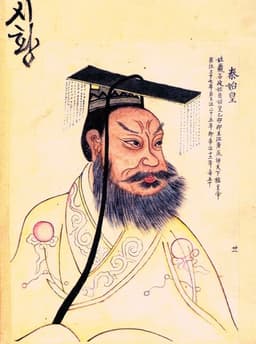
Qin Shi Huang
Emperor · Ancient
85.2Total

Vitali Klitschko
Politician · Modern
57.0Total
Basic Information
Born
-259
1971
Died
-210
—
Era
Ancient
Modern
Nationality
China
Ukraine
Occupation
Emperor
Politician
Civilization
Eastern
Western
Score Comparison
Military (10%)
80.0
46.0
Political (20%)
90.0
68.0
Influence (20%)
85.0
57.2
Legacy (20%)
90.0
44.2
Leadership (15%)
78.0
72.0
Strategy (15%)
82.0
60.0
TOTAL
85.2
57.0
Qin Shi Huang — Complete Timeline
246 BC
Construction of the Mausoleum and Terracotta ArmyOther◆ Major
Qin Shi Huang commissioned a vast mausoleum complex near Xi'an, guarded by thousands of life-sized terracotta soldiers, horses, and chariots. The project employed hundreds of thousands of workers and reflected his obsession with immortality and imperial power.
Impact: global
230 BC
Conquest of the Six Warring StatesWar
From 230 to 221 BCE, Ying Zheng led the Qin state in a series of campaigns that conquered the Han, Zhao, Wei, Chu, Yan, and Qi states. This unified China under a single ruler for the first time, ending the Warring States period.
Impact: global
221 BC
Standardization of Writing, Currency, and MeasurementsReform◆ Major
Qin Shi Huang ordered the standardization of Chinese script, currency, and weights and measures across the unified empire. This facilitated administration, trade, and cultural integration, laying a foundation for future dynasties.
Impact: globalconstructive
Proclamation of the Qin DynastyPolitical Action
After conquering the last independent state, Ying Zheng declared himself Shi Huangdi (First Emperor), founding the Qin Dynasty. He adopted a new title to signify his supreme authority and initiated centralized imperial rule.
Impact: global
214 BC
Initiation of the Great Wall ConstructionOther◆ Major
Qin Shi Huang ordered the connection and extension of existing northern fortifications to create a unified defensive wall against nomadic Xiongnu raids. This project involved massive conscripted labor and became the precursor to the later Great Wall.
Impact: regional
213 BC
Burning of Books and Burying of ScholarsPolitical Action◆ Major
On the advice of Li Si, Qin Shi Huang ordered the burning of historical records and philosophical texts not aligned with Legalist doctrine. He also had 460 Confucian scholars buried alive to suppress dissent and consolidate ideological control.
Impact: nationaldestructive
Vitali Klitschko — Complete Timeline
1999 AD
Won World Heavyweight Boxing ChampionshipCultural◆ Major
Klitschko defeated Wladimir Klitschko's opponent? Actually, Vitali Klitschko won the WBO heavyweight title by defeating Herbie Hide in 1999. He later became WBC champion, establishing himself as a world-class boxer.
BoxingChampionshipSports
Impact: globalconstructive
2005 AD
Retired from Boxing and Entered PoliticsPolitical Action◆ Major
Klitschko retired from professional boxing and founded the Ukrainian Democratic Alliance for Reform (UDAR) party. He began his political career, focusing on anti-corruption and European integration.
PoliticsUDARTransition
Impact: nationalconstructive
2014 AD
Elected Mayor of KyivPolitical Action◆ Major
Klitschko was elected Mayor of Kyiv and head of the Kyiv City State Administration. He took office during a period of political turmoil following the Euromaidan revolution and the Russian annexation of Crimea.
MayorKyivEuromaidan
Impact: national
2022 AD
Led Kyiv During Russian Full-Scale InvasionWar
As mayor, Klitschko led the defense and administration of Kyiv during the Russian invasion of Ukraine. He coordinated humanitarian aid, curfews, and the city's defense, becoming a symbol of Ukrainian resistance.
Russian InvasionKyivLeadership
Impact: global
Expert Analysis
qin-shi-huang-vs-vitali-klitschko
# The Emperor and the Mayor: Two Men Who Forged Their Nations in Fire
On a cold February morning in 2022, as Russian tanks rolled toward Kyiv, Vitali Klitschko stood in the city’s military command center, a former world heavyweight champion turned mayor, coordinating the defense of a capital that seemed destined to fall. Two thousand two hundred years earlier, another man—a young king named Ying Zheng—stood before the walls of a rival Chinese state, planning a conquest that would end centuries of war and create something entirely new: a unified empire. Both men faced existential crises. Both would reshape their nations. But their paths, their tools, and their legacies could not be more different.
Origins
Qin Shi Huang was born in 259 BC into a world of chaos. The Warring States period had torn China apart for over two centuries, with seven rival kingdoms locked in endless conflict. His father was king of Qin, a western state viewed as semi-barbaric by the more cultured central kingdoms. Young Ying Zheng grew up in a court rife with intrigue, his mother involved in a scandalous affair with a eunuch, his own legitimacy questioned. He learned early that trust was a weapon, not a gift.
Vitali Klitschko, born in 1971 in Soviet-era Kyrgyzstan to a Ukrainian father and a Belarusian mother, grew up in a world of order—but order imposed by Moscow. His father was a Soviet air force officer, and the family moved constantly. Vitali learned discipline, hierarchy, and the value of physical strength. But he also saw the Soviet system’s cracks: the shortages, the lies, the simmering nationalism that would eventually tear the empire apart. When the USSR collapsed in 1991, Klitschko was twenty years old—suddenly a citizen of an independent Ukraine, a nation that had never existed in his lifetime.
Rise to Power
Ying Zheng’s rise was swift and brutal. At just thirteen, he became king of Qin. For eight years, regents ruled, but in 238 BC, at twenty-one, he seized power in a bloody purge, executing his mother’s lover and exiling his own chancellor. Then he turned outward. From 230 to 221 BC, he unleashed a relentless military campaign, conquering one rival state after another: Han, Zhao, Wei, Chu, Yan, Qi. Each victory was a masterpiece of strategy, combining Qin’s superior cavalry, innovative siege weapons, and a legalist philosophy that rewarded absolute obedience. By 221 BC, at thirty-eight, he had done what no Chinese ruler had ever achieved: he unified all of China under one crown.
Klitschko’s rise was different—built not on conquest but on spectacle and persuasion. He became a world heavyweight boxing champion in 1999, defeating Herbie Hide for the WBO title. His fights were legendary not just for his power but for his resilience: in 2003, he fought Lennox Lewis with a horrific eye injury, forcing doctors to stop the bout, but earning global respect. When he retired from boxing in 2005, he didn’t disappear into wealth and silence. He founded a political party, the Ukrainian Democratic Alliance for Reform (UDAR—meaning “punch”), and entered a world far messier than any ring. His path to power was democratic: elections, coalitions, public debates. He became mayor of Kyiv in 2014, during the Maidan Revolution, when Ukraine’s pro-Russian president fled and the nation turned toward Europe.
Leadership & Governance
Here the two men diverge like opposite poles of a magnet. Qin Shi Huang governed through terror and uniformity. He standardized writing, currency, and measurements across his empire—a monumental achievement that allowed China to function as a single civilization. But he also burned books that contradicted his ideology and buried scholars alive who resisted. He built roads, canals, and the first version of the Great Wall, but he did so with forced labor on a scale that killed millions. His legalist philosophy, championed by his advisor Li Si, treated human life as a resource to be consumed for the state’s glory.
Klitschko governs through visibility and endurance. As mayor of Kyiv, he faced corruption, economic collapse, and a war that began in 2014 with Russia’s annexation of Crimea. His leadership style is that of a manager, not a tyrant—he posts videos from bomb shelters, coordinates humanitarian aid, and argues with central government over budgets. When Russian forces surrounded Kyiv in February 2022, Klitschko didn’t flee. He stayed, wearing a flak jacket and a pistol, his face tired but resolute. He became the face of Ukrainian resistance, not because he ordered anyone to die, but because he chose to share their danger.
Triumph & Tragedy
Qin Shi Huang’s triumph was the unification itself—an achievement so complete that every Chinese dynasty that followed would model itself on his blueprint. But his tragedy was equally vast. He became obsessed with immortality, sending expeditions for mythical elixirs, building a colossal mausoleum guarded by the Terracotta Army. He died in 210 BC at fifty, likely from mercury poisoning from the very potions he consumed. His dynasty collapsed within three years of his death, torn apart by the brutal system he had created.
Klitschko’s triumph came in 2022, when Kyiv did not fall. Against all military predictions, Ukrainian forces pushed Russian troops back from the capital. Klitschko’s role was not as a general but as a symbol—a man who had once fought for glory in a ring now fighting for survival in a city. His tragedy is that the war continues, that his nation bleeds, that his brother Wladimir also took up arms. There is no final victory in sight, only the daily grind of resistance.
Character & Destiny
Qin Shi Huang was paranoid, ruthless, and visionary. He believed that order could be imposed from above, that human nature could be reshaped by law and punishment. His personality—cold, calculating, suspicious—created a system that worked brilliantly for a decade and then collapsed catastrophically. He could not imagine a future beyond his own control.
Klitschko is disciplined, pragmatic, and stubborn. Boxing taught him to endure pain, to plan for many rounds, to never quit. He knows that democracy is slow, messy, and imperfect—but he also knows that it is worth defending. His personality—calm under pressure, willing to compromise but not to surrender—reflects Ukraine itself: a nation that has learned to survive between empires.
Legacy
Qin Shi Huang is remembered as both a unifier and a tyrant. The Great Wall, the Terracotta Army, the standardized script—these are his monuments. But so are the burned books, the buried scholars, the millions of dead laborers. He gave China its political DNA, but at a cost that still haunts the national memory.
Klitschko’s legacy is still being written. If Ukraine survives as an independent, democratic nation, he will be remembered as the mayor who held the capital when it mattered most. If Ukraine falls, he will be a footnote—a brave man in a lost cause. But perhaps that is the difference between an emperor and a mayor: the emperor builds for eternity, the mayor builds for tomorrow.
Conclusion
Two men, separated by twenty-two centuries, united by the burden of leadership in times of fracture. Qin Shi Huang conquered chaos with iron and fire, creating a unity that lasted. Klitschko faces chaos with patience and presence, hoping to preserve a freedom that is always fragile. One believed in immortality; the other believes in survival. History will judge them both, but perhaps the final lesson is this: whether you rule an empire or defend a city, the hardest task is not to build something new—it is to keep the flame alive when the wind howls.
Rankings
🥇
Qin Shi HuangLeader
Mil: 80.0Pol: 90.0Inf: 85.0
85.2
🥈
Vitali Klitschko
Mil: 46.0Pol: 68.0Inf: 57.2
57.0
+28.2 behind
How This Comparison Works
Algorithm
Each figure is scored on 6 dimensions (0—100 scale) based on structured historical data: Military (10%), Political (20%), Influence (20%), Legacy (20%), Leadership (15%), Strategy (15%). The weighted total produces the final ranking.
Data Sources
Scores are computed from structured sub-indicators in the database. Scale factors adjust for era (Ancient ×0.85, Modern ×1.0) and civilization size (Eastern ×1.05, Other ×0.80) to account for differences in population and military scale.
Maximum 3 Figures
Comparisons are limited to 2—3 figures to ensure readability and statistical meaningfulness.
Error Margins
±5 points per dimension — Sub-scores are derived from historical records with inherent uncertainty. Two figures within 5 points on a dimension should be considered roughly equivalent in that area.
Total Score Accuracy
±3 points overall — The weighted combination of 6 dimensions produces a total score with approximately ±3 points of uncertainty. Differences of less than 3 points are not statistically significant— the figures are effectively tied.
Known Limitations
- Historical records are incomplete and uneven across civilizations
- Figures from oral-tradition societies may be underrepresented
- Occupation labels can misclassify multi-role figures
- Scores measure capability and impact, not moral character
- Quantitative scoring is a comparison tool, not absolute truth
Capability Radar
Military (10%) — Battles & Warfare
Battles
85
46
Win Rate
90
48
Expansion
90
54
Political (20%) — Governance & Reform
Reform
95
40
Diplomacy
75
55
Economy
90
45
Influence (20%) — Cultural & Global Reach
Cultural
95
40
Global
85
45
Legacy (20%) — Historical Impact
Historical
95
35
Longevity
95
30
Leadership (15%) — Power & Stability
Tenure
70
60
Stability
65
50
Strategy (15%) — Tactics & Innovation
Strategy
85
55
Tactics
80
58
Reform
95
65
Similar Comparisons
Comments & Discussion
ArmoredSage6/17/2026
Qin Shi Huang was China's ultimate consolidator; the Terracotta Army reflects his obsession with control even in death. Klitschko defended Kyiv with boxing gloves swapped for a bulletproof vest — two alpha leaders who saw chaos as a calling. One built walls, the other stood on them. Absolute power versus civic courage: which legacy ages better? The First Emperor united China with iron will; Vitali inspired a nation with raw defiance. I'd bet on the mayor's humanity over the emperor's monuments a
城砖隐士6/17/2026
别被表面蒙了——秦始皇用标准化文字统一了帝国的筋脉,克利奇科用国际声援守住了基辅的心脏。一个是铁血征服者,一个是现代斗士;一个靠暴力碾压,一个靠魅力凝聚。你看他们的权力工具:一位用法律和刀剑焊接分裂的七国,一位用电视讲话和无人机守住城市尊严。我站拳王——因为他的盾牌后面是活人的呼吸,而非陶俑的沉默。
GeopolitiKhan6/17/2026
Two "fathers of nations" relying on starkly different currencies: one minted obedience from fear, the other earned loyalty through sacrifice. Qin Shi Huang's Great Wall needed slave labor; Klitschko's defense required volunteers. The emperor exported terror; the mayor imported resilience. Both shaped national identity by fire — one forged a civilization in bronze and blood, the other welded a democracy against Russian tanks. Give me Klitschko's cause any day: freedom is worth more than imperial
数据捕手6/17/2026
纸上气势磅礴,数值冷静打脸:秦始皇统一六国耗时九年,战死人数据底不详,但秦朝百姓平均寿命约37岁;克利奇科在基辅保卫战中活活拖延俄军39天,基辅人口至今大半留存。一个用数字衡量帝业规模(兵马俑8000+座),一个用数字证明抵抗成效(+80%城市未沦陷)。秦始皇建的是永恒陵墓,克利奇科保的是活着的城市。冷档案告诉我:生命权大于纪念碑。选拳王。
RevisionistEcho6/17/2026
The emperor scrubbed his rivals' histories into silence — Book of Songs, burned. Confucian scholars, buried. Klitschko, meanwhile, let cameras roll as Kyiv endured. One wanted his name carved in bronze; the other staked his reputation on QR-coded aid maps and live battlefield updates. Sure, Qin unified writing and weights, but at what moral cost? The mayor's legacy will be contested — but at least it's written by witnesses, not court scribes. Give me messy democracy over tidy tyranny any time.