Loading...
Qin Shi Huang vs Vijayalaya Chola
Qin Shi Huang leads by 31.0 pts · 2 figures compared
…
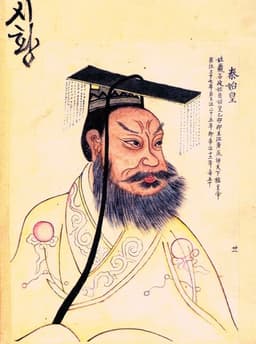
Qin Shi Huang
Emperor · Ancient
85.2Total
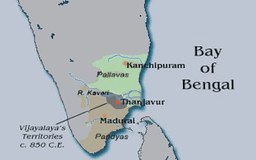
Vijayalaya Chola
Emperor · Medieval
54.2Total
Basic Information
Born
-259
820
Died
-210
870
Era
Ancient
Medieval
Nationality
China
India
Occupation
Emperor
Emperor
Civilization
Eastern
Indian
Score Comparison
Military (10%)
80.0
45.0
Political (20%)
90.0
40.8
Influence (20%)
85.0
58.0
Legacy (20%)
90.0
54.0
Leadership (15%)
78.0
64.0
Strategy (15%)
82.0
60.0
TOTAL
85.2
54.2
Qin Shi Huang — Complete Timeline
246 BC
Construction of the Mausoleum and Terracotta ArmyOther◆ Major
Qin Shi Huang commissioned a vast mausoleum complex near Xi'an, guarded by thousands of life-sized terracotta soldiers, horses, and chariots. The project employed hundreds of thousands of workers and reflected his obsession with immortality and imperial power.
Impact: global
230 BC
Conquest of the Six Warring StatesWar
From 230 to 221 BCE, Ying Zheng led the Qin state in a series of campaigns that conquered the Han, Zhao, Wei, Chu, Yan, and Qi states. This unified China under a single ruler for the first time, ending the Warring States period.
Impact: global
221 BC
Standardization of Writing, Currency, and MeasurementsReform◆ Major
Qin Shi Huang ordered the standardization of Chinese script, currency, and weights and measures across the unified empire. This facilitated administration, trade, and cultural integration, laying a foundation for future dynasties.
Impact: globalconstructive
Proclamation of the Qin DynastyPolitical Action
After conquering the last independent state, Ying Zheng declared himself Shi Huangdi (First Emperor), founding the Qin Dynasty. He adopted a new title to signify his supreme authority and initiated centralized imperial rule.
Impact: global
214 BC
Initiation of the Great Wall ConstructionOther◆ Major
Qin Shi Huang ordered the connection and extension of existing northern fortifications to create a unified defensive wall against nomadic Xiongnu raids. This project involved massive conscripted labor and became the precursor to the later Great Wall.
Impact: regional
213 BC
Burning of Books and Burying of ScholarsPolitical Action◆ Major
On the advice of Li Si, Qin Shi Huang ordered the burning of historical records and philosophical texts not aligned with Legalist doctrine. He also had 460 Confucian scholars buried alive to suppress dissent and consolidate ideological control.
Impact: nationaldestructive
Vijayalaya Chola — Complete Timeline
820 AD
Foundation of the Imperial Chola DynastyPolitical Action◆ Major
Vijayalaya Chola established the Imperial Chola dynasty, reviving the ancient Chola lineage after centuries of obscurity. He consolidated control over the Kaveri delta region, laying the foundation for the Chola Empire's future expansion.
Impact: regionalconstructive
850 AD
Capture of Thanjavur from the MutharaiyarWar◆ Major
Vijayalaya Chola captured the city of Thanjavur from the Mutharaiyar chieftains, who were vassals of the Pallavas. This victory established the Chola kingdom as an independent power and made Thanjavur the new Chola capital.
Impact: regionalconstructive
860 AD
Construction of the Vijayalaya Choleswaram TempleCultural
Vijayalaya Chola built the Vijayalaya Choleswaram temple at Narthamalai, a rock-cut temple dedicated to Shiva. This temple is one of the earliest Chola architectural monuments, reflecting the transition from Pallava to Chola styles.
constructive
Expert Analysis
qin-shi-huang-vs-vijayalaya-chola
# The Emperor and the Founder
On a spring morning in 221 BC, a young king in his late thirties stood before the walls of a conquered city and declared himself *Shi Huangdi*—the First Emperor. He had crushed six rival kingdoms in a decade of relentless warfare, and now he intended to reshape the world. A thousand miles to the south, across the Bay of Bengal, another figure climbed the rough stone steps of a hill fort in the Kaveri delta, surveying a patchwork of feuding chieftains. His name was Vijayalaya, and he carried no grand titles. He was a local lord reviving a forgotten name. Both men were founders. One built an empire that would define China for two millennia. The other built a dynasty that would rule southern India for four centuries. But their paths, their methods, and their fates could hardly have been more different.
Origins
Qin Shi Huang was born into a world of war. The Warring States period had torn China apart for two centuries, and Ying Zheng, as he was then known, inherited a state that had already been hardened by Legalist reforms. His father was a king, his mother a concubine, and his childhood was spent in the shadow of a court where betrayal was routine. By the time he came to the throne at thirteen, he had learned that power was something to be taken, not given.
Vijayalaya, by contrast, emerged from obscurity. The ancient Chola dynasty had faded into legend centuries before his birth. The region he inhabited—the fertile plains of what is now Tamil Nadu—was dominated by the Pallava and Pandya kingdoms, and the Mutharaiyar chieftains held the local strongholds. Vijayalaya was not born a king. He was a feudatory, a minor warrior who saw an opportunity in the chaos around him. Where Qin Shi Huang inherited a machine of war, Vijayalaya had to build one from scratch.
Rise to Power
The First Emperor’s rise was a study in systematic violence. From 230 to 221 BC, he led his armies through six campaigns that devoured the Han, Zhao, Wei, Chu, Yan, and Qi states. Each conquest was methodical: he used spies, bribes, and overwhelming force. When he finally stood alone, he did not simply declare victory—he proclaimed a new order. The title *Shi Huangdi* was not just a name; it was a claim to cosmic authority, a fusion of divine and earthly rule.
Vijayalaya’s rise was quieter but no less decisive. Around 850 AD, he captured the city of Thanjavur from the Mutharaiyar, who had been vassals of the Pallavas. It was not a grand campaign but a single, bold stroke—a raid that turned into a conquest. He did not declare himself emperor. He simply took a city, built a temple, and called himself king. The foundation of the Imperial Chola dynasty was not marked by a proclamation but by a prayer: the Vijayalaya Choleswaram temple, carved into the rock at Narthamalai, still stands as a testament to his humility.
Leadership & Governance
Qin Shi Huang ruled through terror and uniformity. He standardized writing, currency, and measurements across his empire, forcing the conquered states to speak one language of commerce and law. He ordered the burning of books that contradicted his Legalist philosophy and buried scholars alive who resisted. He connected the northern fortifications into what would become the Great Wall, a monument to his vision of control. His governance was a machine—efficient, ruthless, and utterly dependent on his will.
Vijayalaya’s style was different. He did not impose a new order; he revived an old one. By capturing Thanjavur, he restored the Chola name, but he did not erase the local traditions. His temple-building was not an act of propaganda but of devotion. The rock-cut shrine at Narthamalai, with its simple yet elegant carvings, reflects a ruler who understood that legitimacy came from piety, not fear. He did not standardize or suppress; he consolidated and built.
Triumph & Tragedy
The First Emperor’s greatest triumph was also his most fragile. By 210 BC, he had unified China, but his empire was held together by fear. He spent his final years obsessed with immortality, sending expeditions for the elixir of life and building a mausoleum guarded by thousands of terracotta soldiers—a silent army for the afterlife. When he died, his empire collapsed within three years. The Qin Dynasty, which he had founded with such ferocious energy, lasted only fifteen years after his death.
Vijayalaya’s tragedy was more personal. He died around 870 AD, having founded a dynasty but not yet seen it flourish. He left behind a small kingdom, a temple, and a name that would grow into something far greater. His son Aditya would expand the realm, and his grandson Parantaka would challenge the Pandya kings. But Vijayalaya himself never saw the empire that would bear his name. He was a seed, not a tree.
Character & Destiny
What drove these two men? Qin Shi Huang was consumed by a vision of absolute control. He wanted to erase the past and create a future that answered only to him. His paranoia and ambition were two sides of the same coin. He trusted no one, not even his own ministers. When he died, his courtiers hid his death for weeks, afraid of what would happen if the truth emerged.
Vijayalaya was different. He was a pragmatist, not a visionary. He saw a broken political landscape and seized a chance. He did not try to conquer the world; he tried to reclaim a heritage. His ambition was tempered by patience. He knew that a dynasty is not built in a single lifetime. His character was not defined by grandiosity but by resilience.
Legacy
Qin Shi Huang is remembered as the First Emperor, the man who gave China its name. His terracotta army draws millions of visitors, and his standardization of writing and currency shaped Chinese civilization. But his legacy is also one of tyranny. He is admired and reviled in equal measure, a figure of awe and horror.
Vijayalaya is less known, but his legacy is no less profound. The Chola dynasty he founded would go on to build the great temples of Tanjore, launch naval expeditions to Southeast Asia, and create a golden age of Tamil culture. He is remembered not as a conqueror but as a founder—the man who lit a flame that would burn for centuries.
Conclusion
Standing at the foot of the Great Wall or before the rock-cut temple at Narthamalai, one senses the weight of history. Both men sought to build something permanent. One built with iron and fire; the other with stone and faith. The First Emperor’s empire crumbled, but his idea of China endured. Vijayalaya’s dynasty flourished, but his name faded into the shadow of his descendants. In the end, both succeeded and failed. They remind us that power is not measured by the size of an empire but by the depth of its roots. And that the quietest foundations often hold the longest.
Rankings
🥇
Qin Shi HuangLeader
Mil: 80.0Pol: 90.0Inf: 85.0
85.2
🥈
Vijayalaya Chola
Mil: 45.0Pol: 40.8Inf: 58.0
54.2
+31.0 behind
How This Comparison Works
Algorithm
Each figure is scored on 6 dimensions (0—100 scale) based on structured historical data: Military (10%), Political (20%), Influence (20%), Legacy (20%), Leadership (15%), Strategy (15%). The weighted total produces the final ranking.
Data Sources
Scores are computed from structured sub-indicators in the database. Scale factors adjust for era (Ancient ×0.85, Modern ×1.0) and civilization size (Eastern ×1.05, Other ×0.80) to account for differences in population and military scale.
Maximum 3 Figures
Comparisons are limited to 2—3 figures to ensure readability and statistical meaningfulness.
Error Margins
±5 points per dimension — Sub-scores are derived from historical records with inherent uncertainty. Two figures within 5 points on a dimension should be considered roughly equivalent in that area.
Total Score Accuracy
±3 points overall — The weighted combination of 6 dimensions produces a total score with approximately ±3 points of uncertainty. Differences of less than 3 points are not statistically significant— the figures are effectively tied.
Known Limitations
- Historical records are incomplete and uneven across civilizations
- Figures from oral-tradition societies may be underrepresented
- Occupation labels can misclassify multi-role figures
- Scores measure capability and impact, not moral character
- Quantitative scoring is a comparison tool, not absolute truth
Capability Radar
Military (10%) — Battles & Warfare
Battles
85
45
Win Rate
90
50
Expansion
90
55
Political (20%) — Governance & Reform
Reform
95
35
Diplomacy
75
40
Economy
90
35
Influence (20%) — Cultural & Global Reach
Cultural
95
40
Global
85
30
Legacy (20%) — Historical Impact
Historical
95
55
Longevity
95
50
Leadership (15%) — Power & Stability
Tenure
70
50
Stability
65
45
Strategy (15%) — Tactics & Innovation
Strategy
85
45
Tactics
80
40
Reform
95
30
Similar Comparisons
Comments & Discussion
TerracottaSkeptic6/17/2026
Bottom line: Qin conquered a civilization; Vijayalaya revived one. Qin's unification required hundreds of thousands of troops and brought mass conscription—standardizing script, weights, and axle lengths at spearpoint. Vijayalaya's "conquest" of Thanjavur was a single night raid with maybe a few hundred men. Calling this a fair comparison is like comparing a nuclear reactor to a campfire. They're both heat sources, sure, but the scale gap is comical.
DeccanDynastyFan6/17/2026
拿秦始皇跟维贾亚拉雅比,简直是侮辱南印度。前者是个焚书坑儒的暴君,后者却是复兴了古老王朝的文化英雄。维贾亚拉雅夺回坦贾武尔时,当地还是穆塔拉亚尔人的小领地,他靠的是外交和家族联盟,不是几十万大军。秦朝二世而亡,注水帝国;朱罗王朝却在中世纪印度洋称霸四百年,连东南亚都俯首称臣。拼谁更牛?维贾亚拉雅之子阿迪特亚一世才是真正的征服者。
LegalismLament6/17/2026
可笑,拿秦政的"书同文车同轨"来压朱罗的"分封小领地"?你们南印吹真敢碰瓷。秦始皇统一度量衡、修驰道、筑长城,哪件不是改变文明进程的伟业?维贾亚拉雅干了什么?占了个小破镇子叫坦贾武尔,连个像样的文字记载都没留下。朱罗帝国真正崛起得等到一两个世纪后的拉贾拉贾一世,维贾亚拉雅只是个吉祥物罢了。别把创始人跟真正改革者混为一谈。
VijayalayaVindicator6/17/2026
I'm tired of this Sinocentric framing. Vijayalaya didn't need to slaughter millions to make history. His takeover of Thanjavur was a surgical strike against a weakening Mutharaiyar kingdom, and the Brihadishvara Temple? That came later, sure, but the dynasty HE founded would eventually build it, proving that subtle beginnings can yield monumental legacies. Qin's terracotta army is about death; Chola bronzes are about life. I know which I'd rather study.
NumericNavelGazer6/17/2026
Let's talk data: Qin's unification involved ~500,000 troops, 7,000 terracotta warriors, standardized axle gauges across 4,000 km of roads. Vijayalaya likely commanded fewer than 500 men, left no known inscriptions, and his capital Thanjavur had a population smaller than a single Qin county. One reshaped half a continent's infrastructure; the other founded a family that later flourished. Different variables, different tiers. This comparison is only interesting if we admit they're apples and Warri