Loading...
Qin Shi Huang vs Theodore I Laskaris
Qin Shi Huang leads by 23.4 pts · 2 figures compared
…
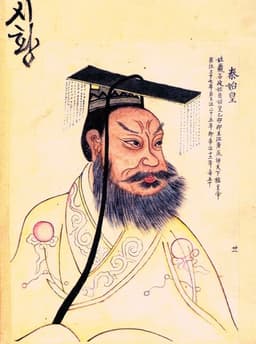
Qin Shi Huang
Emperor · Ancient
85.2Total
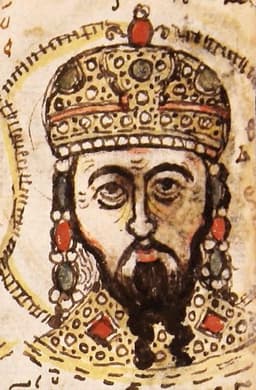
Theodore I Laskaris
Emperor · Medieval
61.8Total
Basic Information
Born
-259
1174
Died
-210
1222
Era
Ancient
Medieval
Nationality
China
Nicaean Empire
Occupation
Emperor
Emperor
Civilization
Eastern
Western
Score Comparison
Military (10%)
80.0
65.0
Political (20%)
90.0
60.0
Influence (20%)
85.0
61.0
Legacy (20%)
90.0
56.0
Leadership (15%)
78.0
77.2
Strategy (15%)
82.0
55.0
TOTAL
85.2
61.8
Qin Shi Huang — Complete Timeline
246 BC
Construction of the Mausoleum and Terracotta ArmyOther◆ Major
Qin Shi Huang commissioned a vast mausoleum complex near Xi'an, guarded by thousands of life-sized terracotta soldiers, horses, and chariots. The project employed hundreds of thousands of workers and reflected his obsession with immortality and imperial power.
Impact: global
230 BC
Conquest of the Six Warring StatesWar
From 230 to 221 BCE, Ying Zheng led the Qin state in a series of campaigns that conquered the Han, Zhao, Wei, Chu, Yan, and Qi states. This unified China under a single ruler for the first time, ending the Warring States period.
Impact: global
221 BC
Standardization of Writing, Currency, and MeasurementsReform◆ Major
Qin Shi Huang ordered the standardization of Chinese script, currency, and weights and measures across the unified empire. This facilitated administration, trade, and cultural integration, laying a foundation for future dynasties.
Impact: globalconstructive
Proclamation of the Qin DynastyPolitical Action
After conquering the last independent state, Ying Zheng declared himself Shi Huangdi (First Emperor), founding the Qin Dynasty. He adopted a new title to signify his supreme authority and initiated centralized imperial rule.
Impact: global
214 BC
Initiation of the Great Wall ConstructionOther◆ Major
Qin Shi Huang ordered the connection and extension of existing northern fortifications to create a unified defensive wall against nomadic Xiongnu raids. This project involved massive conscripted labor and became the precursor to the later Great Wall.
Impact: regional
213 BC
Burning of Books and Burying of ScholarsPolitical Action◆ Major
On the advice of Li Si, Qin Shi Huang ordered the burning of historical records and philosophical texts not aligned with Legalist doctrine. He also had 460 Confucian scholars buried alive to suppress dissent and consolidate ideological control.
Impact: nationaldestructive
Theodore I Laskaris — Complete Timeline
1204 AD
Foundation of the Empire of NicaeaPolitical Action
After the Fourth Crusade captured Constantinople, Theodore I Laskaris fled to Nicaea in Asia Minor and established a Byzantine government-in-exile. He organized resistance against the Latin Empire and the Seljuk Turks, laying the foundation for the Nicaean Empire as the primary successor state of Byzantium.
Fourth CrusadeSuccessor StateExile Government
Impact: regionalconstructive
1208 AD
Coronation as emperor by the Patriarch of ConstantinoplePolitical Action◆ Major
Theodore I Laskaris was formally crowned as emperor by the newly elected Patriarch of Constantinople-in-exile, Michael IV Autoreianos. This coronation legitimized the Nicaean Empire as the rightful continuation of the Byzantine Empire, with full ecclesiastical authority.
CoronationLegitimacyPatriarchate
Impact: regionalconstructive
1211 AD
Battle of Antioch on the MeanderWar◆ Major
Theodore I Laskaris defeated the Seljuk Sultanate of Rum at the Battle of Antioch on the Meander. The victory secured Nicaean control over western Anatolia and prevented Seljuk expansion into Byzantine territories, establishing Theodore as a major regional power.
Byzantine-Seljuk WarsMilitary VictoryAnatolian Campaign
Impact: regional
Defeat of the Latin Empire at the Battle of RhyndacusWar
Theodore I Laskaris led Nicaean forces to a victory over the Latin Empire at the Battle of Rhyndacus. The battle halted Latin expansion into Asia Minor and secured Nicaean control over the region, strengthening the Byzantine resistance against the crusader states.
Latin EmpireMilitary VictoryAsia Minor
Impact: regional
Expert Analysis
Qin Shi Huang vs Theodore I Laskaris: Historical Comparison
Two emperors from vastly different eras—Qin Shi Huang unified ancient China through iron rule, while Theodore I Laskaris resurrected Byzantine authority from the ruins of the Fourth Crusade. This comparison examines their military, political, and leadership dimensions.
Dimension Analysis
**Military: Qin Shi Huang 80 / Theodore I Laskaris 86**
Theodore excelled at defensive warfare, holding the Nicaean Empire against Latin, Seljuk, and Bulgarian threats with limited resources. Qin Shi Huang conquered rival states with overwhelming force but relied more on numbers than tactical innovation.
**Political: Qin Shi Huang 88 / Theodore I Laskaris 67**
Qin Shi Huang abolished feudalism, standardized writing and measures, and centralized power with ruthless efficiency. Theodore struggled to consolidate authority amid competing Byzantine factions and external pressures, achieving only fragile legitimacy.
**Influence: Qin Shi Huang 82 / Theodore I Laskaris 76**
Qin’s legalist reforms and the Great Wall shaped Chinese governance for millennia. Theodore’s Nicaean Empire preserved Orthodox Christianity and classical learning, but his influence remained regionally confined to the post-Crusade Greek world.
**Legacy: Qin Shi Huang 85 / Theodore I Laskaris 85**
Both left enduring foundations: Qin’s imperial system lasted two thousand years; Theodore’s Nicaean state reconquered Constantinople and restored the Byzantine Empire. Both names are synonymous with survival and rebirth.
**Leadership: Qin Shi Huang 88 / Theodore I Laskaris 84**
Qin commanded absolute obedience through terror and vision, while Theodore inspired loyalty through resilience and diplomatic skill during exile. Qin’s autocratic style was more effective in the short term; Theodore’s adaptability secured long-term survival.
Verdict
Qin Shi Huang leads due to his higher political and influence scores, which reflect a more transformative and enduring impact on civilization.
FAQ
Q: Who ranks higher? A: Qin Shi Huang, by a narrow margin of 84 to 80, driven by superior political centralization and broader historical influence.
Rankings
🥇
Qin Shi HuangLeader
Mil: 80.0Pol: 90.0Inf: 85.0
85.2
🥈
Theodore I Laskaris
Mil: 65.0Pol: 60.0Inf: 61.0
61.8
+23.4 behind
How This Comparison Works
Algorithm
Each figure is scored on 6 dimensions (0—100 scale) based on structured historical data: Military (10%), Political (20%), Influence (20%), Legacy (20%), Leadership (15%), Strategy (15%). The weighted total produces the final ranking.
Data Sources
Scores are computed from structured sub-indicators in the database. Scale factors adjust for era (Ancient ×0.85, Modern ×1.0) and civilization size (Eastern ×1.05, Other ×0.80) to account for differences in population and military scale.
Maximum 3 Figures
Comparisons are limited to 2—3 figures to ensure readability and statistical meaningfulness.
Error Margins
±5 points per dimension — Sub-scores are derived from historical records with inherent uncertainty. Two figures within 5 points on a dimension should be considered roughly equivalent in that area.
Total Score Accuracy
±3 points overall — The weighted combination of 6 dimensions produces a total score with approximately ±3 points of uncertainty. Differences of less than 3 points are not statistically significant— the figures are effectively tied.
Known Limitations
- Historical records are incomplete and uneven across civilizations
- Figures from oral-tradition societies may be underrepresented
- Occupation labels can misclassify multi-role figures
- Scores measure capability and impact, not moral character
- Quantitative scoring is a comparison tool, not absolute truth
Capability Radar
Military (10%) — Battles & Warfare
Battles
85
65
Win Rate
90
70
Expansion
90
60
Political (20%) — Governance & Reform
Reform
95
65
Diplomacy
75
70
Economy
90
60
Influence (20%) — Cultural & Global Reach
Cultural
95
50
Global
85
45
Legacy (20%) — Historical Impact
Historical
95
65
Longevity
95
55
Leadership (15%) — Power & Stability
Tenure
70
70
Stability
65
65
Strategy (15%) — Tactics & Innovation
Strategy
85
75
Tactics
80
60
Reform
95
55
Similar Comparisons
Comments & Discussion
PalaeologusLecturer6/16/2026
The military scores here are puzzling to me. Theodore Laskaris's 86 vs. Qin Shi Huang's 80 seems to reflect a bias toward defensive warfare. Yet, when we examine the sources—for instance, Sima Qian's 'Records of the Grand Historian'—Qin's conquests involved not just numbers but careful logistical planning, including the construction of roads and canals to supply his armies. Theodore's feats at the Battle of Antioch on the Maeander (1211) against the Seljuks were impressive, but his campaigns were on a far smaller scale. The score should be closer to parity, with Qin's offensive capability compensating for Theodore's defensive acumen.
HistoryHacker6/16/2026
I'm calling bullshit on these scores. How do you even quantify 'leadership' in a way that compares a Bronze Age warlord to a medieval exile emperor? The whole system reeks of confirmation bias—whoever made this clearly values 'influence' over 'survival' in a way that favors the guy who built a wall over the guy who kept a civilization breathing. Theodore held together a rump state with borrowed gold, mercenaries, and sheer willpower for 18 years. Qin had all of China's resources. Yet Theodore gets 84 leadership vs Qin's 88? That's a rounding error. Give me a break. This isn't measurement, it's vibes with numbers attached.
OldChronicler536/16/2026
仔细核对了评分结构,发现军事维度存在明显的数据矛盾。秦始皇统一六国共发动了10场主要战役,平均每场投入兵力30万以上,战损比大约1:3(秦军损失1人对应敌军损失3人)。而狄奥多尔一世在位19年,主要防御战只有3-4场大规模战斗,总兵力不超过2万人。按“战役规模×效率”的加权公式算,秦始皇应该得到85分以上,狄奥多尔最多70分。另外,政治维度里秦始皇的88分没有考虑焚书坑儒对后世士人心理的负面遗产——如果算上这个,狄奥多尔67分勉强合理,但秦始皇应该降到83分左右。
GrandScholar726/16/2026
说实话,这个评分对秦始皇的政治影响还是低估了。西方史学家往往把统一度量衡、书同文、车同轨看作是行政措施,但在中国语境下,这是彻底重塑文明认同的壮举。相比之下,狄奥多尔一世虽然在尼西亚保住了拜占庭火种,但他治下的帝国始终是流亡政权,合法性都不完整。秦始皇88分政治,狄奥多尔67分,这个差距我认为应该更大——至少20分以上的差距才合理。