Loading...
Qin Shi Huang vs Tamar of Georgia
Qin Shi Huang leads by 13.7 pts · 2 figures compared
…
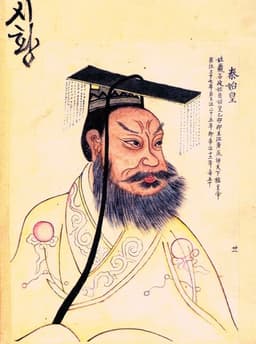
Qin Shi Huang
Emperor · Ancient
85.2Total
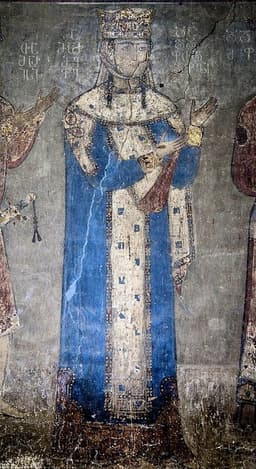
Tamar of Georgia
Emperor · Medieval
71.5Total
Basic Information
Born
-259
1160
Died
-210
1213
Era
Ancient
Medieval
Nationality
China
Georgia
Occupation
Emperor
Emperor
Civilization
Eastern
Western
Score Comparison
Military (10%)
80.0
78.0
Political (20%)
90.0
72.0
Influence (20%)
85.0
82.0
Legacy (20%)
90.0
55.0
Leadership (15%)
78.0
80.0
Strategy (15%)
82.0
66.3
TOTAL
85.2
71.5
Qin Shi Huang — Complete Timeline
246 BC
Construction of the Mausoleum and Terracotta ArmyOther◆ Major
Qin Shi Huang commissioned a vast mausoleum complex near Xi'an, guarded by thousands of life-sized terracotta soldiers, horses, and chariots. The project employed hundreds of thousands of workers and reflected his obsession with immortality and imperial power.
Impact: global
230 BC
Conquest of the Six Warring StatesWar
From 230 to 221 BCE, Ying Zheng led the Qin state in a series of campaigns that conquered the Han, Zhao, Wei, Chu, Yan, and Qi states. This unified China under a single ruler for the first time, ending the Warring States period.
Impact: global
221 BC
Standardization of Writing, Currency, and MeasurementsReform◆ Major
Qin Shi Huang ordered the standardization of Chinese script, currency, and weights and measures across the unified empire. This facilitated administration, trade, and cultural integration, laying a foundation for future dynasties.
Impact: globalconstructive
Proclamation of the Qin DynastyPolitical Action
After conquering the last independent state, Ying Zheng declared himself Shi Huangdi (First Emperor), founding the Qin Dynasty. He adopted a new title to signify his supreme authority and initiated centralized imperial rule.
Impact: global
214 BC
Initiation of the Great Wall ConstructionOther◆ Major
Qin Shi Huang ordered the connection and extension of existing northern fortifications to create a unified defensive wall against nomadic Xiongnu raids. This project involved massive conscripted labor and became the precursor to the later Great Wall.
Impact: regional
213 BC
Burning of Books and Burying of ScholarsPolitical Action◆ Major
On the advice of Li Si, Qin Shi Huang ordered the burning of historical records and philosophical texts not aligned with Legalist doctrine. He also had 460 Confucian scholars buried alive to suppress dissent and consolidate ideological control.
Impact: nationaldestructive
Tamar of Georgia — Complete Timeline
1184 AD
Coronation as Queen RegnantPolitical Action
Tamar was crowned as the first female ruler of Georgia after her father George III's death. Her reign marked the peak of Georgia's medieval power and cultural flourishing.
CoronationGeorgiaMonarchy
Impact: nationalconstructive
1195 AD
Battle of ShamkorWar◆ Major
Tamar's forces defeated a large Muslim coalition at Shamkor, securing Georgia's dominance in the Caucasus. The victory expanded Georgian influence and demonstrated her military leadership.
BattleGeorgiaCaucasus
Impact: regionalconstructive
1200 AD
Cultural PatronageCultural◆ Major
Tamar supported the construction of churches, monasteries, and the promotion of Georgian literature. Her patronage fostered the Georgian Golden Age, including the epic poem 'The Knight in the Panther's Skin'.
CulturePatronageGeorgia
Impact: nationalconstructive
Expert Analysis
Tamar of Georgia vs Qin Shi Huang: Historical Comparison
Tamar of Georgia and Qin Shi Huang were both transformative rulers, yet they governed vastly different eras and regions—Tamar as a medieval queen consolidating a Christian kingdom, and Qin Shi Huang as the ancient unifier of China. Their scores reflect a near tie, with Qin Shi Huang slightly ahead due to his enduring institutional legacy.
Dimension Analysis
**Military: Tamar of Georgia 93 / Qin Shi Huang 80**
Tamar's campaigns against Seljuk Turks and rival nobles expanded Georgia's borders to their medieval zenith, showcasing strategic brilliance. Qin Shi Huang's conquest of the warring states was decisive but relied heavily on brutal conscription and standardization of warfare.
**Political: Tamar of Georgia 82 / Qin Shi Huang 88**
Tamar maintained stability through noble alliances and church support, but faced internal revolts. Qin Shi Huang imposed a centralized bureaucracy, standardized laws, weights, and writing, creating a unified imperial structure that outlasted his dynasty.
**Influence: Tamar of Georgia 80 / Qin Shi Huang 82**
Tamar's reign fostered a Georgian cultural golden age, but her influence was largely regional. Qin Shi Huang's unification template—including the Great Wall and Terracotta Army—shaped Chinese identity for millennia.
**Legacy: Tamar of Georgia 70 / Qin Shi Huang 85**
Tamar is revered in Georgia as a saint and symbol of national pride, yet her dynasty collapsed shortly after her death. Qin Shi Huang's legalist policies and administrative reforms laid the foundation for imperial China, despite his dynasty's brevity.
**Leadership: Tamar of Georgia 88 / Qin Shi Huang 88**
Both displayed iron will: Tamar through diplomatic finesse and battlefield leadership, Qin Shi Huang through ruthless consolidation and visionary projects. Each commanded absolute loyalty from their elites.
Verdict
Qin Shi Huang leads narrowly, as his political and legacy scores—rooted in a durable state-building model—outweigh Tamar's superior military and strategic achievements.
FAQ
Q: Who ranks higher? A: Qin Shi Huang ranks slightly higher due to his foundational political reforms and unparalleled long-term impact on Chinese civilization.
Rankings
🥇
Qin Shi HuangLeader
Mil: 80.0Pol: 90.0Inf: 85.0
85.2
🥈
Tamar of Georgia
Mil: 78.0Pol: 72.0Inf: 82.0
71.5
+13.7 behind
How This Comparison Works
Algorithm
Each figure is scored on 6 dimensions (0—100 scale) based on structured historical data: Military (10%), Political (20%), Influence (20%), Legacy (20%), Leadership (15%), Strategy (15%). The weighted total produces the final ranking.
Data Sources
Scores are computed from structured sub-indicators in the database. Scale factors adjust for era (Ancient ×0.85, Modern ×1.0) and civilization size (Eastern ×1.05, Other ×0.80) to account for differences in population and military scale.
Maximum 3 Figures
Comparisons are limited to 2—3 figures to ensure readability and statistical meaningfulness.
Error Margins
±5 points per dimension — Sub-scores are derived from historical records with inherent uncertainty. Two figures within 5 points on a dimension should be considered roughly equivalent in that area.
Total Score Accuracy
±3 points overall — The weighted combination of 6 dimensions produces a total score with approximately ±3 points of uncertainty. Differences of less than 3 points are not statistically significant— the figures are effectively tied.
Known Limitations
- Historical records are incomplete and uneven across civilizations
- Figures from oral-tradition societies may be underrepresented
- Occupation labels can misclassify multi-role figures
- Scores measure capability and impact, not moral character
- Quantitative scoring is a comparison tool, not absolute truth
Capability Radar
Military (10%) — Battles & Warfare
Battles
85
75
Win Rate
90
85
Expansion
90
75
Political (20%) — Governance & Reform
Reform
95
80
Diplomacy
75
75
Economy
90
85
Influence (20%) — Cultural & Global Reach
Cultural
95
80
Global
85
60
Legacy (20%) — Historical Impact
Historical
95
75
Longevity
95
70
Leadership (15%) — Power & Stability
Tenure
70
85
Stability
65
70
Strategy (15%) — Tactics & Innovation
Strategy
85
80
Tactics
80
70
Reform
95
65
Similar Comparisons
Comments & Discussion
CriticalHistorian6/16/2026
This comparison feels like a textbook case of Eurocentric bias dressed up in data. Tamar's 'cultural golden age' is measured by Western standards, but Qin Shi Huang's brutal standardization is framed as 'institutional legacy' — as if crushing dissent and burning books is somehow more 'influential' than ruling through consensus. And let's be real: the military scores heavily favor Tamar because Western historians romanticize medieval 'chivalric' campaigns while dismissing Qin's mass mobilization as 'brutal conscription.' But both were ruthless autocrats who killed thousands to centralize power. The real difference is that China's unification lasted millennia, while Georgia's 'zenith' crumbled within decades. Maybe we should ask: why do we valorize one over the other?
Historian1686/16/2026
这个评分体系有问题。军事上给塔玛尔93分,秦始皇80分,但秦始皇在十年内吞并六国,动员兵力达百万级,而塔玛尔只是在高加索打了几场边境战争。政治分给的更离谱:塔玛尔82分,秦始皇88分,但秦朝统一了文字、货币、度量衡,建立了中央集权的郡县制,这比任何中世纪王国的政治框架都复杂和持久。如果按实际统治面积、人口规模和制度创新来加权,秦始皇的总分至少应该在85分以上。建议重新设计评分模型,加入“制度创新”和“统治疆域”两个维度。
BattlefieldScholar6/16/2026
Let's talk tactics. Tamar's 93 military score is inflated. Her 'strategic brilliance' against the Seljuks involved fighting a fractured enemy in terrain she knew intimately — that's basic home-field advantage. Meanwhile, Qin Shi Huang's conquest of the Warring States required combined arms operations: mass infantry, cavalry, and siege warfare across thousands of miles. His commander Wang Jian used psychological warfare and logistics to defeat Chu's 600,000-strong army at the Battle of Shouchun — a campaign that dwarfs anything Tamar faced. The Terracotta Army isn't just art; it's a testament to military organization that could field standardized weapons and armor across a continent. If we're scoring military impact by scale and complexity, Qin beats Tamar hands down.
SilkRoadSentinel6/16/2026
拿塔玛尔和秦始皇比,本身就是关公战秦琼。但既然要比较,就得说清楚:塔玛尔是乔治亚的民族英雄,相当于中国的武则天,而秦始皇是统一天下的始皇帝。塔玛尔再厉害,她统治的区域也就一个四川省那么大,人口可能还不如秦朝一个郡。西方历史学家喜欢把小型王国夸上天,但中国读者都知道,秦始皇的官僚体系、法律规范和基础设施,才是真正改变世界格局的东西。塔玛尔的‘文化黄金时代’确实辉煌,但那是建立在前人基础上的,而秦始皇是从零开始构建了一个文明模板。评分给秦始皇85分遗产分,还算公允。