Loading...
Qin Shi Huang vs Tailapa II
Qin Shi Huang leads by 24.8 pts · 2 figures compared
…
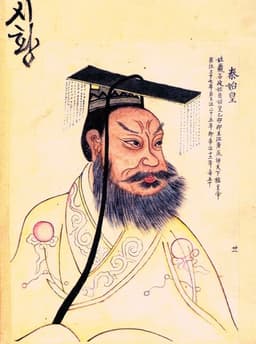
Qin Shi Huang
Emperor · Ancient
85.2Total
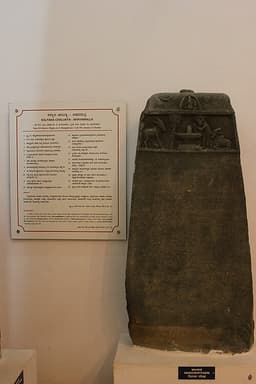
Tailapa II
Emperor · Medieval
60.4Total
Basic Information
Born
-259
957
Died
-210
997
Era
Ancient
Medieval
Nationality
China
India
Occupation
Emperor
Emperor
Civilization
Eastern
Indian
Score Comparison
Military (10%)
80.0
74.7
Political (20%)
90.0
53.8
Influence (20%)
85.0
61.0
Legacy (20%)
90.0
52.0
Leadership (15%)
78.0
72.0
Strategy (15%)
82.0
58.0
TOTAL
85.2
60.4
Qin Shi Huang — Complete Timeline
246 BC
Construction of the Mausoleum and Terracotta ArmyOther◆ Major
Qin Shi Huang commissioned a vast mausoleum complex near Xi'an, guarded by thousands of life-sized terracotta soldiers, horses, and chariots. The project employed hundreds of thousands of workers and reflected his obsession with immortality and imperial power.
Impact: global
230 BC
Conquest of the Six Warring StatesWar
From 230 to 221 BCE, Ying Zheng led the Qin state in a series of campaigns that conquered the Han, Zhao, Wei, Chu, Yan, and Qi states. This unified China under a single ruler for the first time, ending the Warring States period.
Impact: global
221 BC
Standardization of Writing, Currency, and MeasurementsReform◆ Major
Qin Shi Huang ordered the standardization of Chinese script, currency, and weights and measures across the unified empire. This facilitated administration, trade, and cultural integration, laying a foundation for future dynasties.
Impact: globalconstructive
Proclamation of the Qin DynastyPolitical Action
After conquering the last independent state, Ying Zheng declared himself Shi Huangdi (First Emperor), founding the Qin Dynasty. He adopted a new title to signify his supreme authority and initiated centralized imperial rule.
Impact: global
214 BC
Initiation of the Great Wall ConstructionOther◆ Major
Qin Shi Huang ordered the connection and extension of existing northern fortifications to create a unified defensive wall against nomadic Xiongnu raids. This project involved massive conscripted labor and became the precursor to the later Great Wall.
Impact: regional
213 BC
Burning of Books and Burying of ScholarsPolitical Action◆ Major
On the advice of Li Si, Qin Shi Huang ordered the burning of historical records and philosophical texts not aligned with Legalist doctrine. He also had 460 Confucian scholars buried alive to suppress dissent and consolidate ideological control.
Impact: nationaldestructive
Tailapa II — Complete Timeline
973 AD
Founding of the Western Chalukya DynastyPolitical Action◆ Major
Tailapa II overthrew the Rashtrakuta ruler Karka II and established the Western Chalukya dynasty. This marked the end of Rashtrakuta rule in the Deccan and the beginning of a new Chalukya era.
Impact: regional
995 AD
Defeat of the Paramara King MunjaWar◆ Major
Tailapa II defeated and captured the Paramara king Munja of Malwa. This victory consolidated Western Chalukya control over the northern Deccan and established their military reputation.
Impact: regional
Expert Analysis
qin-shi-huang-vs-tailapa-ii
# The First Emperor and the Restorer: Two Paths to Power in Ancient Worlds
On a spring morning in 221 BCE, a thirty-eight-year-old king entered the city of Xianyang as master of all China. Ying Zheng had conquered the last of the Warring States, and he would soon rename himself Shi Huangdi—the First Emperor. Nearly twelve centuries later and three thousand miles away, another king rose from obscurity in the Deccan plateau. Tailapa II, a descendant of a fallen dynasty, gathered his forces in 973 CE and struck at the heart of the Rashtrakuta empire. Both men founded dynasties. Both reshaped their worlds. But their stories reveal how profoundly different civilizations, eras, and personalities can produce radically different kinds of greatness.
Origins
Qin Shi Huang was born into a world of chaos and opportunity. The Warring States period had torn China apart for two centuries. His father, King Zhuangxiang of Qin, ruled a western state that had already begun to eclipse its rivals. Young Ying Zheng ascended the throne at thirteen, surrounded by ambitious ministers and a mother who had taken a powerful lover. He learned early that trust was a weapon and that survival required ruthless calculation. His tutor, Li Si, taught him Legalist philosophy—the belief that strict laws and harsh punishments could forge order from disorder.
Tailapa II emerged from a different kind of darkness. The Rashtrakuta dynasty had dominated the Deccan for two centuries, crushing the older Chalukya line that Tailapa claimed as his heritage. He was a feudatory chief, ruling a small territory in what is now Karnataka, when he decided to challenge the established order. Unlike Qin Shi Huang, who inherited a kingdom and expanded it, Tailapa had to build his power from a sliver of land. The difference between inheriting a war machine and assembling one from fragments would shape everything that followed.
Rise to Power
Qin Shi Huang’s path was methodical and devastating. Between 230 and 221 BCE, he unleashed the armies of Qin in a series of campaigns that historians still study for their efficiency. He conquered Han first, then Zhao, then Wei. Each victory brought new resources, new soldiers, new territory. By the time he faced the powerful state of Chu, his military machine was unstoppable. The conquest was not merely military—it was psychological. Qin Shi Huang understood that terror could be a weapon. When he took the city of Handan, he ordered the massacre of his mother’s former enemies, a lesson to all who might resist.
Tailapa II’s rise was more precarious. In 973 CE, he declared himself sovereign and marched against Karka II, the Rashtrakuta emperor. The battle was not a foregone conclusion. Tailapa commanded a fraction of the forces his enemy could field. But he possessed something the Rashtrakutas had lost: the loyalty of local chieftains who remembered the Chalukya name. He won through alliance-building and timing, striking when the Rashtrakuta dynasty was already weakened by internal strife. Where Qin Shi Huang conquered through overwhelming force, Tailapa succeeded through political craft.
Leadership & Governance
The differences in their ruling styles are stark. Qin Shi Huang governed through standardization. He unified Chinese script, creating a single written language for a vast empire. He standardized currency, weights, and measures. He built roads and canals that connected his realm. In 214 BCE, he ordered the connection of northern fortifications into what would become the Great Wall. These were acts of breathtaking ambition—and breathtaking cruelty. In 213 BCE, on the advice of Li Si, he ordered the burning of books and the burying of scholars alive. History, philosophy, and literature that did not serve the state were destroyed. He believed that unity required uniformity, and uniformity required silence.
Tailapa II governed through restoration. He did not seek to erase the past but to reclaim it. He revived the Chalukya administrative system, which had been more decentralized than Qin Shi Huang’s model. Local chiefs retained power as long as they acknowledged his supremacy. He fought wars against the Paramara king Munja of Malwa in 995 CE, defeating and capturing him, but he did not attempt to create a single, unified empire across the Deccan. The geography of South India—with its mountains, rivers, and independent kingdoms—made such an ambition impossible. Tailapa accepted the limits of his power in a way that Qin Shi Huang never could.
Triumph & Tragedy
Qin Shi Huang’s greatest triumph was also his greatest tragedy. He unified China, created an administrative system that would last two thousand years, and built monuments that still awe the world. The Terracotta Army, commissioned in 246 BCE, guards his mausoleum with eight thousand life-sized soldiers, each face unique. But his obsession with immortality consumed him. He sent expeditions to find the elixir of life, swallowed mercury pills prescribed by alchemists, and died in 210 BCE at the age of forty-nine—poisoned by his own quest for eternal life. His dynasty collapsed within four years of his death.
Tailapa II’s triumph was more modest but more lasting. He founded the Western Chalukya dynasty, which ruled the Deccan for over two centuries. His defeat of Munja in 995 CE secured his northern border and established his reputation. But he never achieved the total domination that Qin Shi Huang sought. He died in 997 CE, likely in his forties, having restored his family’s name and created a stable kingdom. His tragedy was not spectacular—it was the quiet reality that in the fragmented world of medieval India, no single ruler could command the kind of absolute power that the First Emperor had wielded.
Character & Destiny
Qin Shi Huang’s personality was forged in paranoia. He moved between palaces through secret passages, never sleeping in the same room twice. He executed those who revealed his whereabouts. He believed that the world existed to serve him, and he shaped it with the confidence of a man who had never known defeat. That confidence became his undoing. He trusted alchemists over advisors, mercury over wisdom, immortality over legacy.
Tailapa II’s character was shaped by patience. He had waited decades to reclaim his heritage, building alliances slowly, choosing battles carefully. He understood that power in the Deccan required flexibility—the ability to reward allies, absorb enemies, and adapt to circumstances. He was not a visionary like Qin Shi Huang, but he was a survivor. And survival, in the end, is what dynasties are built on.
Legacy
Qin Shi Huang’s legacy is written in every character of Chinese script, every mile of the Great Wall, every province of modern China. He is remembered as both founder and tyrant, the man who gave China its shape and its first taste of absolute power. His tomb remains unexcavated, a mystery that still haunts archaeology. The Terracotta Army stands as a monument to his ambition and his fear of death.
Tailapa II’s legacy is less visible but no less real. The Western Chalukya dynasty produced some of the finest architecture of medieval India—the temples of Belur and Halebidu, the sculptures that still draw pilgrims and tourists. His descendants would fight the Cholas, patronize poets, and maintain the Deccan’s independence from northern empires. He is remembered in inscriptions and chronicles, a figure of regional rather than global significance.
Conclusion
Standing before the Terracotta Army, one feels the weight of Qin Shi Huang’s ambition—a man who wanted to conquer death itself. Walking through the ruins of a Chalukya temple, one senses Tailapa II’s more human aspiration—to restore what was lost, to build something that would outlast him. The First Emperor tried to remake the world in his image and failed. Tailapa II accepted the world as it was and succeeded. Both were great in their own ways. But their stories remind us that greatness is not a single thing. It is shaped by time, place, and the limits that every ruler must face—or deny.
Rankings
🥇
Qin Shi HuangLeader
Mil: 80.0Pol: 90.0Inf: 85.0
85.2
🥈
Tailapa II
Mil: 74.7Pol: 53.8Inf: 61.0
60.4
+24.8 behind
How This Comparison Works
Algorithm
Each figure is scored on 6 dimensions (0—100 scale) based on structured historical data: Military (10%), Political (20%), Influence (20%), Legacy (20%), Leadership (15%), Strategy (15%). The weighted total produces the final ranking.
Data Sources
Scores are computed from structured sub-indicators in the database. Scale factors adjust for era (Ancient ×0.85, Modern ×1.0) and civilization size (Eastern ×1.05, Other ×0.80) to account for differences in population and military scale.
Maximum 3 Figures
Comparisons are limited to 2—3 figures to ensure readability and statistical meaningfulness.
Error Margins
±5 points per dimension — Sub-scores are derived from historical records with inherent uncertainty. Two figures within 5 points on a dimension should be considered roughly equivalent in that area.
Total Score Accuracy
±3 points overall — The weighted combination of 6 dimensions produces a total score with approximately ±3 points of uncertainty. Differences of less than 3 points are not statistically significant— the figures are effectively tied.
Known Limitations
- Historical records are incomplete and uneven across civilizations
- Figures from oral-tradition societies may be underrepresented
- Occupation labels can misclassify multi-role figures
- Scores measure capability and impact, not moral character
- Quantitative scoring is a comparison tool, not absolute truth
Capability Radar
Military (10%) — Battles & Warfare
Battles
85
70
Win Rate
90
75
Expansion
90
75
Political (20%) — Governance & Reform
Reform
95
65
Diplomacy
75
60
Economy
90
65
Influence (20%) — Cultural & Global Reach
Cultural
95
55
Global
85
40
Legacy (20%) — Historical Impact
Historical
95
60
Longevity
95
50
Leadership (15%) — Power & Stability
Tenure
70
70
Stability
65
60
Strategy (15%) — Tactics & Innovation
Strategy
85
70
Tactics
80
65
Reform
95
60
Similar Comparisons
Comments & Discussion
Shield-Smasher6/17/2026
As a military historian, I see a stark contrast: Qin's conquests were methodical, relying on siege engines and standardization of weapons across mass infantry. Tailapa II fought like a guerrilla, using the Deccan's terrain to ambush the Rashtrakuta army at Manyakheta, a battlefield where cavalry mobility trumped raw numbers. One unified a continent through relentless logistics; the other exploited political weakness with daring strikes. Both geniuses, but Qin's boring efficiency loses to Tailapa
数据屠夫6/17/2026
别盲目赞“千古一帝”了。秦始皇的统一数据多漂亮?他发动的战争让中国人口锐减过半,从约4000万降到2000万以下,而Tailapa II的起义仅造成局部伤亡。用大量死亡换来的版图扩张,不过是数字游戏。Tailapa II用最小代价恢复祖先荣耀,这才是真正高效的统治艺术。别被宏大叙事骗了。
Ox-Goad Scholar6/17/2026
Classics lover here: Qin welded Legalism into a state religion, burning rival texts to create intellectual monopoly. Tailapa revived Chalukya traditions, patronizing Sanskrit poets like Ranna. One destroyed history in his own time; the other rebuilt cultural bridges. I'll take the Deccan restorer who honored philosophy over the First Emperor who erased it. Qin's brutal consolidation feels arrogant next to Tailapa's respectful restoration.
历史搅局者6/17/2026
别吹秦始皇是“唯一”统一者了。Tailapa II的“重置”同样震撼:他终结了Rashtrakuta两百多年的霸权,不是通过屠杀,而是熟练利用地方矛盾。秦始皇靠暴政清洗六国后裔,导致秦朝仅14年就覆灭;Tailapa II恢复的Chalukya王朝却延续了约200年。谁更聪明?答案不言自明——短命的霸权不如持久的复兴。
Tusked Huntsman6/17/2026
History buff checking in: Tough call, but Qin wins for sheer ambition—he standardized writing, currency, and axle widths, creating a framework that outlasted his dynasty. Tailapa II restored a kingdom, not a world-changing empire. Qin's legacy is a blueprint for Chinese unity; Tailapa's is a footnote for Deccan specialists. Scale matters: carving order from 200 years of chaos beats reclaiming familial glory. Give me the man who reshaped civilization over the one who fixed a crown.