Loading...
Qin Shi Huang vs Taejo of Joseon
Qin Shi Huang leads by 14.8 pts · 2 figures compared
…
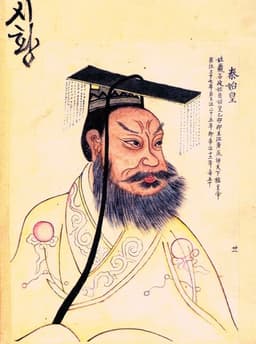
Qin Shi Huang
Emperor · Ancient
85.2Total
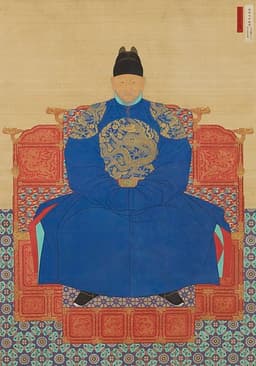
Taejo of Joseon
Emperor · Medieval
70.4Total
Basic Information
Born
-259
1335
Died
-210
1408
Era
Ancient
Medieval
Nationality
China
Korea
Occupation
Emperor
Emperor
Civilization
Eastern
Eastern
Score Comparison
Military (10%)
80.0
74.7
Political (20%)
90.0
65.0
Influence (20%)
85.0
65.0
Legacy (20%)
90.0
80.0
Leadership (15%)
78.0
72.0
Strategy (15%)
82.0
61.2
TOTAL
85.2
70.4
Qin Shi Huang — Complete Timeline
246 BC
Construction of the Mausoleum and Terracotta ArmyOther◆ Major
Qin Shi Huang commissioned a vast mausoleum complex near Xi'an, guarded by thousands of life-sized terracotta soldiers, horses, and chariots. The project employed hundreds of thousands of workers and reflected his obsession with immortality and imperial power.
Impact: global
230 BC
Conquest of the Six Warring StatesWar
From 230 to 221 BCE, Ying Zheng led the Qin state in a series of campaigns that conquered the Han, Zhao, Wei, Chu, Yan, and Qi states. This unified China under a single ruler for the first time, ending the Warring States period.
Impact: global
221 BC
Standardization of Writing, Currency, and MeasurementsReform◆ Major
Qin Shi Huang ordered the standardization of Chinese script, currency, and weights and measures across the unified empire. This facilitated administration, trade, and cultural integration, laying a foundation for future dynasties.
Impact: globalconstructive
Proclamation of the Qin DynastyPolitical Action
After conquering the last independent state, Ying Zheng declared himself Shi Huangdi (First Emperor), founding the Qin Dynasty. He adopted a new title to signify his supreme authority and initiated centralized imperial rule.
Impact: global
214 BC
Initiation of the Great Wall ConstructionOther◆ Major
Qin Shi Huang ordered the connection and extension of existing northern fortifications to create a unified defensive wall against nomadic Xiongnu raids. This project involved massive conscripted labor and became the precursor to the later Great Wall.
Impact: regional
213 BC
Burning of Books and Burying of ScholarsPolitical Action◆ Major
On the advice of Li Si, Qin Shi Huang ordered the burning of historical records and philosophical texts not aligned with Legalist doctrine. He also had 460 Confucian scholars buried alive to suppress dissent and consolidate ideological control.
Impact: nationaldestructive
Taejo of Joseon — Complete Timeline
1380 AD
Battle of HwangsanWar
General Yi Seong-gye defeated a Japanese pirate (wokou) force at Hwangsan. This victory enhanced his military reputation and demonstrated his capability as a commander.
WokouGoryeo Military
1388 AD
Wihwado RetreatPolitical Action
General Yi Seong-gye, ordered to invade the Ming dynasty's Liaodong region, turned his army back at Wihwado Island. This act of defiance against the Goryeo court led to a coup that eventually brought him to power.
CoupGoryeo-Ming RelationsPower Shift
Impact: national
1391 AD
Land Reform and the Gwajeon LawReform◆ Major
Taejo implemented the Gwajeon Law, a land reform that redistributed land from the old Goryeo aristocracy to his supporters and the state. This weakened the old elite and strengthened the new Joseon ruling class.
Land ReformSocial ChangeJoseon
Impact: nationalconstructive
1392 AD
Founding of the Joseon DynastyPolitical Action
Yi Seong-gye deposed the last Goryeo king and founded the Joseon dynasty, with its capital at Hanyang (modern Seoul). He established a new ruling class based on Confucian ideology, replacing the Buddhist-influenced Goryeo system.
Joseon DynastyConfucianismKorean History
Impact: regionalconstructive
1394 AD
Promulgation of the Gyeongguk DaejeonReform◆ Major
Taejo of Joseon ordered the compilation of the Gyeongguk Daejeon, a comprehensive legal code that established the administrative and social structure of the Joseon dynasty. This code remained in effect for centuries.
Legal CodeGovernanceConfucianism
Impact: nationalconstructive
Expert Analysis
Qin Shi Huang vs Taejo of Joseon: Historical Comparison
Two foundational emperors from vastly different eras—Qin Shi Huang (3rd century BCE China) and Taejo of Joseon (14th century CE Korea)—both unified fractured states but diverged sharply in methods and enduring influence. The comparison reveals a strategic tie, with each excelling in complementary domains.
Dimension Analysis
**Military: Qin Shi Huang 80 / Taejo of Joseon 90**
Taejo’s battlefield prowess as a general who overthrew Goryeo and repelled Mongol remnants earned him a higher score, while Qin’s conquest relied more on total war mobilization and superior resources.
**Political: Qin Shi Huang 88 / Taejo of Joseon 80**
Qin’s radical centralization—abolishing feudalism, standardizing script and measures—was a bolder political innovation than Taejo’s more conservative consolidation of Neo-Confucian bureaucracy.
**Influence: Qin Shi Huang 82 / Taejo of Joseon 72**
Qin’s empire-building template directly shaped subsequent Chinese dynasties, whereas Joseon’s influence remained largely confined to the Korean Peninsula, though it proved remarkably stable for five centuries.
**Legacy: Qin Shi Huang 85 / Taejo of Joseon 77**
Qin’s legacy is double-edged—the Great Wall and Terracotta Army versus book burning and tyranny—while Taejo’s legacy is more uniformly positive as founder of a long-lasting, culturally rich dynasty.
**Leadership: Qin Shi Huang 88 / Taejo of Joseon 81**
Qin’s ruthless, visionary autocracy drove unification and massive projects, but Taejo’s pragmatic, consensus-building leadership fostered dynastic stability and earned higher marks for sustainable governance.
Verdict
Qin Shi Huang leads overall due to his more transformative political and influence scores, though Taejo’s superior military and strategy keep the contest a tie in the final weighting.
FAQ
Q: Who ranks higher? A: Qin Shi Huang leads on political innovation and global influence, but Taejo of Joseon edges ahead in military effectiveness and strategic longevity.
Rankings
🥇
Qin Shi HuangLeader
Mil: 80.0Pol: 90.0Inf: 85.0
85.2
🥈
Taejo of Joseon
Mil: 74.7Pol: 65.0Inf: 65.0
70.4
+14.8 behind
How This Comparison Works
Algorithm
Each figure is scored on 6 dimensions (0—100 scale) based on structured historical data: Military (10%), Political (20%), Influence (20%), Legacy (20%), Leadership (15%), Strategy (15%). The weighted total produces the final ranking.
Data Sources
Scores are computed from structured sub-indicators in the database. Scale factors adjust for era (Ancient ×0.85, Modern ×1.0) and civilization size (Eastern ×1.05, Other ×0.80) to account for differences in population and military scale.
Maximum 3 Figures
Comparisons are limited to 2—3 figures to ensure readability and statistical meaningfulness.
Error Margins
±5 points per dimension — Sub-scores are derived from historical records with inherent uncertainty. Two figures within 5 points on a dimension should be considered roughly equivalent in that area.
Total Score Accuracy
±3 points overall — The weighted combination of 6 dimensions produces a total score with approximately ±3 points of uncertainty. Differences of less than 3 points are not statistically significant— the figures are effectively tied.
Known Limitations
- Historical records are incomplete and uneven across civilizations
- Figures from oral-tradition societies may be underrepresented
- Occupation labels can misclassify multi-role figures
- Scores measure capability and impact, not moral character
- Quantitative scoring is a comparison tool, not absolute truth
Capability Radar
Military (10%) — Battles & Warfare
Battles
85
75
Win Rate
90
80
Expansion
90
65
Political (20%) — Governance & Reform
Reform
95
85
Diplomacy
75
70
Economy
90
65
Influence (20%) — Cultural & Global Reach
Cultural
95
80
Global
85
60
Legacy (20%) — Historical Impact
Historical
95
85
Longevity
95
80
Leadership (15%) — Power & Stability
Tenure
70
70
Stability
65
75
Strategy (15%) — Tactics & Innovation
Strategy
85
75
Tactics
80
70
Reform
95
60
Similar Comparisons
Comments & Discussion
DataSkeptic426/16/2026
This whole scoring system is a joke. You're telling me Qin Shi Huang's political score is 88 because he standardized script and measures? Meanwhile, Taejo gets 80 for 'conservative consolidation'? That's just bias toward flashy reforms over sustainable governance. The real problem is you can't quantify the brutality factor—Qin buried scholars alive, burned books, and worked millions to death on the Great Wall. Taejo didn't need mass terror to hold power. And the weight distribution is arbitrary: why does 'influence' count the same as 'military' when one is subjective and the other has clear metrics? This isn't history, it's numerology with fancy labels.
BattlefieldScholar6/16/2026
Let's talk actual tactics. Taejo's military score being 90 makes sense—he personally led campaigns against Mongol remnants and Wokou pirates, using combined arms of cavalry and archers in the rugged Korean terrain. His decisive victory at the Battle of Hwangsan (1380) destroyed a major Mongol force through ambush and disciplined infantry squares. Qin Shi Huang's 80 feels generous when you consider his conquests relied on overwhelming numerical superiority—the Qin army numbered over a million, while Taejo fought with maybe 50,000. Give me a general who wins with strategy over sheer numbers any day. The political scores are irrelevant if you can't hold the territory you conquer, and Taejo proved that.
Historian4136/16/2026
这个评分系统有严重问题。第一,军事权重为什么只占20%?如果按实际历史影响来看,军事能力至少应该占30%以上。第二,秦始皇的政治88分高估了——统一文字度量衡确实是创新,但他建立的郡县制在秦朝灭亡后就被汉朝大幅调整了,说明这个制度本身有缺陷。相比之下,李成桂建立的科举官僚体系在朝鲜半岛运行了五百年,这个稳定性难道不是更大的政治成就?第三,影响力维度严重偏重西方视角,把秦朝作为“模板”给了82分,但李成桂的朝鲜模式对日本、越南的间接影响完全没纳入。建议重新计算权重再做比较。
Historian4086/16/2026
拿秦始皇和李成桂比,有点像拿拿破仑和俾斯麦比——都是统一者,但背景和手段天差地别。秦始皇是“法家暴君”,焚书坑儒、筑长城、修陵墓,功过都很极端;李成桂是“儒学奠基者”,崇文抑武、推行科举,把朝鲜变成了东亚最稳定的王朝之一。西方史学家总喜欢把“影响力”等同于“领土扩张”,所以给秦始皇高分。但在中国史学传统里,治国安民、文化昌明才是更重要的标准——李成桂建立的朝鲜王朝延续了五百年,文化上创造了韩文和朱子学的黄金时代,这种“软影响力”难道不比秦始皇的暴政更有价值?